




WASHINGTON, D.C. --- With the near-month crude oil futures price rising from a level close to $50 per barrel recently to nearly $57 per barrel Jan. 30, retail gasoline prices have seemingly bottomed, according to the federal government. In its weekly report, the Energy Department's Energy Information Administration (EIA) addressed the development, pointing out that the national average price on Jan. 29 remained unchanged from its Jan. 22 level. "The end of the declining trend in gasoline prices over prior weeks is generating expectations among some analysts that momentum has shifted towards rising prices," the EIA report said. "But whether any such shift persists into the spring and beyond, or lasts only a few weeks, is still an open question." Once retail gasoline prices begin rising, an upward trend could potentially last for many weeks. During the remaining winter weather, temperatures in the Northeast -- the region where much of the country's heating oil is consumed -- will be a critical factor influencing crude oil prices. "If cold weather persists in the Northeast, then crude oil prices are not likely to diminish much, if at all, in February, and gasoline prices would likely continue rising over the next few weeks," the report said. "However, by the time March arrives, if not sooner, gasoline will become the main focus of domestic markets, as demand begins to increase." From 2004 through 2006, gasoline demand in March has averaged about 200,000 barrels per day higher than in February. At least partly due to this demand increase, the U.S. retail price for regular gasoline has averaged more than 13 cents per gallon higher in March than in February over the past three years. But could a rise in gasoline prices over the next couple of weeks be temporary, with prices falling again relatively soon? "With gasoline inventories rising sharply over the last five weeks thanks to strong import volumes and domestic production, there is certainly ample gasoline on hand," the report said. "If crude oil prices were to fall back towards $50 per barrel, gasoline prices would likely flatten and eventually fall, especially if gasoline inventories remain above the average range for this time of year." While this scenario is possible, it seems less likely for several reasons, according to the EIA. Saudi Arabia has already announced plans to meet its commitment to cut production further beginning Feb. 1, and some analysts are expecting other OPEC countries to cut further as well. Also, the average range for gasoline inventories is fairly narrow. They can fluctuate from one end of the range to the other in a matter of just a few weeks. In fact, they recently went from below the range to above the range in just five weeks. "On a days supply basis, gasoline inventories are roughly in the middle of their normal range, despite the sharp build in absolute levels," the EIA report said. "This reflects the recent strength in gasoline demand, and illustrates the fragility or susceptibility of the gasoline balance to momentum shifts." For now, even if prices should rise over an extended period, the EIA said it does not expect to see the average U.S. retail gasoline price approach anything close to $3 per gallon, as it has in each of the last two years, unless there is a major disruption in infrastructure or crude oil supplies.
Gasoline Prices Stabilize
WASHINGTON, D.C. --- With the near-month crude oil futures price rising from a level close to $50 per barrel recently to nearly $57 per barrel Jan. 30, retail gasoline prices have seemingly bottomed, according to the federal government.
More Fuel
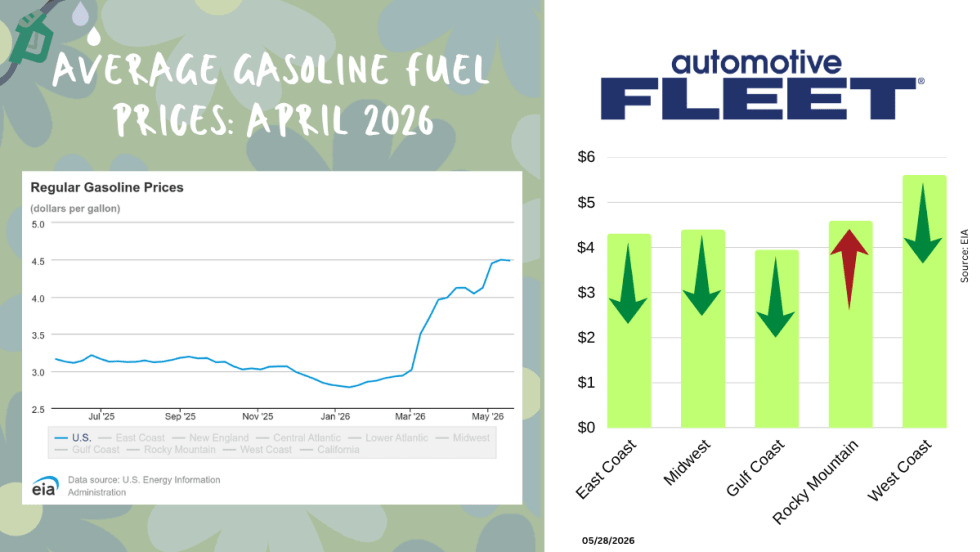
May Fuel Update: Prices Remain Steady with a Slight Decline
While prices have remained steady this week with a 1-cent decline, the next jump is anticipated just before Memorial Day.
Read More →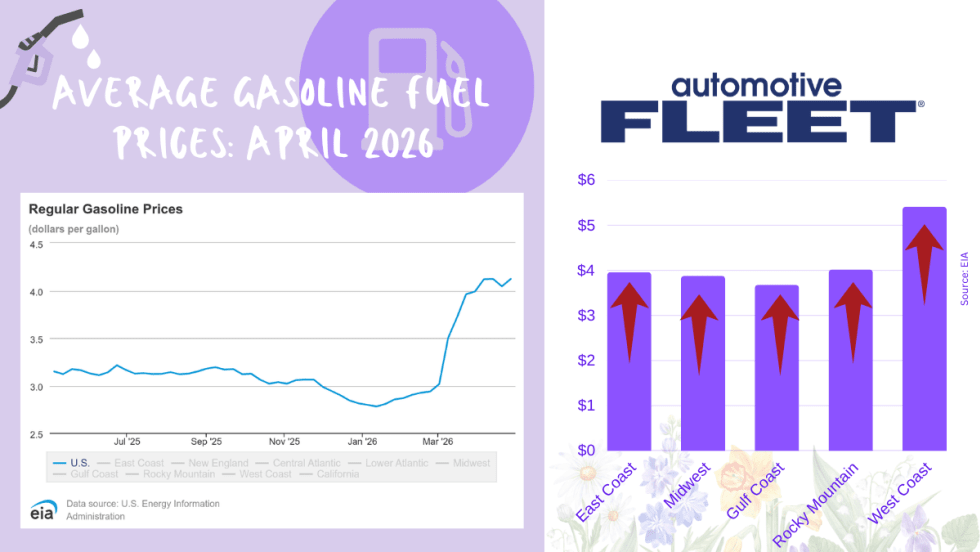
April Fuel Update: Prices Climb Above $4 as Spring Surge Accelerates
National average jumps to $4.04 per gallon, up sharply from last year, with West Coast prices topping $5 and further increases expected amid rising oil tensions.
Read More →
Tips from Fleet Managers on Saving Fuel Costs
Fleet leaders share practical strategies to reduce fuel spend through smarter policy, routing, and driver guidance.
Read More →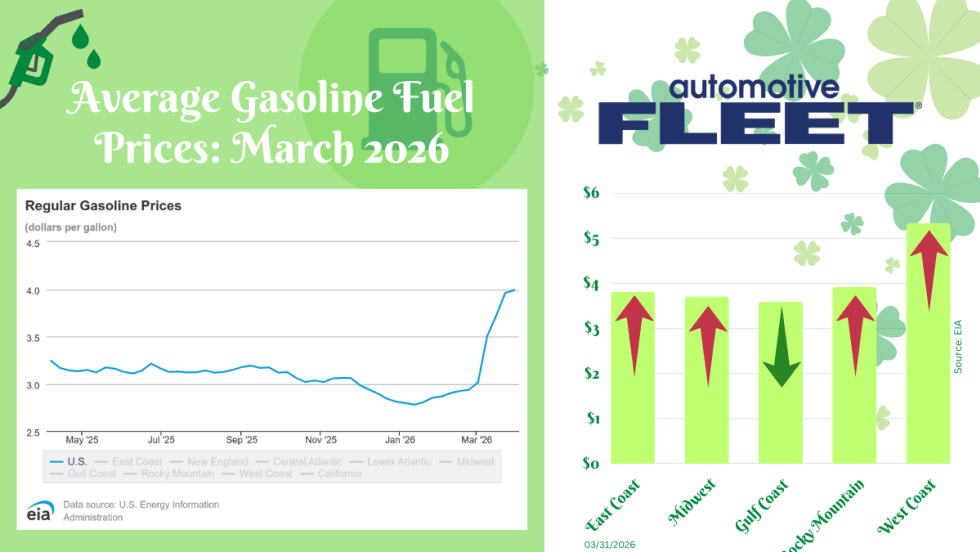
March Fuel Update: Prices Settle With a $4 Average
Fuel prices significantly slowed this week, but a $4 national average is still expected.
Read More →
Bob Adamsky on Fuel Volatility: “Don’t Panic — Have a Plan”
With oil prices rising again, AWP Safety’s fleet manager shares how to respond to rising fuel costs and how the right strategy can turn fuel spikes into cost-saving opportunities.
Read More →
Oil Market Turbulence Is Complicating Fleet Cost Planning
Rapid swings in crude oil prices driven by the conflict in the Middle East could create longer-term cost pressures for fleets, affecting fuel prices, supply chains, and vehicle strategy, says NTEA’s Andrew Wrobel.
Read More →
Report: How AI Is Reshaping Fleet and Field Service Operations
AI is rapidly transforming fleet and field service operations, from predictive maintenance and intelligent scheduling to customer self-service and real-time diagnostics. But while organizations are seeing measurable gains in uptime, productivity, and efficiency, many are still navigating workforce adoption, cybersecurity concerns, and data readiness challenges. Explore the latest trends, investment priorities, and emerging AI use cases shaping the future of fleet operations.
Read More →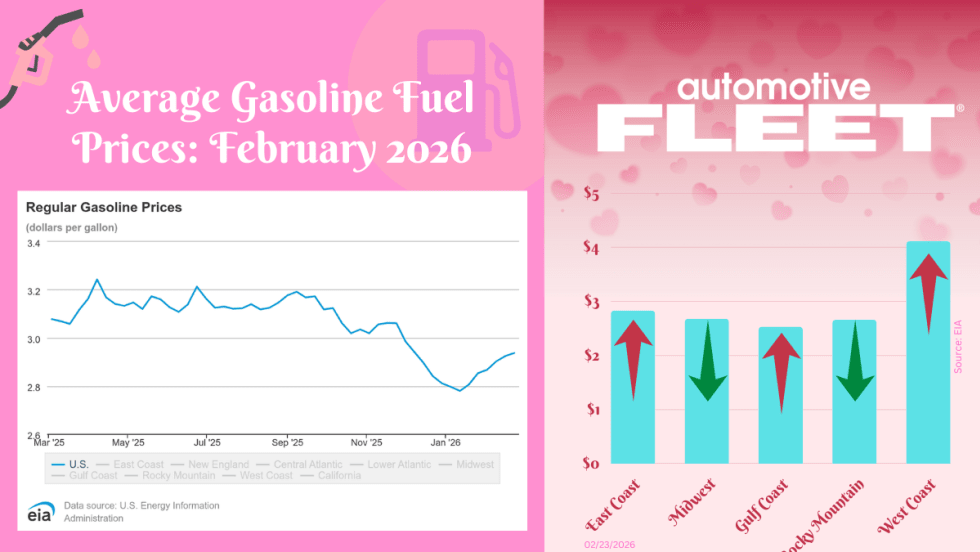
February Fuel Update: Prices Inch Higher for Third Week in a Row
The final February fuel update reveals prices continuing to inch higher for the third week in a row.
Read More →
The 2026 Fuel Economy Guide: Updated Cost and Efficiency Benchmarks for Fleets
Fleet managers can use the DOE’s 2026 Fuel Economy Guide to benchmark MPG across powertrain types using side-by-side vehicle ratings and compare new model-year options.
Read More →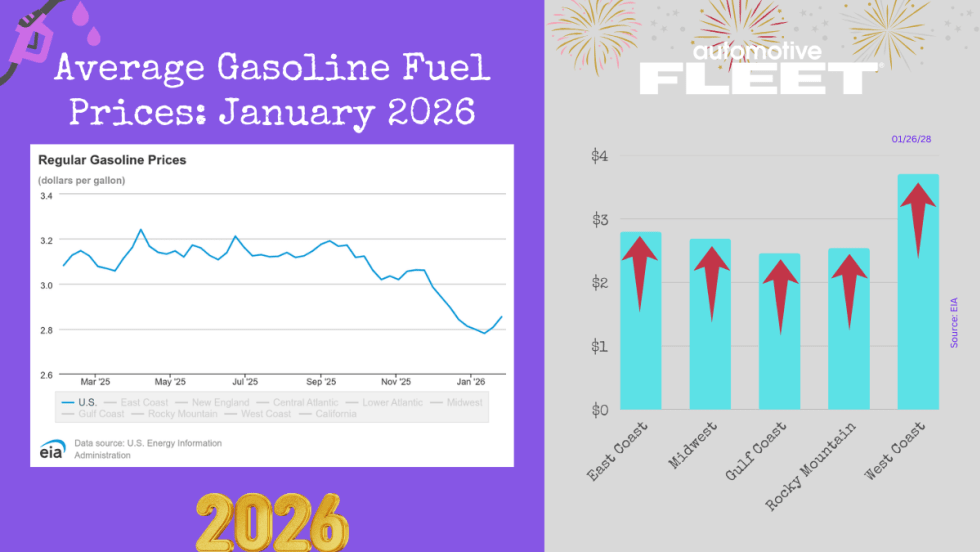
January Fuel Update: Prices Hit Highest Level Since Summer
The national average for fuel prices has officially risen to its highest point since the summer.
Read More →