




Ford's Transit Gets 2.0L EcoBlue Diesel in Europe
Ford’s new Transit and Transit Custom commercial vehicles will be powered by the all-new, state-of-the-art 2.0L Ford EcoBlue diesel engine from mid-2016.
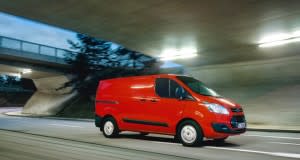
Ford Transit Custom. Photo: Ford
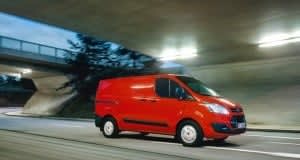
Ford Transit Custom. Photo: Ford
Ford’s new Transit and Transit Custom commercial vehicles will be powered by the all-new, state-of-the-art 2.0L Ford EcoBlue diesel engine from mid-2016.
New from the ground up, the next-generation Ford EcoBlue engine enhances fuel efficiency by up to 13% compared with the outgoing 2.2L TDCi engine, with CO2 emissions from 157 g/km, and delivers improvements in low-rpm torque for enhanced driveability. The new engine – available to order now – also will deliver up to 2-year/60,000 km (37,000 mile) variable service intervals for Transit and Transit Custom operators, according to the automaker.
The all-new downsized 2.0L Ford EcoBlue diesel engine has been engineered to meet Ford’s rigorous commercial vehicle durability standards, powering Transit vehicles through the equivalent of 5.5 million km (3.4 million miles) of punishing durability testing, including 400,000 km (250,000 miles) of testing at the hands of real-world Transit customers.
Clean diesel technologies enable ultra-low emissions in line with stringent Euro Stage VI standards that will be introduced in September 2016, requiring a 55% reduction in NOx emissions compared to Euro Stage V standards.
In addition to the all-new engine line-up, Transit and Transit Custom vehicles also are available to order now with advanced driver assistance technologies including Side Wind Stabilization and Pre-Collision Assist with Pedestrian Detection. From late 2016, customers also will be able to specify a six speed automatic transmission in place of a manual gearbox, and a new rear air suspension option on Transit Custom Kombi models.
The engine has been developed with the latest turbocharging, fuel injection, combustion system, structural design and low-friction technologies to deliver significant improvements in fuel efficiency, performance and operating refinement, while delivering the outstanding durability and low cost-of-ownership demanded for a Transit power unit.
For the Transit and Transit Custom models, the 2.0L Ford EcoBlue engine is offered in 104 hp, 128 hp and 168 hp power ratings, each of which offers increased power and torque compared to the outgoing 2.2L engine. Improved low-end pulling power – with 20% more torque at 1,250 rpm – delivers more flexible and responsive performance in everyday driving, according to the automaker.
Lower running costs are supported by significantly improved fuel efficiency. Transit models equipped with optional Auto-Start-Stop achieve CO2 emissions from 174 g/km and average fuel consumption from 6.6 l/100 km (42.8 mpg) – a 10% reduction over the equivalent outgoing model, according to the automaker.
Transit Custom vehicles fitted with optional Auto-Start-Stop deliver CO2 emissions from 157 g/km with average fuel consumption from 6.1 l/100 km (46.3 mpg) – 13% down from the equivalent outgoing model, according to the automaker.
Ford said it anticipates a fuel cost saving of up to €1,600 (US$1,781) over 130,000 km (80,000 miles) for the operator of a new 104 hp Transit Custom van compared with the previous 99 hp model.
Scheduled maintenance costs are also reduced, with the extended variable service intervals of up to two years/60,000 km (37,000 miles) offering up to an additional 10,000 km (6,000 miles) between services on both Transit and Transit Custom models, according to the automaker.
The two-ton Transit and one-ton Transit Custom vehicles are core models within Ford’s renewed Transit range, which also includes the smaller all-new Transit Connect and Transit Courier vans. The updated Transit and Transit Custom models offer commercial vehicle operators the same comprehensive line-up of vehicle variants including multiple roof height and wheelbase options, a wide choice of gross vehicle weights, and bodystyles with van, kombi and double-cab-in-van variants. Transit customers can further select from Front-Wheel Drive, Rear-Wheel Drive and intelligent All-Wheel Drive derivatives, along with Chassis Cab and Minibus bodystyles, according to the automaker.
More Global Fleet
Holman Takes Full Ownership of ARIZA in Mexico
Holman is bringing its Mexican fleet management operation fully under its own brand after more than 30 years as a joint venture. The change gives multinational fleet customers a single Holman operation across the U.S., Canada, and Mexico.
Read More →
Proven Ways to Reduce Work Truck Downtime
The age-old problem of downtime will always be a reality, but with new strategies at hand, fleets have more ways to keep trucks on the road longer.
Read More →
The Top 300 Commercial Fleets
The Top 300 Commercial Fleets: See the List
Read More →


Cameras, Safety and Insurance: From Reactive Claims to Real-Time Prevention (Part 2 of 2)
Part Two: Commercial auto remains one of the most challenging and costly lines of coverage for fleet operators and insurers alike. Continue learning more about how to effectively address these issues from Onur Aksan, Enterprise Business Development Executive, Geotab
Read More →
Cameras, Safety and Insurance: From Reactive Claims to Real-time Prevention
Commercial auto remains one of the most challenging and costly lines of coverage for fleet operators and insurers alike. Learn more about how to effectively address these issues from Onur Aksan, Enterprise Business Development Executive, Geotab.
Read More →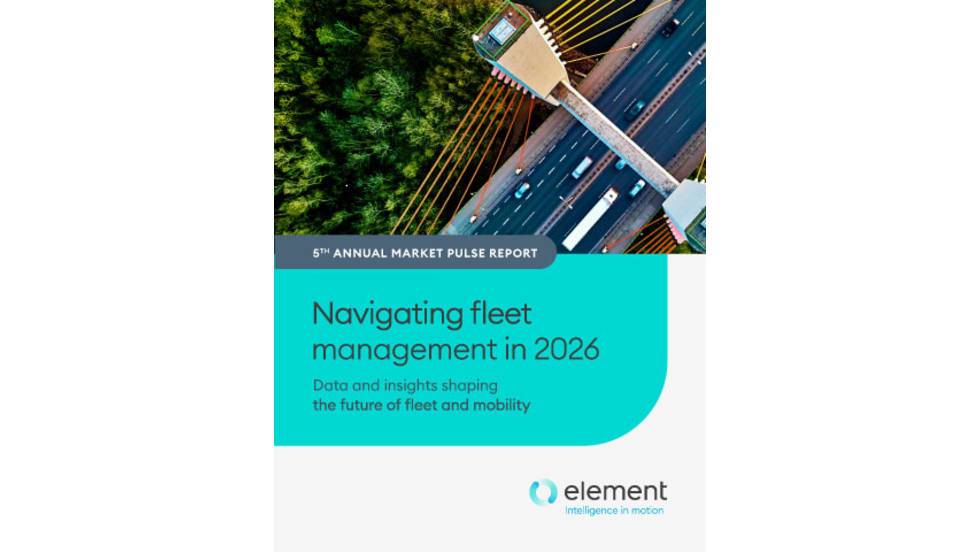
Fleet Costs Are Rising: Here’s How Leaders Are Responding
Fleet leaders are under pressure to reduce costs, adapt to economic uncertainty, and make smarter decisions. See how peers across North America are responding with real data, proven strategies, and forward-looking insights. Download the 2026 Market Pulse Report to benchmark your strategy and uncover where you can gain an edge.
Read More →
Enterprise Fleet Management Surpasses 900,000 Vehicles in U.S. & Canada
Enterprise Mobility connects with mobility solutions around the globe
Read More →
Automotive Fleet's Guide to Fleet Electrification
Unlock the secrets to a successful transition to electric fleets with Automotive Fleet's comprehensive Fleet Electrification Guide!
Read More →
Sumitomo Rubber Industries to Acquire Viaduct
Viaduct will join Sumitomo as an independent subsidiary. Partnership strengthens global reach and accelerates AI-driven innovation for fleets and manufacturing.
Read More →