




Ford V.P. Urges Senators to Support Renewable Fuel Development
WASHINGTON, D.C. ---Calling on lawmakers to "act with urgency," a Ford executive this week told the Senate Energy and Natural Resources Committee that policies are needed to support an aggressive, integrated approach by industry and government stakeholders to develop renewable fuels and advanced technology vehicles.
WASHINGTON, D.C. --- Calling on lawmakers to "act with urgency," a Ford executive this week told the Senate Energy and Natural Resources Committee that policies are needed to support an aggressive, integrated approach by industry and government stakeholders to develop renewable fuels and advanced technology vehicles. "It is clear the solution to America ’s energy challenges will need to come from advances in fuels and vehicle technology. The fact is, without the whole-hearted involvement of the oil industry, we cannot move forward far enough and fast enough," said Sue Cischke, Ford vice president of environmental and safety engineering. "We obviously need key partners like the oil industry to invest in developing and marketing renewable fuels, like E85." Ford is committed to a portfolio of advanced technology vehicles, including hybrids, flexible fuel vehicles, advanced clean diesels, hydrogen-powered internal combustion engines and fuel cells. At the Washington Auto Show in January, Ford unveiled the first-ever hybrid-ethanol demonstration vehicle, a Ford Escape Hybrid E85. Pointing out that Ford alone has put more than 1.6 million ethanol-capable, or flex-fuel, vehicles on the road in the last decade, Cischke emphasized the need for rapid production of renewable fuels, and the infrastructure to support them. Only 600 of the 170,000 retail gas stations in the country carry E85 ethanol, a blend of 85% ethanol and 15% gasoline. Cischke said expanding the availability of E85 will be critical to moving America toward energy independence. "For ethanol to be a real player in the transportation sector and lessen America’s dependence on foreign oil, we need a strong, long-term focus on policies that increase U.S. ethanol production and accelerate E85 infrastructure development," she said. "We need national research efforts to pursue producing ethanol from more energy efficient cellulosic materials like rice straw, corn stover, switch grass, wood chips or forest residue." Cischke also reiterated Ford’s commitment to produce 250,000 hybrids by 2010, including offering hybrids on half of all Ford, Lincoln and Mercury models. Cischke advocated an integrated approach between government and industry stakeholders. She called for an expanded role for federal and state government, including tax credits for research and development and tax incentives for consumers and businesses to use renewable fuels. "We fully support government incentives to encourage and accelerate this investment," she said. "The challenges are considerable but not insurmountable, and there is an enormous amount we can achieve if we act together in an integrated manner."
More Fuel
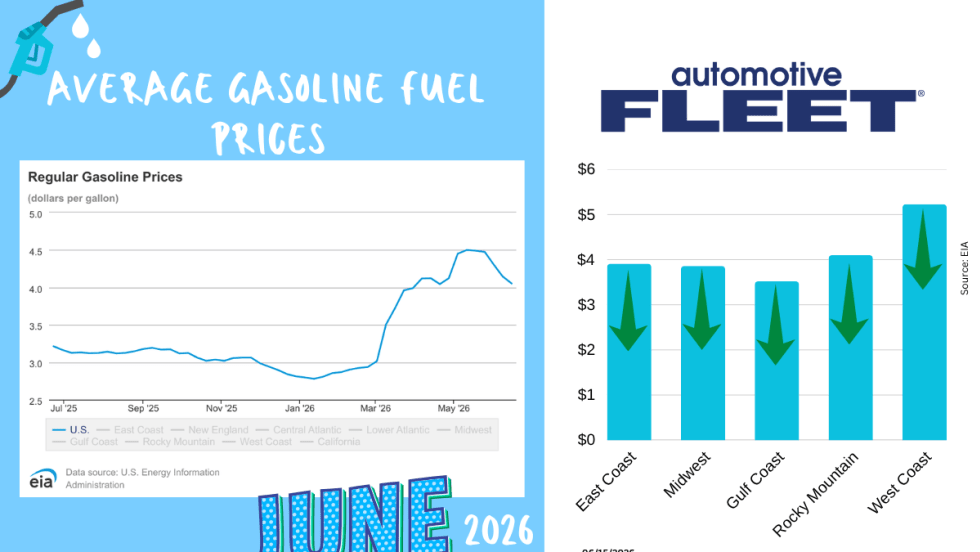
June Fuel Update: Prices Fall Below $4
Drivers are finally getting some relief at the pump. The national average gas price has dropped below $4 a gallon for the first time in months, with prices falling in 47 states as oil markets react to developments in U.S.-Iran negotiations.
Read More →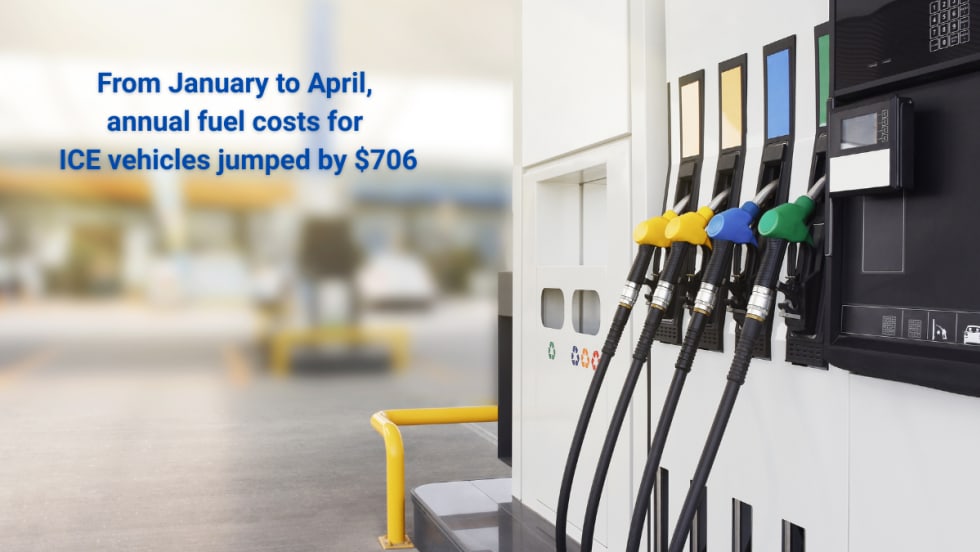
Study: How 2026's Gas Price Hikes Affect Different Vehicle Types
New data from iSeeCars reveals how rising fuel costs have affected different vehicle segments as gasoline prices climbed nearly 46% over the past four months.
Read More →
Are You Tracking Your Fleet's True Total Cost of Ownership?
Bobit Business Media surveyed 190 fleet professionals and found that while most fleets are tracking costs, fragmented systems and data gaps are keeping true TCO visibility out of reach. With rising pressure to control spend in an increasingly volatile environment, the gap between what fleets think they know and what the data actually shows is wider than you might expect. See how your peers are managing costs today and where the industry still has room to improve.
Read More →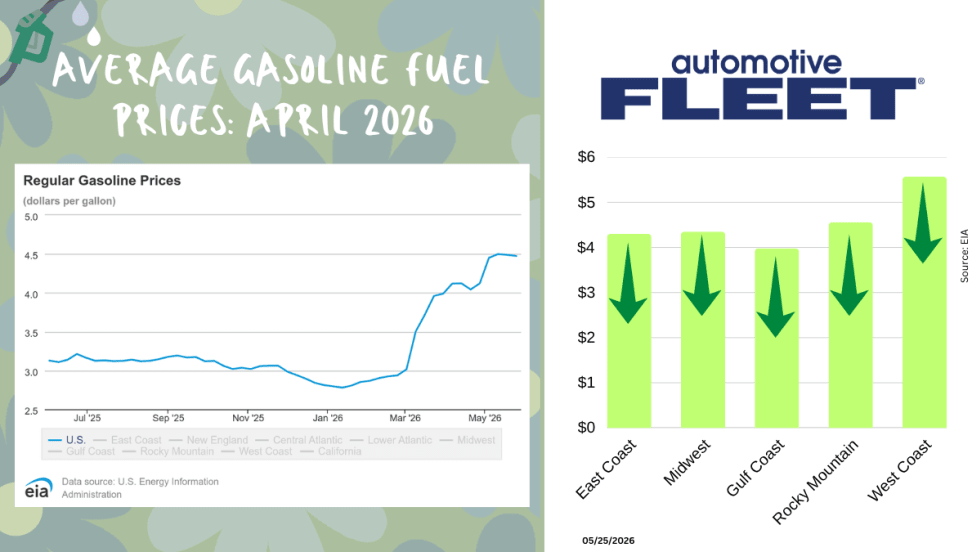
May Fuel Update: All Regions Experience Declines
Gas prices are finally easing in much of the country, but experts warn global tensions could quickly reverse the trend as the national average remains well above last month’s levels.
Read More →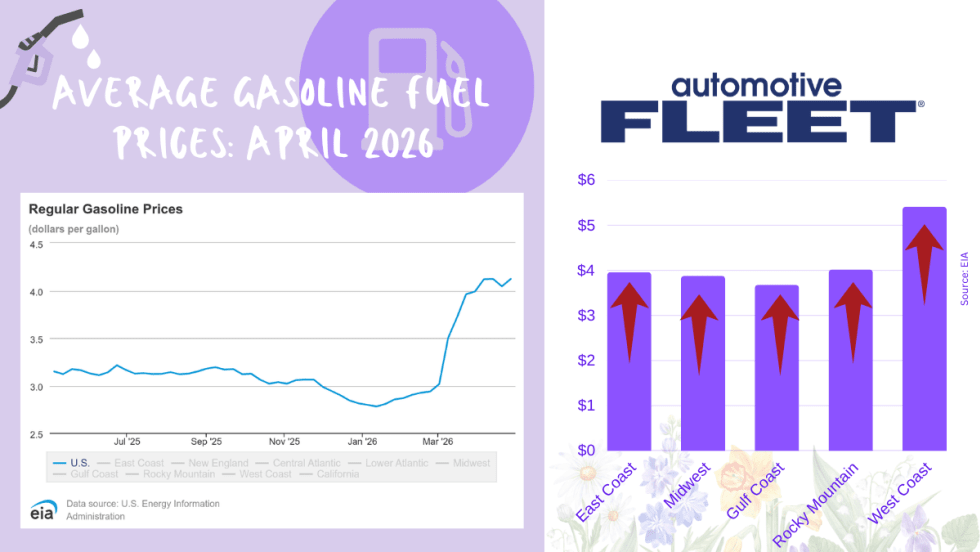
April Fuel Update: Prices Climb Above $4 as Spring Surge Accelerates
National average jumps to $4.04 per gallon, up sharply from last year, with West Coast prices topping $5 and further increases expected amid rising oil tensions.
Read More →
Tips from Fleet Managers on Saving Fuel Costs
Fleet leaders share practical strategies to reduce fuel spend through smarter policy, routing, and driver guidance.
Read More →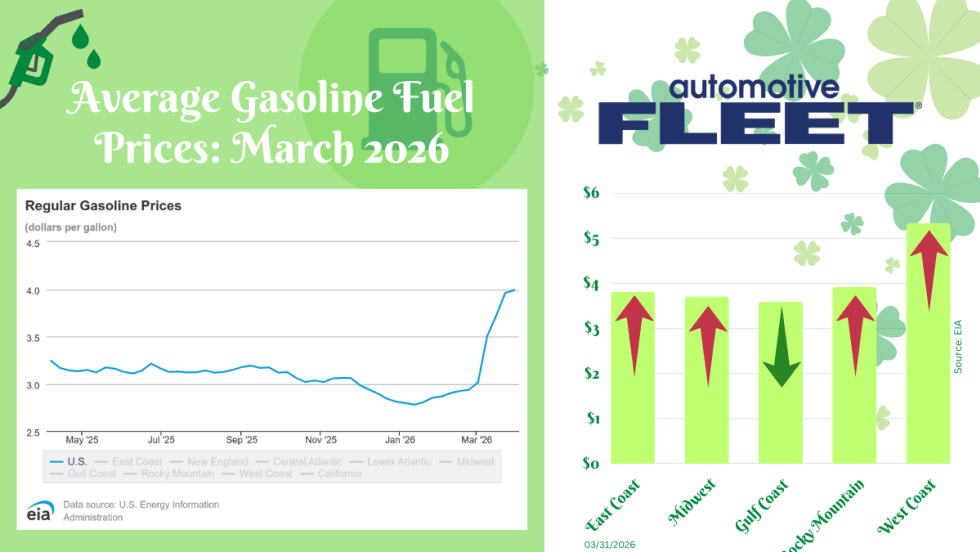
March Fuel Update: Prices Settle With a $4 Average
Fuel prices significantly slowed this week, but a $4 national average is still expected.
Read More →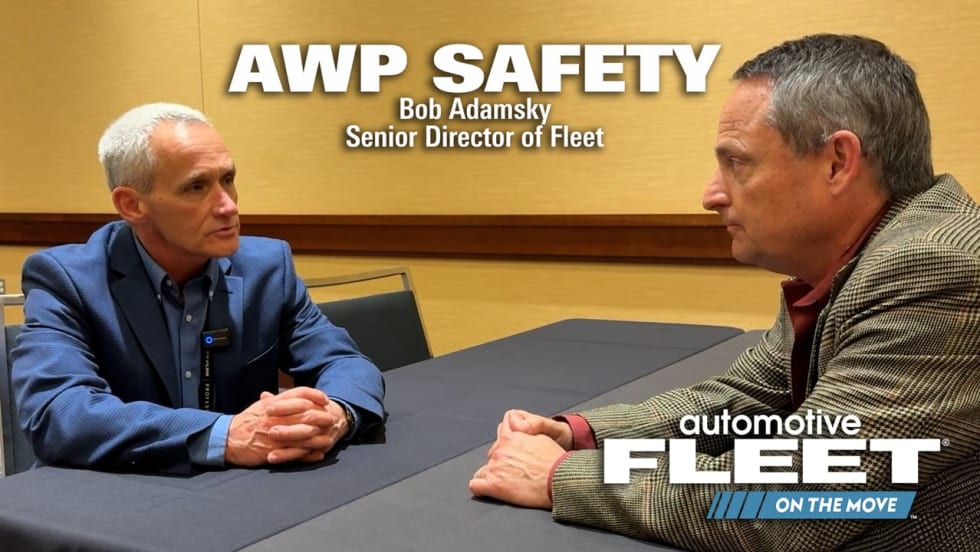
Bob Adamsky on Fuel Volatility: “Don’t Panic — Have a Plan”
With oil prices rising again, AWP Safety’s fleet manager shares how to respond to rising fuel costs and how the right strategy can turn fuel spikes into cost-saving opportunities.
Read More →
Oil Market Turbulence Is Complicating Fleet Cost Planning
Rapid swings in crude oil prices driven by the conflict in the Middle East could create longer-term cost pressures for fleets, affecting fuel prices, supply chains, and vehicle strategy, says NTEA’s Andrew Wrobel.
Read More →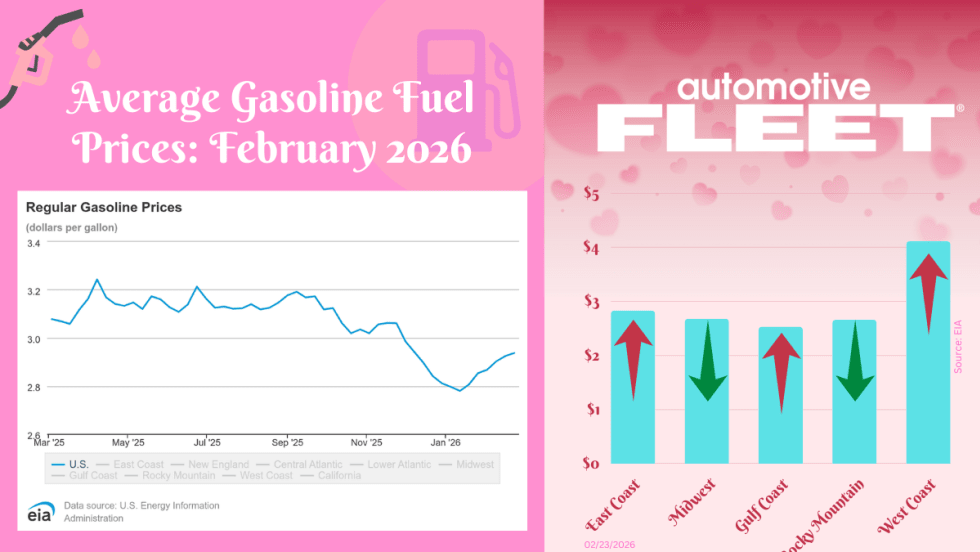
February Fuel Update: Prices Inch Higher for Third Week in a Row
The final February fuel update reveals prices continuing to inch higher for the third week in a row.
Read More →