




Ford Focus, Volvo C30 Ace IIHS Crash Tests
ARLINGTON, VA --- The Ford Focus and Volvo C30 excelled in recent crash tests by the Insurance Institute for Highway Safety, earning the vehicles the coveted Top Safety Pick designation.
ARLINGTON, VA --- The Ford Focus and Volvo C30 excelled in recent crash tests by the Insurance Institute for Highway Safety, earning the vehicles the coveted Top Safety Pick designation.
The IIHS's latest series of tests focused on two-door vehicles. To evaluate the extent to which automakers are extending crashworthiness improvements to two-door cars, the institute conducted front, side and rear tests of 2009 coupes. Those tested were the Chevrolet Cobalt, Ford Focus, Honda Civic and Scion tC, all small models, plus the midsize Volvo C30.
"We're often asked about the crash test performance of two-door cars," said David Zuby, institute senior vice president for vehicle research. "Design and structural differences mean we can't automatically apply our test results of four-door cars to two-door versions of the same models. We decided to do these tests to see how the two-doors stack up in protecting people in the three most common kinds of crashes."
The institute rates vehicles "good," "acceptable," "marginal," or "poor," based on performance in front and side crash tests. The third test measures how well vehicle seats and head restraints protect people against neck injury in low-speed rear crashes.
"Overall, the results for two-door cars are good news," Zuby said. "All but one earn 'good' ratings in our frontal offset test. Only two of the five earn this rating for protection in side crashes, but none of the five earns anything less than an 'acceptable' rating. This is pretty good, considering how demanding the side test is. It simulates being struck by a pickup or SUV."
Zuby added that "all five cars in this group, from relatively inexpensive to moderately priced, have head-protecting side airbags as standard equipment. In 2003 automakers pledged to voluntarily put side airbags in their vehicles as standard equipment by the 2010 model year. They're making good on this pledge."
Earning "good" ratings in all three of the institute's tests and equipped with optional electronic stability control, the Focus qualifies as a 2009 Top Safety Pick among small cars. Also earning this award is the midsize Volvo C30. Seven small cars and 10 midsize moderately priced models have now earned the award, the institute's top safety designation.
"Choosing a vehicle that provides top-notch crash protection is easier than ever," Zuby said.
Among the five car models the institute recently tested, four earned the top rating of "good" in the 40 mph frontal offset test. The Scion tC was rated "acceptable."
The tC's structure held up well, but overall performance wasn't as good as the other cars, the IIHS said. Forces recorded on the driver dummy indicated that an injury to the lower right leg would be possible, and a high head acceleration occurred when the dummy's head bottomed out the airbag.
The tC is unique in this group for having a separate airbag in the lower instrument panel designed to minimize knee injuries in frontal crashes. But the tC doesn't have electronic stability control, which research shows can significantly reduce the risk of crashing -- especially getting into a serious single-vehicle crash, the IIHS said. This feature reduces fatal single-vehicle crash risk by 51 percent and fatal multiple-vehicle crash risk by 20 percent.
Side impacts are the second most common type of fatal crash. More than 8,000 people were killed in side impacts in 2007. This compares with more than 14,000 deaths in frontal crashes. In the institute's side test, the C30 and Focus were rated "good." The Civic, Cobalt and tC were rated "acceptable" (The Cobalt's rating applies to vehicles built after May 2009, when General Motors modified this car's curtain airbags).
In the Civic, forces on the driver dummy's chest and abdomen indicated that rib fractures and a fractured pelvis would be possible, IIHS said. The tC also was downgraded for torso protection.
The Cobalt's "marginal" score for structural intrusion into the occupant compartment prevented this car from earning a "good" rating overall in the side test.
Occupant protection in rear-enders has mostly lagged behind improvements in front and side crashworthiness, but the recently tested cars are exceptions, IIHS said. All but the tC earned "good" rear crash ratings. Neck sprain or strain is the most frequently reported crash injury in U.S. insurance claims. As automakers strive to earn Top Safety Pick, they're upgrading seats and head restraints.
The Civic, Cobalt and Focus also are sold as four-doors, and the institute tested them previously. Frontal tests revealed only small differences between the two- and four-door versions, but differences in side test performance were more pronounced. For example, the four-door Civic earned a "good" rating in the institute's side test and is a Top Safety Pick, while the two-door version was rated "acceptable" in the side test because of higher forces on the driver dummy's chest, abdomen and pelvis, IIHS said.
On the other hand, the two-door Focus performed better than the four-door version, earning a "good" rating in the side test and a Top Safety Pick designation compared with the four-door's "acceptable" performance in the side test.
"These differences confirm that crash test ratings for four-door cars can't automatically be applied to two-door versions," Zuby explained. "Still, the safety improvements we've seen for four-door vehicles generally appear to be carrying over to two-doors, which is good news for consumers."
More Safety

Nexar-Nauto Merger Aims to Give Fleets Better Safety Intelligence Through Larger Driving Dataset
Stefan Heck tells Automotive Fleet that combining more than 10 billion miles of driving history with Nexar's AI models will give fleets deeper insights into driver risk and roadway conditions than either company could provide independently.
Read More →
Don't Wait for a Crisis: 5 Ways to Build Mental Health Into Your Fleet Safety Program
For Suicide Prevention Month, fleet and safety leaders have an opportunity to put mental health where it belongs: at the center of workplace safety.
Read More →
How Camera Data Can Strengthen a Fleet’s Insurance Renewal
Insights from a commercial insurance carrier and a broker show how fleets can turn video telematic data, driver coaching, and improved claims results into a stronger case at insurance renewal.
Read More →
The Safest Fleets Aren’t the Ones with the Most Technology
You’ve made the telematics investment. Here’s how to capture the other half of its value and build the safest fleet on the road.
Read More →
Hidden in Plain Sight: Fleet Compliance Risks
Fleet compliance isn't just about having policies — it's about consistently enforcing them. This practical guide reveals six hidden compliance risks common in public sector and shared fleet operations and outlines proven strategies to improve visibility, accountability, and audit readiness
Read More →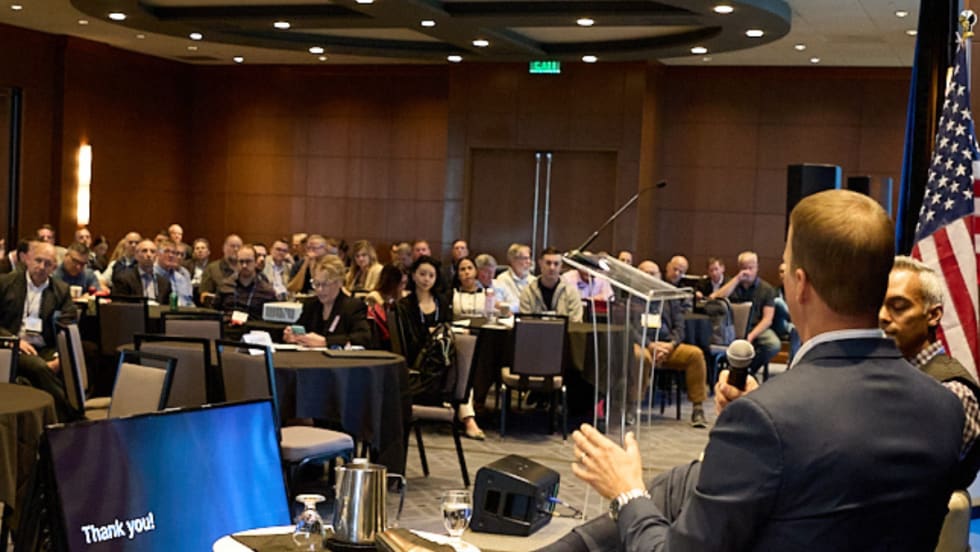
NETS Sets 2026 Fleet Safety Benchmark Conference for Indianapolis
The Sept. 15–17 program will feature fleet benchmarking data, case studies, emerging technologies, and implementation strategies while running alongside the NSC Safety Congress & Expo.
Read More →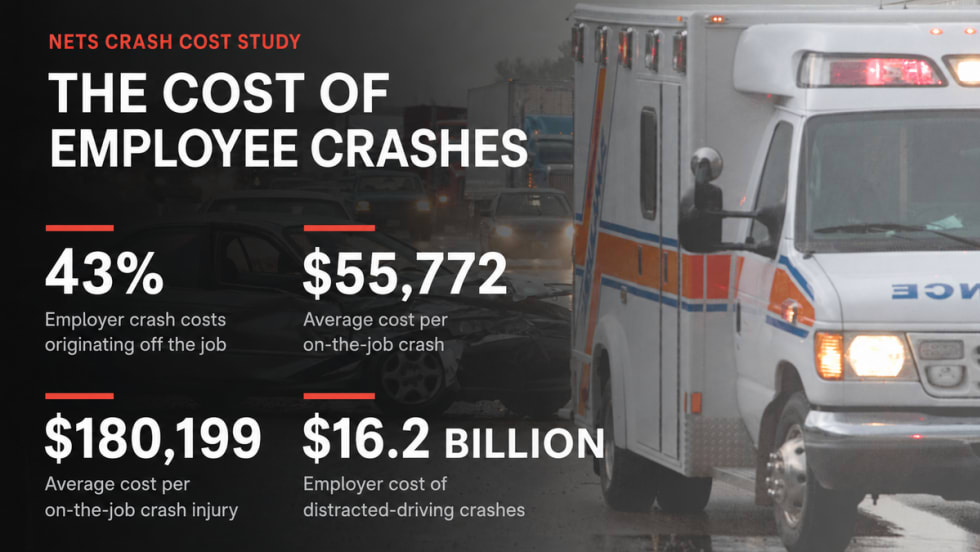
Off-the-Job Crashes Account for 43% of Employers’ $61.7 Billion Crash Burden
NETS quantifies costs dispersed across fleet, risk, HR, and other departments while providing new per-crash benchmarks for employers.
Read More →
Ram Recalls More Than 1.27 Million 1500 Pickups for Seat Belt Anchor Issue
The recall affects certain 2019-2026 Ram 1500 pickups that may have improperly attached second-row seat belt buckle anchors.
Read More →
How Better Visibility Cut Speeding Violations by 48%
Fleet leaders don't need more data, they need clearer visibility into what the data is saying. This case study explores how one utility replaced speeding-event counts with a single metric — miles driven in violation — to strengthen safety and significantly reduce speeding violations.
Read More →
Operation Safe Driver Week: Why the Industry's Oldest Safety Campaign Still Matters to Fleets
A look at how a 2007 enforcement initiative became one of the most consequential weeks on the fleet safety calendar, and what it means for your drivers in 2026.
Read More →