




Fed Reserve Approves Second Rate Hike of 2018
With the labor market continuing to strengthen and economic activity rising at a solid rate, the Federal Reserve raised the Federal Funds Rate a quarter percentage point for the second time this year — putting the target for short-term rates in the 1.75 to 2% range.

Chairman Jerome Powell discusses the decision to raise the Federal Funds Rate by a quarter point for the second time this year.
Photo courtesy of Federal Reserve.
With the labor market continuing to strengthen and economic activity rising at a solid rate, the Federal Reserve raised the Federal Funds Rate a quarter percentage point for the second time this year — putting the target for short-term rates in the 1.75 to 2% range.
The increase, the seventh since 2015, now has short-term rates up a full percentage point from last year. Cox Automotive Chief Economist Jonathan Smoke said recent rake hikes have impacted lending and borrowing across the U.S. economy, noting that average rates on automotive loans are up slightly more than a percentage point over last year and are now nearing seven-year highs.
“The 1% increase on the average auto loan we’ve already seen has increased the average monthly payment by $14. Throw in higher vehicle prices, and average payments are up over 4% from last year,” he said. “Higher rates are a problem for a consumer-driven economy as interest rates rise, debt service takes up a bigger chunk of income.”
Smoke added that data on personal income and consumption through April indicate that U.S. consumers have seen a 12% increase in interest payments year over year.
According to Experian Automotive, the average interest rate for new-vehicle financing in the first quarter climbed 31 basis points from the year-ago period to 5.17%, while the average rate for used-vehicle financing jumped 29 basis points to 9.18% over the same period.
The opening quarter of 2018 also saw the average amount financed and average monthly payment for a new vehicle rise to record highs of $31,455 and $523, respectively, with the firm noting that the “dream of owning a new vehicle is becoming more elusive to the average American.”
Kelley Blue Book put May’s average transaction price for a new light vehicle at $35,635, while Edmunds noted this month that May’s average transaction price for a used vehicle rose to a record high of $19,657.
In explaining the decision, Federal Reserve Chairman Jerome Powell said the main takeaway “is that the economy is doing very well.” He added that most people who want to find jobs are finding them, noting that unemployment and inflation remain low.
“Interest rates have been low for some years while the economy has been recovering from the financial crisis,” Powell said. “For the past few years, we have been gradually raising interest rates, and along the way, we have tried to explain the reasoning behind our decisions. In particular, we think that gradually returning interest rates to a more normal level as the economy strengthens is the best way the Fed can help sustain an environment in which American households and businesses can thrive.
“Today, we have taken another step in that process by raising our target range for the federal funds rate by a quarter of a percentage point,” he added. He also indicated that two more increases are likely this year.
According to Powell, economic growth appears to have picked up in the current quarter, largely reflecting a bounce-back in household spending. Business investments also continue to grow strongly, and the overall outlook for growth remains favorable, he added.
The median projection for the growth in the real gross domestic product is 2.8% this year, 2.4$ next year, and 2% in 2020.
In the labor market, job gains averaged 180,000 per month over the last three months, “well above the pace needed in the longer run to provide jobs for new entrants into the workforce,” Powell noted. He added that the unemployment rate declined over the past two months and stood at 3.8% in May — the lowest level in nearly two decades.
Additionally, the labor force participation rate has been roughly unchanged since late 2013, a positive sign, Powell said, “given that the aging of our population is putting downward pressure on the participation rate.”
“As you can see in our Summary of Economic Projections, the median of Committee participants’ projections for the unemployment rate stands at 3.6% in the fourth quarter of this year and runs at 3.5% over the next two years, a percentage point below the median estimate of its longer-run normal rate,” Powell said. “The median path is just a bit lower than that from March.”
The Fed chairman also noted that after many years of running below the Fed’s 2% longer-run objective, inflation is now closing in on that level. He added that overall consumer prices, as measured by the price index for personal consumption expenditures, increased 2% over the 12 months ending in April, noting that the core PCE index, which excludes the prices of energy and food and tends to be a better indicator of future inflation, rose 1.8% over the same period.
“As we expected, inflation moved up as the unusually low readings from last March dropped out of the calculation,” Powell said. “The recent inflation data have been encouraging, but after many years of inflations below our objective, we do not want to declare a victory. We want to ensure that inflation remains near our symmetric 2% longer-run goal on a sustained basis.”
The Federal Open Market Committee noted in its statement announcing its rate hike that it would be concerned if inflation were running persistently above or below its 2% objective. The committee’s median projection for inflation runs at 2.1% through 2020.
While the Federal Reserve’s decision was widely expected, higher rates and tighter credit — Experian noting that subprime lending fell to a record low in the first quarter — have already led to softening retail demand. And car buyers aren’t the only market participants affected.
“Manufactures and dealers are also impacted by higher interest rates. For OEM incentive spending, the cost of providing low-interest rate loans goes up,” said Cox Automotive Senior Economist Charlie Chesbrough. “For a $35K vehicle, providing [zero percent for 60 months] at 2.9% versus 3.9% is a difference of over $900.
“And for dealerships, the cost of acquiring and maintaining inventory — floor planning — also rises, which shaves a little deeper into already tight profit margins,” Chesbrough added. “For suppliers, their own operating costs – often borrowing to finance vehicle program fulfillment – goes up. The automobile industry is cash intensive. Rising interest rates impact all corners of the business.”
Related: The Impact of Rising Interest Rates on TCO
More Leasing
Martin Kuhn on the Future of Mike Albert Fleet Solutions
The new president and CEO explains how Mike Albert Fleet Solutions plans to invest in technology, data, and people without losing the personal service fleet customers value.
Read More →
Mike Albert Fleet Solutions Names Marty Kuhn CEO, First from Outside the Family
Kuhn has a theory of what sets the company apart from larger FMCs: depth of partnership over breadth of volume.
Read More →
Union Leasing Rebrands as Moventum Fleet Management
The name Moventum reflects the company’s position at the intersection of movement and momentum, with the guiding principle "Keep Work Moving."
Read More →
How Does a Mid-Major FMC Compete? Ask BBL Fleet
This Pittsburgh-based FMC built a technology-first culture, sustained double-digit organic growth, and expanded its Midwest footprint through a recent acquisition. How did it happen?
Read More →
What’s Really Happening in Fleet Supply Right Now
Fleet supply has improved, but not everywhere. Merchants Fleet’s Charles Matthew explains where constraints still exist, what risks are emerging, and why fleets shouldn’t wait to place orders.
Read More →
These Edges Are Measured in Inches — Matt Dyer on Fleet’s New Normal
The Merchants Fleet CEO contends that fleets that drive the business win the inches. In 2026, every one of them counts.
Read More →
Who Gets a Company Car? (In 2026 and Beyond)
As costs rise and scrutiny increases, fleets are refining criteria that govern eligibility for company-owned vehicles.
Read More →
DriveItAway Holdings, Free2move Launch Operations In Nine Cities
The co-branded program with Stellantis’ mobility division scales up leasing and financing options nationwide with more cities to come online in 2026.
Read More →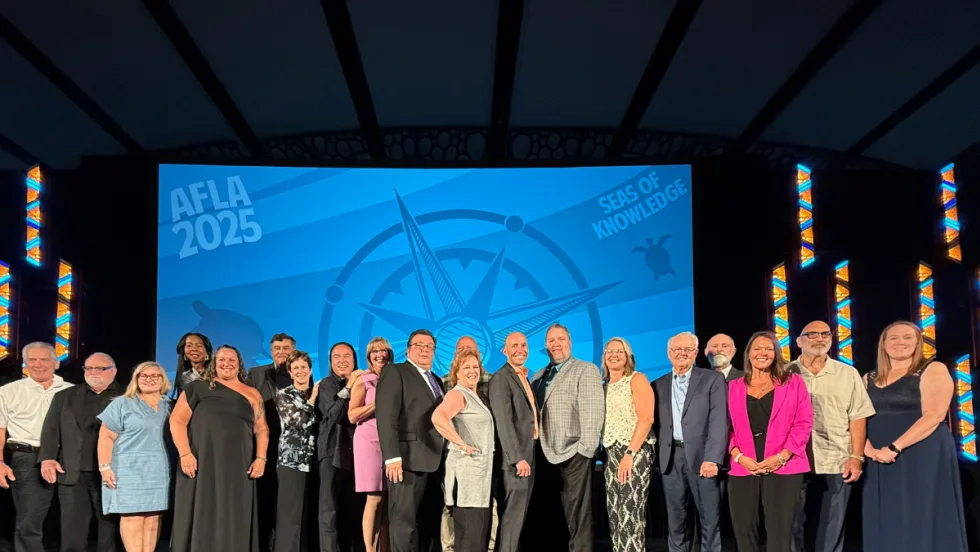
AFLA 2025 Conference in Pictures
Drawing over 640 attendees, the 2025 AFLA Annual Conference was held Sept. 14-17 at the JW Marriott Marco Island Beach Resort in Florida.
Read More →
DriveItAway, Free2move Partner to Expand Vehicle Access for Dealers
The arrangement enables franchise dealers to offer flexible lease-to-own programs with no credit checks, no down payments, and no long-term commitments.
Read More →