




FCA Upgrades Uconnect for 2016
FCA is introducing new features to its Uconnect infotainment system in select 2016 Chrysler, Jeep, Dodge and Ram Truck vehicles, in addition to updating the performance of the infotainment system.
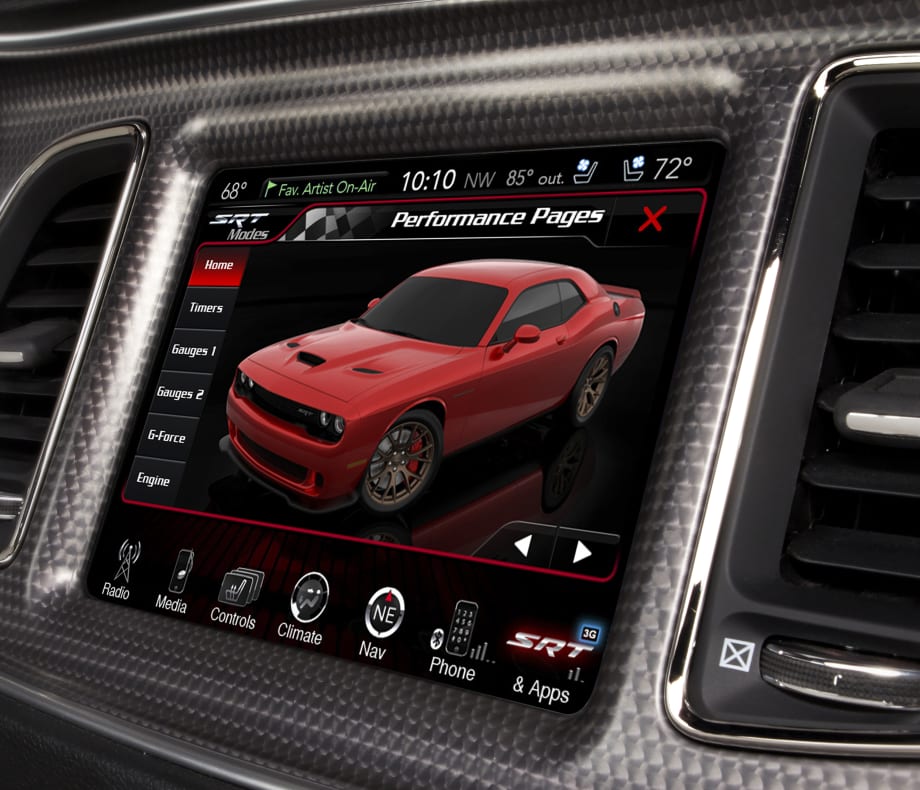
Photo courtesy of FCA.
Photo courtesy of FCA.
FCA is introducing new features to its Uconnect infotainment system in select 2016 Chrysler, Jeep, Dodge and Ram Truck vehicles, including an all-new Drag and Drop menu bar, Siri Eyes Free, Do Not Disturb, SiriusXM Tune Start and a Vehicle User Guide that can be viewed through an 8.4-inch touchscreen.
The new features will arrive in the Chrysler 200 and 300; Dodge Challenger, Charger, Durango and Viper; Jeep Cherokee and Grand Cherokee; and Ram 1500, Heavy Duty and Chassis Cab.
With the new drag and drop menu bar, FCA US vehicle owners will be able to personalize their touchscreen controls for one-button access to features and services, including SiriusXM Travel Link, heated or cooled seats, and Yelp Search.
Through a voice button on the vehicles' steering wheel, Siri Eyes Free allows drivers to speak natural language voice commands to send text messages, play music, set reminders, place phone calls and access turn-by-turn directions. Drivers can push and hold the voice recognition button on the steering wheel until the Siri screen appears on the touchscreen and they can hear the audible tones. Siri Eyes Free is compatible with an Apple iPhone 4s and above.
Vehicle owners who prefer not to be interrupted with phone calls or text messages while driving can choose to turn on the new Do Not Disturb and Reply with Text Message feature. The Do Not Disturb icon, which is located on the Uconnect system’s phone screen, will route all incoming mobile calls to voicemail and suppress text messages. The vehicle owner can also choose to send a default or customized response once a call or text message is received.
The SiriusXM feature starts songs from the beginning when switching between their favorite pre-set satellite radio channels, ensuring that drivers and passengers do not miss a beat of the songs they want to hear.
For 2016, Uconnect gets new software and voice recognition algorithms that improve voice recognition accuracy, calculation of navigation routes, search and playing of songs and applications engagement. Integration of a new noise cancellation software helps to increase the quality and clarity of handsfree phone calls.
More Operations

Fleet Has a Talent Pipeline Problem. What Comes Next? | AF News Recap
Where will fleet’s next generation of leaders come from? This week, we’re looking at the industry’s talent pipeline, what certification can add to a fleet career, how to build an award-worthy track record, and the return of Automotive Fleet’s Personal Use Survey.
Read More →
Smith System Launches Driver Risk Management Program
Fleets have more driver data than ever, but identifying risky behavior doesn't necessarily correct it. Smith System's new Driver Risk Management program combines monitoring, training, and follow-up coaching to help fleets connect risk signals with driver intervention.
Read More →
Automotive Fleet Opens 2026 Personal Use Survey for Commercial Fleet Managers
Less than two weeks left! Commercial and corporate fleet managers are invited to share how their organizations handle company vehicle personal-use policies, charges, and driver eligibility.
Read More →
From AI Prompts to AI-Generated Safety Songs | AF News Recap
Can better prompts make AI more useful for fleet managers? This week, we’re breaking down smarter fleet analysis, an AI-assisted experiment that turned safety training into music, and what happened to fuel prices in August.
Read More →
How to Write Better AI Prompts for Fleet Analysis
Include these six elements in your fleet prompts to generate more relevant analysis and accurate answers.
Read More →
Fleet Meets: Eric Kilgore
This edition of the Fleet Meets series features one of the industry's best leaders driving multi-market and national operations.
Read More →
Why Reactive Fleet Management Is Becoming Too Expensive to Sustain
Research highlights a growing need for proactive management strategies to address rising costs in fleet operations effectively.
Read More →
What Your Fleet KPIs Aren’t Telling You
Tracking fleet metrics is only useful when the data leads to better decisions. This guide helps fleet leaders assess cost, utilization, and downtime more accurately, identify performance gaps, and prioritize the actions that can improve operational results.
Read More →
Hidden in Plain Sight: Fleet Compliance Risks
Fleet compliance isn't just about having policies — it's about consistently enforcing them. This practical guide reveals six hidden compliance risks common in public sector and shared fleet operations and outlines proven strategies to improve visibility, accountability, and audit readiness
Read More →
Turning Fleet Payment Data into Executive Insights
Does data alone drive results in operations?
Read More →