




EPA Chief Defends Decision to Block Calif. Emissions Regulation
WASHINGTON, D.C. --- During a tense Senate committee hearing last Thursday, the head of the Environmental Protection Agency defended his refusal to let California set limits on the greenhouse gas emissions of automobiles.
WASHINGTON, D.C. --- During a tense Senate committee hearing last Thursday, the head of the Environmental Protection Agency defended his refusal to let California set limits on the greenhouse gas emissions of automobiles. EPA Administrator Stephen L. Johnson insisted that climate change posed no "compelling and extraordinary" risk to the state, and described such change as "not unique to" and "not exclusive to California." He called climate change "a global problem requiring a global solution or, at least at a minimum, a national solution," the New York Times reported. But internal EPA documents, cited by members of the Senate Committee on Environment and Public Works, listed climate change effects specific to California, including wildfires and species loss. Fifteen states have signed on to follow California's lead in regulating automobile emissions. The governors of three of them --— Maryland, Pennsylvania and Vermont --— testified before the committee Thursday. They asserted that attacking the problem was essential for their residents and the world at large, the Times reported. The states are suing to overturn Johnson's decision to deny California a waiver from the federal Clean Air Act that would allow the state to regulate emissions. California is the only state allowed by the act to apply for such exemptions. The state needed the waiver to enforce a 2002 state law aimed at cutting carbon emissions from vehicle tailpipes by 30 percent over the next eight years. California has employed previous waivers to require automakers to reduce emissions of smog. Over the years, other states have adopted California's program, and the EPA has adopted many of the changes as national policy. Johnson argued that the newly revised federal standard for vehicle fuel efficiency was a better approach to reducing auto emissions because it was more uniform. During his appearance before the committee, Johnson was confronted with a hostile panel of senators, most of them Democrats. The only Republican present, Senator James M. Inhofe of Oklahoma, questioned whether human activity was an important cause of global warming and disputed the notion that there was agreement among scientists that this was the case, the Times reported. The committee chairwoman, Senator Barbara Boxer of California, has been battling with the EPA over access to its records. She wants to determine whether Johnson overruled his staff in blocking state action on global warming. Johnson said he could not recall whether the briefing papers prepared by his staff had included a recommendation. But according to EPA staff document excerpts released by Boxer last week, the staff concluded that California had "compelling and extraordinary conditions" to justify its own tailpipe law.
More Fuel
Bob Adamsky on Fuel Volatility: "Don't Panic, Have a Plan."
When it comes to up and down fuel prices, Adamsky has a message for fleets: “Don’t panic.”
Read More →
How Fleets Can Gain Control of Non-Fuel Spend
Fuel often gets the spotlight, but non-fuel expenses can have a major impact on fleet costs. Ramel Lindsay of U.S. Bank Voyager discusses how fleets can gain better visibility and control over these often-overlooked expenditures.
Read More →
Fuel is Just the Start: How Middle East Tensions are Driving Up Fleet Maintenance Costs
The Middle East conflict is doing more than pushing up fuel prices. It’s also raising the cost of key maintenance products your fleet depends on, from motor oil to tires to windshield wipers. Here’s what you need to know about this budget-busting situation.
Read More →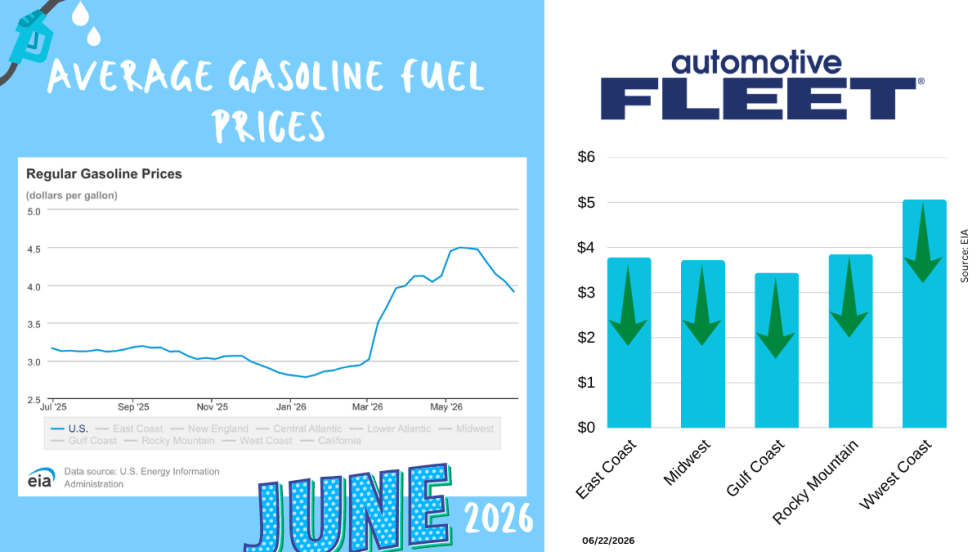
June Fuel Update: Prices Fall Below $4
Drivers are finally getting some relief at the pump. The national average gas price has dropped below $4 a gallon for the first time in months, with prices falling in 47 states as oil markets react to developments in U.S.-Iran negotiations.
Read More →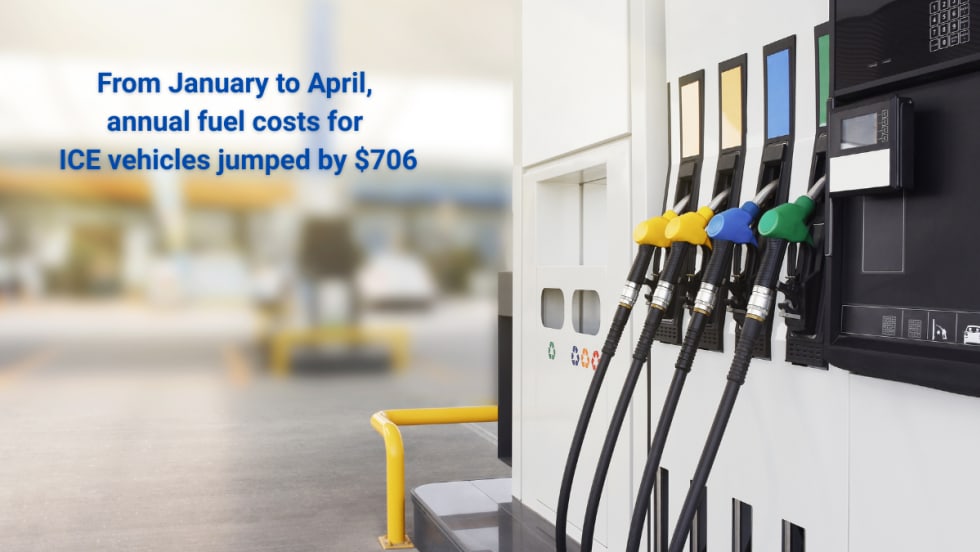
Study: How 2026's Gas Price Hikes Affect Different Vehicle Types
New data from iSeeCars reveals how rising fuel costs have affected different vehicle segments as gasoline prices climbed nearly 46% over the past four months.
Read More →
Are You Tracking Your Fleet's True Total Cost of Ownership?
Bobit Business Media surveyed 190 fleet professionals and found that while most fleets are tracking costs, fragmented systems and data gaps are keeping true TCO visibility out of reach. With rising pressure to control spend in an increasingly volatile environment, the gap between what fleets think they know and what the data actually shows is wider than you might expect. See how your peers are managing costs today and where the industry still has room to improve.
Read More →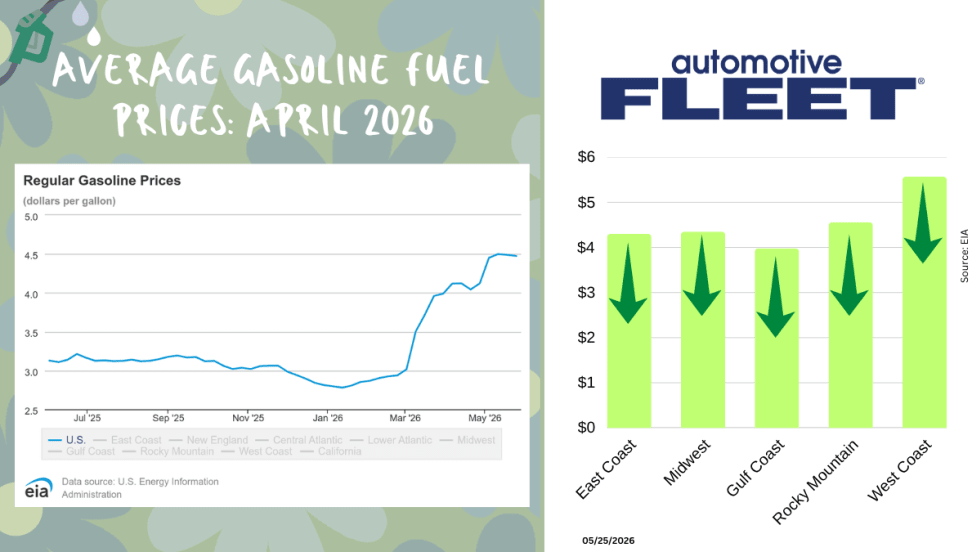
May Fuel Update: All Regions Experience Declines
Gas prices are finally easing in much of the country, but experts warn global tensions could quickly reverse the trend as the national average remains well above last month’s levels.
Read More →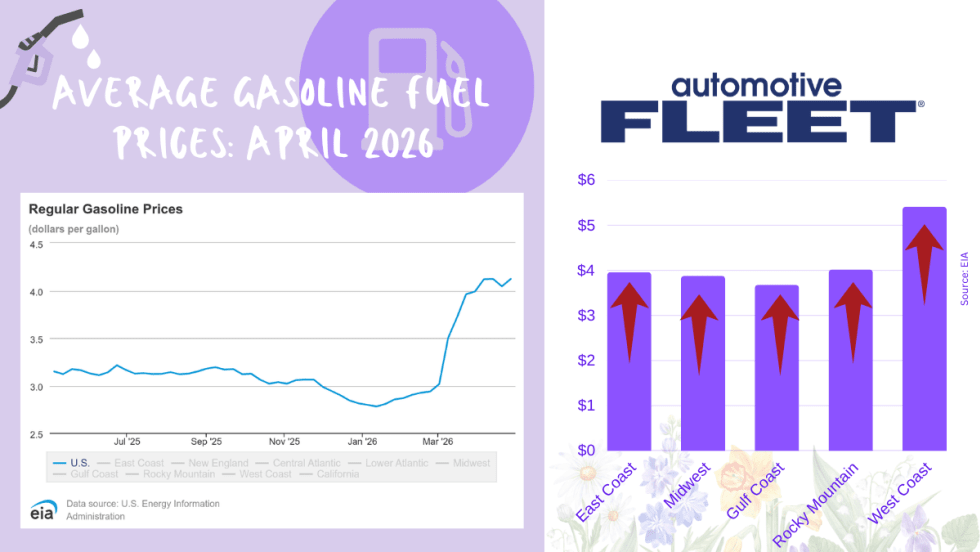
April Fuel Update: Prices Climb Above $4 as Spring Surge Accelerates
National average jumps to $4.04 per gallon, up sharply from last year, with West Coast prices topping $5 and further increases expected amid rising oil tensions.
Read More →
Tips from Fleet Managers on Saving Fuel Costs
Fleet leaders share practical strategies to reduce fuel spend through smarter policy, routing, and driver guidance.
Read More →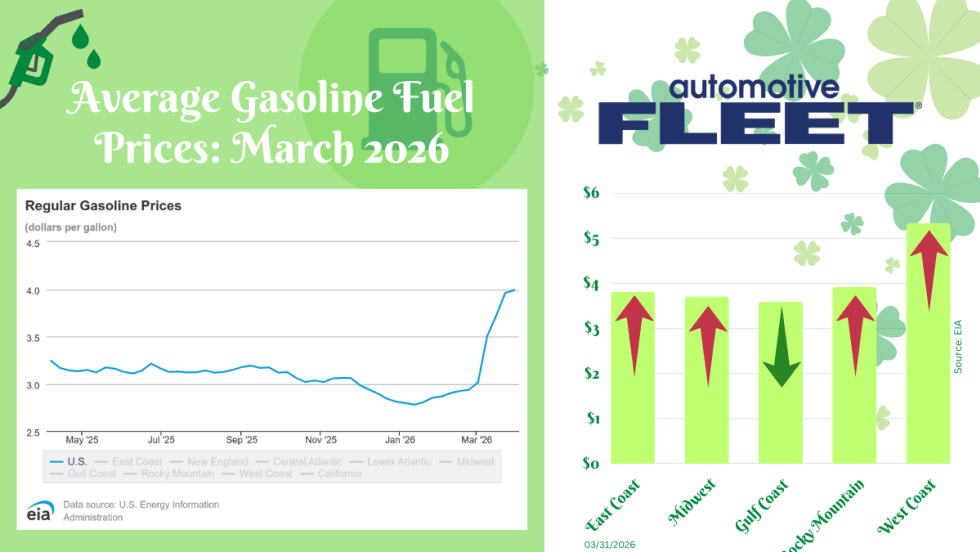
March Fuel Update: Prices Settle With a $4 Average
Fuel prices significantly slowed this week, but a $4 national average is still expected.
Read More →