




Energy Department to Fund 11 Fuel-Efficiency R&D Projects
BENTON HARBOR, Mich. --- U.S. Department of Energy (DOE) Secretary Samuel W. Bodman announced the department will award a total of up to $21.5 million for 11 research and development projects that aim to improve the fuel efficiency of light-duty vehicle engines.
BENTON HARBOR, Mich. --- U.S. Department of Energy (DOE) Secretary Samuel W. Bodman announced the department will award a total of up to $21.5 million for 11 research and development projects that aim to improve the fuel efficiency of light-duty vehicle engines. These projects will focus on three areas: improving fuel utilization in ethanol-powered engines (engine optimization), developing advanced lubrication systems, and exploring high efficiency, clean combustion engines. "We expect this research to make significant strides toward maximizing an engine's performance in a cleaner, more economical manner," Bodman said. "Increasing the use of clean, renewable fuels will not only help reduce our reliance on imported oil, but will also help reduce greenhouse gas emissions for a more secure energy future." Combined with industry investment, the 11 projects will total nearly $43 million to support improvement of engine and combustion systems. Improving the engine of an FFV can increase performance and fuel economy, and decrease emissions. Funding is expected to begin this year (Fiscal Year 2007, $3.1 million) and continue through FY2010 (FY’08 - $8.6 million; FY’09 - $7.4 million; FY’10 - $2.6 million), subject to appropriations from Congress. Seven of the 11 projects selected total up to $15.3 million in DOE funding and will focus specifically on improving flexible-fuel engines and light-duty vehicles that operate on ethanol-gasoline blends up to 85 percent ethanol by volume (E-85). Research will seek to take advantage of favorable properties of ethanol blends without diminishing gasoline fuel efficiency. Projects selected for negotiation of awards include: Delphi Automotive Systems LLC in Troy, Mich., has been selected for negotiation of an award of up to $2.2 million for a project to demonstrate a vehicle with an E-85 optimized engine, yielding up to 30 percent fuel efficiency improvement. Wayne State University will partner with Delphi. Ford Motor Co. in Dearborn, Mich., has been selected for negotiation of an award of up to $3.2 million for a project to explore the use of knock-suppression properties of ethanol with increased compression ratios to allow use of smaller, more fuel efficient engines. General Motors Corp. in Pontiac, Mich., has been selected for negotiation of an award of up to $1.9 million for a project to develop a cooled exhaust gas recirculation (EGR) combustion prototype, allowing for smaller engines without loss of engine power. This could result in as much as a 15 percent fuel economy improvement. General Motors will partner with Ricardo Inc. for this effort. Robert Bosch LLC in Farmington Hills, Mich., has been selected for negotiation of an award of up to $1.5 million for a project to implement an integrated hardware-software system, yielding gasoline-like fuel economy when operating on E-85. Robert Bosch will partner with Ricardo and University of Michigan for this effort. Siemens Government Services Inc. in Reston, Va., has been selected for negotiation of an award of up to $3 million for a project to investigate the potential of a turbocharged, direct-injection engine operating on E-85 to improve combustion and fuel economy as well as lower exhaust emissions. Siemens will partner with AVL Engineering and Rousch Engineering for this effort. TIAX LLC in Cambridge, Mass., has been selected for negotiation of an award of up to $1.2 million for a project to develop a novel, high-efficiency engine system for an FFV that not only operates on any blend of ethanol up to E-85, but is projected to exceed the efficiency of a conventional gasoline engine when operated with the highest blends of ethanol (e.g., E85 or higher). TIAX will partner with Monsanto and John Deere for this effort. Visteon Corp. in Van Buren Township, Mich., has been selected for negotiation of an award of up to $2.3 million for a project to achieve gasoline-like fuel economy when using E-85 by minimizing thermal, dynamic, volumetric and other system efficiency losses. Visteon will partner with DOE's Argonne National Laboratory, Mahle Powertrain and Michigan State University for this effort. Caterpillar Inc. in Mossville, Ill., has been selected for negotiation of an award for up to $491,000 to develop an environmentally friendly lubricant additive for enhancing an engine's fuel efficiency. Caterpillar will partner with DOE's Argonne National Laboratory, NanoMech LLC and the University of Arkansas for this effort. Three projects have been selected for negotiation of awards up to $5.7 million to develop advanced combustion engines for light-duty vehicles. Selected projects will take advantage of complementary properties among combustion, fuels, and emission control technologies to develop clean, high-efficiency engines. Projects selected for negotiation of awards include: Cummins Engine Company in Columbus, Ind., has been selected for negotiation of an award of up to $2.4 million for a project to improve fuel efficiency of a state-of-the-art light-duty diesel engine by 10.5 percent, while maintaining Tier 2, Bin 5 emission levels. Cummins will partner with Daimler-Chrysler and BP for this effort. Ford has been selected for negotiation of an award of up to $1.3 million for a project to use diesel-boosting technologies to improve efficiency and performance of advanced, low-temperature combustion engines. Ford will partner with ConceptsNREC, Wayne State University and FEV Global for this effort. Michigan State University in East Lansing, Mich., has been selected for negotiation of an award of up to $2 million for a project to develop advanced, low-temperature combustion designs for diesel engines using biofuel blends optimized for engine performance. Michigan State will partner with Ford Motor Co. for this effort.
More Fuel

Bob Adamsky on Fuel Volatility: "Don't Panic, Have a Plan."
When it comes to up and down fuel prices, Adamsky has a message for fleets: “Don’t panic.”
Read More →
How Fleets Can Gain Control of Non-Fuel Spend
Fuel often gets the spotlight, but non-fuel expenses can have a major impact on fleet costs. Ramel Lindsay of U.S. Bank Voyager discusses how fleets can gain better visibility and control over these often-overlooked expenditures.
Read More →
Fuel is Just the Start: How Middle East Tensions are Driving Up Fleet Maintenance Costs
The Middle East conflict is doing more than pushing up fuel prices. It’s also raising the cost of key maintenance products your fleet depends on, from motor oil to tires to windshield wipers. Here’s what you need to know about this budget-busting situation.
Read More →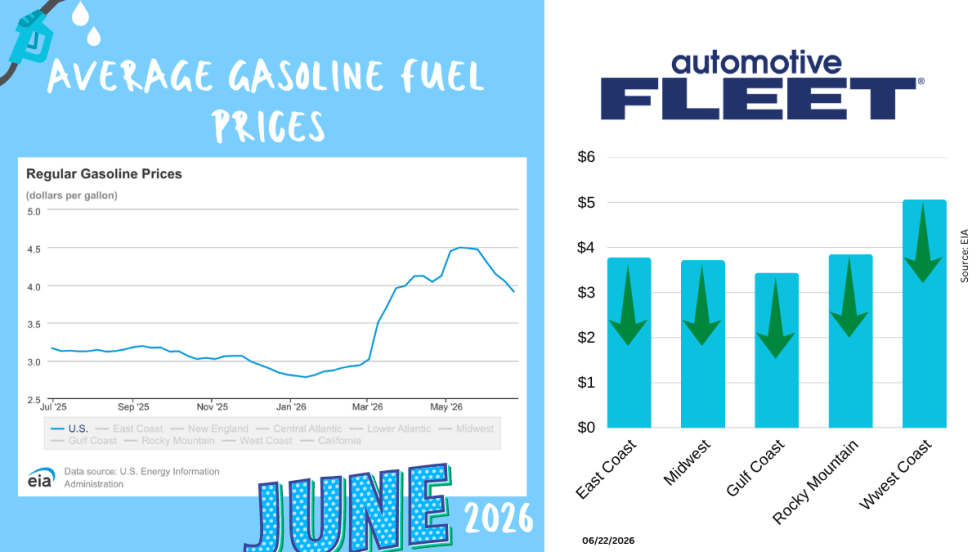
June Fuel Update: Prices Fall Below $4
Drivers are finally getting some relief at the pump. The national average gas price has dropped below $4 a gallon for the first time in months, with prices falling in 47 states as oil markets react to developments in U.S.-Iran negotiations.
Read More →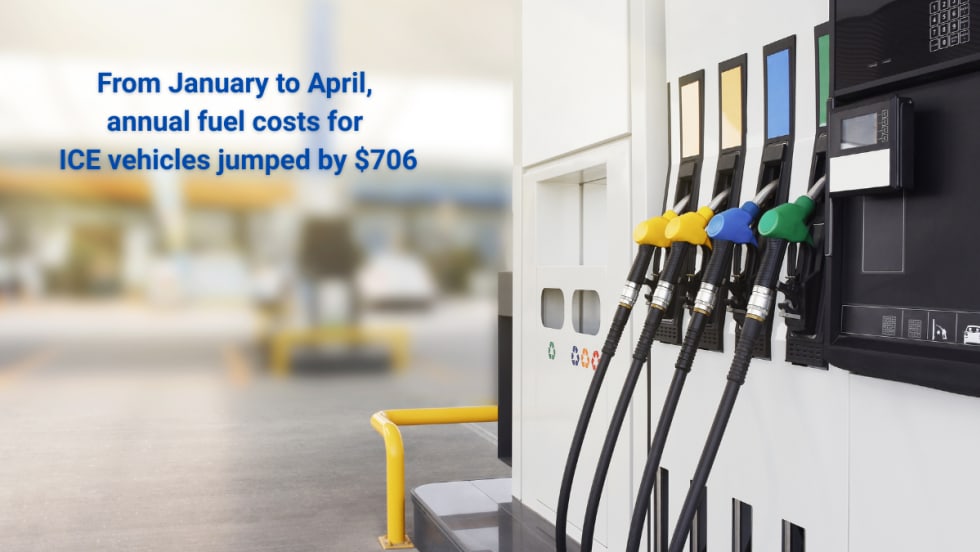
Study: How 2026's Gas Price Hikes Affect Different Vehicle Types
New data from iSeeCars reveals how rising fuel costs have affected different vehicle segments as gasoline prices climbed nearly 46% over the past four months.
Read More →
Are You Tracking Your Fleet's True Total Cost of Ownership?
Bobit Business Media surveyed 190 fleet professionals and found that while most fleets are tracking costs, fragmented systems and data gaps are keeping true TCO visibility out of reach. With rising pressure to control spend in an increasingly volatile environment, the gap between what fleets think they know and what the data actually shows is wider than you might expect. See how your peers are managing costs today and where the industry still has room to improve.
Read More →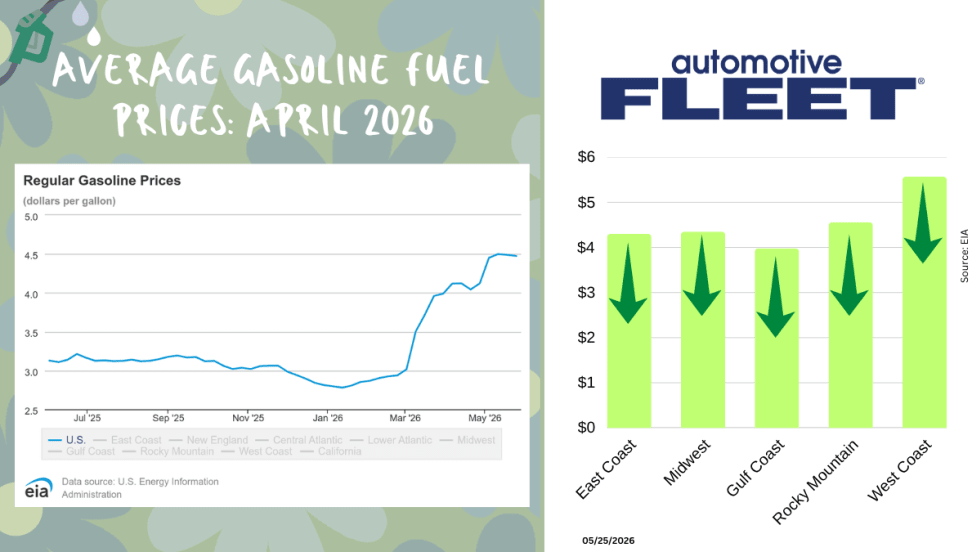
May Fuel Update: All Regions Experience Declines
Gas prices are finally easing in much of the country, but experts warn global tensions could quickly reverse the trend as the national average remains well above last month’s levels.
Read More →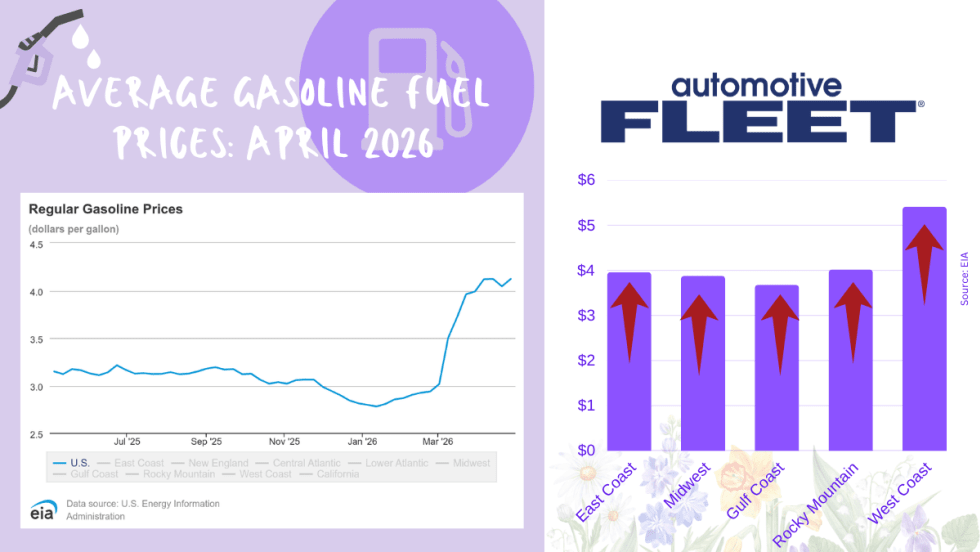
April Fuel Update: Prices Climb Above $4 as Spring Surge Accelerates
National average jumps to $4.04 per gallon, up sharply from last year, with West Coast prices topping $5 and further increases expected amid rising oil tensions.
Read More →
Tips from Fleet Managers on Saving Fuel Costs
Fleet leaders share practical strategies to reduce fuel spend through smarter policy, routing, and driver guidance.
Read More →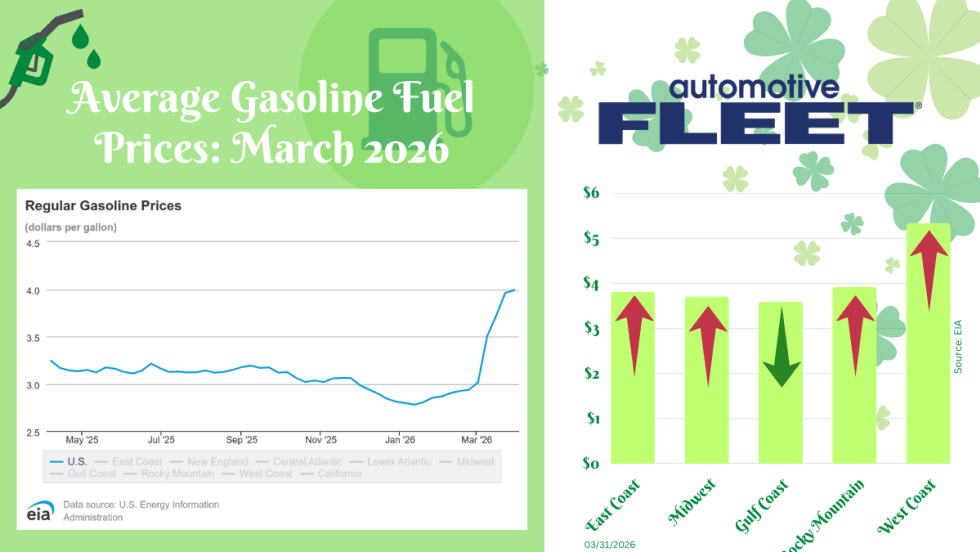
March Fuel Update: Prices Settle With a $4 Average
Fuel prices significantly slowed this week, but a $4 national average is still expected.
Read More →