




Energy Department Explains Diesel Fuel Pricing Trends
WASHINGTON, D.C. --- For U.S. petroleum product markets, the end of summer means a shift in focus from gasoline to heating oil and diesel fuel.
WASHINGTON, D.C. --- For U.S. petroleum product markets, the end of summer means a shift in focus from gasoline to heating oil and diesel fuel. With most of August behind us, and with gasoline inventories in the upper half of the average range, market participants feel reasonably sure that gasoline supplies are ample, absent any major disruption over the next several days, the department's Energy Information Administration (EIA) said. As a result, the NYMEX near-month futures price for reformulated gasoline has dropped nearly 34 cents per gallon between Aug. 1 and Aug. 22. However, as the market has shifted its focus towards heating oil and other distillate fuels like diesel fuel, there has not been anything close to the same type of price decline in distillate fuels. The near-month futures price for heating oil is relatively unchanged from Aug. 1 to Aug. 22, down about 4 cents per gallon during this period, and up over 14 cents per gallon from the summer low set on June 19. Why have the two products diverged in their respective price paths, and what does this mean for the near-term future? Part of the reason that distillate fuel products (diesel fuel and heating oil) have not seen the same pattern in spot or futures prices is the move towards ultra-low-sulfur diesel, the EIA explained in its most recent weekly report. With the transition from diesel fuel with a sulfur content of up to 500 parts per million (ppm) to diesel fuel with a sulfur content of up to only 15 ppm taking place between June 1 and Oct. 15, some temporary regional dislocations have already occurred. These dislocations can occur for many reasons, including anything from difficulty in making ultra-low-sulfur diesel fuel at a particular refinery, to issues with storage terminals as they may draw down inventory levels of regular diesel fuel to make room for ultra-low-sulfur diesel fuel, to potential problems with the distribution of ultra-low-sulfur diesel fuel through pipeline systems. Even if no major problems surface, the chance that they may occur is high enough to cause market participants to pay a little bit more than they would otherwise, to hedge against the possibility of paying significantly more should a problem occur, thus placing more upward pressure on prices. Also, the shift in focus from gasoline to distillate fuel in the late summer and early fall, followed by a shift back to gasoline in the late winter and early spring, has been a phenomenon growing in importance over the last few years, the EIA said. With limited spare capacity throughout the supply chain, markets don't have the luxury of looking too far ahead and instead concentrate on the upcoming cycle. As a result, concerns about the future tend to be magnified for those products the market currently has in its sights. Oil markets continue to face many uncertainties, the EIA said. While year-to-date hurricane activity has been minimal, hurricane season is far from over. The situation between the United Nations and Iran concerning Iran's nuclear program continues to dominate oil market headlines, and concerns about a potential oil supply disruption related to Iran continue to affect crude oil prices. Apprehension about crude oil disruptions elsewhere in the world linger as well, the EIA pointed out. Thus, while gasoline prices may continue to drop after Labor Day (absent any major disruption), diesel fuel and heating oil prices may remain elevated, as the market turns its focus from gasoline towards distillate fuel.
More Fuel
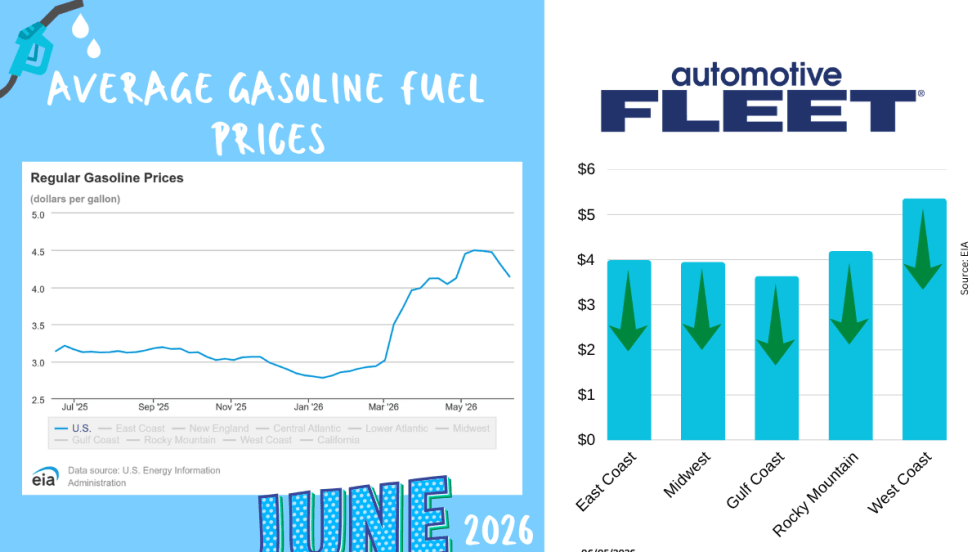
June Fuel Update: Prices Continue to Fall
While prices have continued to decline for four straight weeks, the next weeks don't look as promising.
Read More →
Study: How 2026's Gas Price Hikes Affect Different Vehicle Types
New data from iSeeCars reveals how rising fuel costs have affected different vehicle segments as gasoline prices climbed nearly 46% over the past four months.
Read More →
Are You Tracking Your Fleet's True Total Cost of Ownership?
Bobit Business Media surveyed 190 fleet professionals and found that while most fleets are tracking costs, fragmented systems and data gaps are keeping true TCO visibility out of reach. With rising pressure to control spend in an increasingly volatile environment, the gap between what fleets think they know and what the data actually shows is wider than you might expect. See how your peers are managing costs today and where the industry still has room to improve.
Read More →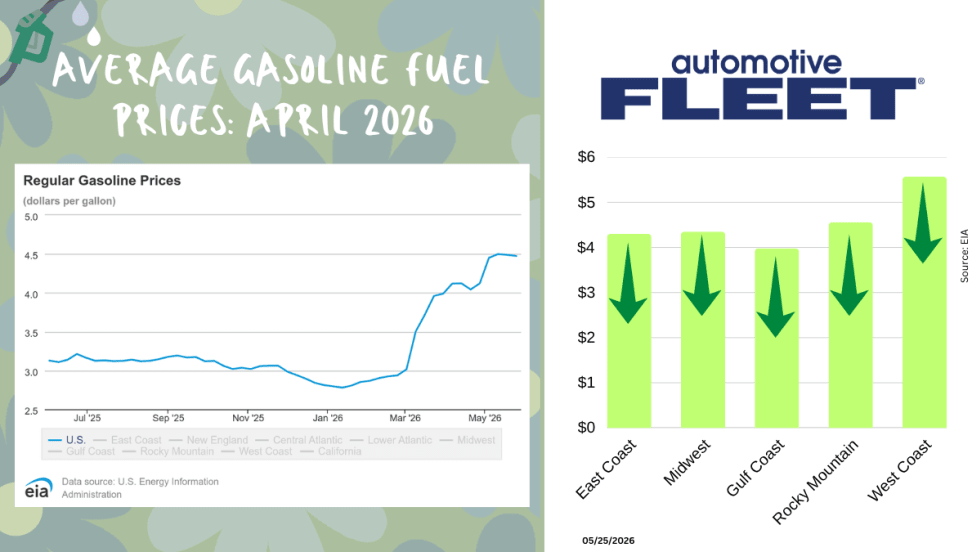
May Fuel Update: All Regions Experience Declines
Gas prices are finally easing in much of the country, but experts warn global tensions could quickly reverse the trend as the national average remains well above last month’s levels.
Read More →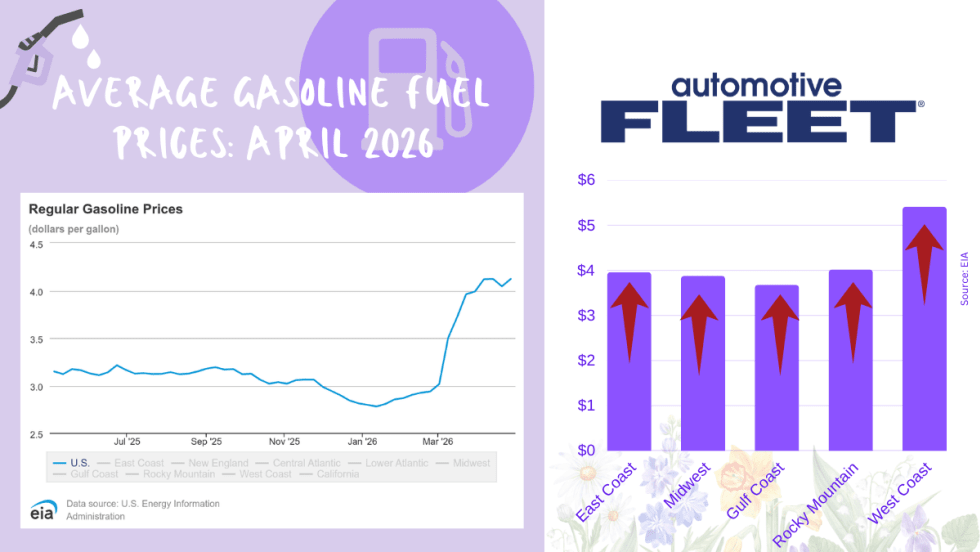
April Fuel Update: Prices Climb Above $4 as Spring Surge Accelerates
National average jumps to $4.04 per gallon, up sharply from last year, with West Coast prices topping $5 and further increases expected amid rising oil tensions.
Read More →
Tips from Fleet Managers on Saving Fuel Costs
Fleet leaders share practical strategies to reduce fuel spend through smarter policy, routing, and driver guidance.
Read More →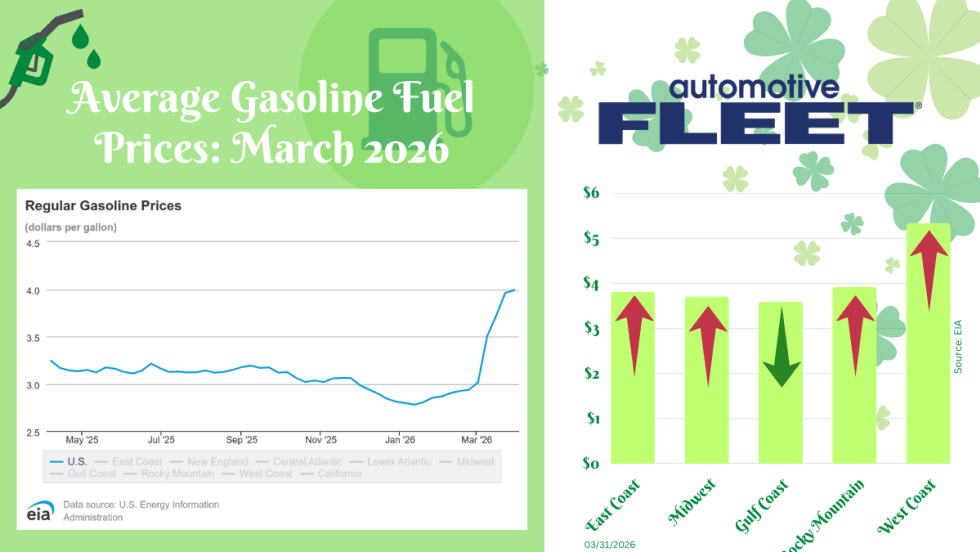
March Fuel Update: Prices Settle With a $4 Average
Fuel prices significantly slowed this week, but a $4 national average is still expected.
Read More →
Bob Adamsky on Fuel Volatility: “Don’t Panic — Have a Plan”
With oil prices rising again, AWP Safety’s fleet manager shares how to respond to rising fuel costs and how the right strategy can turn fuel spikes into cost-saving opportunities.
Read More →
Oil Market Turbulence Is Complicating Fleet Cost Planning
Rapid swings in crude oil prices driven by the conflict in the Middle East could create longer-term cost pressures for fleets, affecting fuel prices, supply chains, and vehicle strategy, says NTEA’s Andrew Wrobel.
Read More →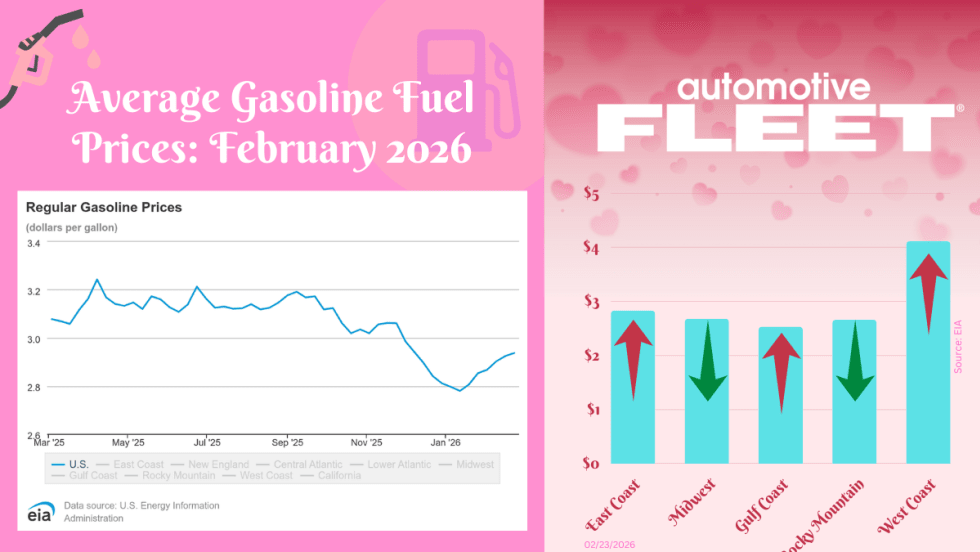
February Fuel Update: Prices Inch Higher for Third Week in a Row
The final February fuel update reveals prices continuing to inch higher for the third week in a row.
Read More →