




Electronics to Improve Performance in 2004 Explorer
Ford Motor Co. announced June 20 that electronic throttle control (ETC) is one of several new technologies it will introduce next year as standard equipment on the 2004 Explorer to help increase its fuel economy by about 5 percent while reducing emissions.

Ford Motor Co. announced June 20 that electronic throttle control (ETC) is one of several new technologies it will introduce next year as standard equipment on the 2004 Explorer to help increase its fuel economy by about 5 percent while reducing emissions. Ford says ETC will enhance the performance feel of the Explorer. Both engines available on the 2004 Ford Explorer, the 4.0-liter V-6 and the 4.6-liter V-8, will feature “drive-by-wire,” a torque-based, “intelligent” ETC with a gasoline engine. Advanced engine computing power is the key to optimizing the operation of this technology. Ford says its Powertrain Control Module (PCM) and Electric Controller Area Network (CAN) will work together to provide power on demand to the driver for more responsive “tip-in.” According to Ford, a number of other technologies to be introduced on the 2004 Explorer also help improve its fuel economy by reducing friction and parasitic energy loss. These technologies include coated pistons, torque converter upgrade, electronic returnless fuel system, low rolling resistance tires, synthetic rear axle lube, and an advanced exhaust gas return (EGR) system. “Bundling together several technologies will enable us to deliver to our Explorer customers improvements in fuel efficiency while further lowering emissions levels,” said Bob Himes, engineering director – Ford SUV product development. “This is all part of the difficult work in cost-effectively engineering technologies that increase fuel efficiency without taking away any of the capabilities that have made Explorer the top-selling SUV.” Metro-highway fuel economy for the most popular 2004 model — the 4x4 with V-6 engine — is expected to increase to 20 mpg from 19 mpg on the 2003 Explorer. Fuel economy for the base model (4x2 V-6) will increase to 21 mpg from 20 mpg metro-highway. Similarly, metro-highway fuel economy for Explorers with the optional V-8 engine will increase to 19 mpg on 4x4 models from 18 mpg on the 2003 Explorer, and 20 mpg for 4x2 models from 19 mpg on the 2003, according to the company. The 2004 Explorer equipped with 4.6-liter V-8 engine will meet the U.S. federal govern-ment’s new standard for Low Emission Vehicles (LEV II). “We will introduce the Ford Escape Hybrid next year that will be the cleanest SUV available while delivering nearly 40 mpg in stop-and-go city driving,” said Himes. Ford made the 2004 Explorer announcement at FutureTruck 2002, an advanced vehicle competi-tion sponsored by Ford, The U.S. Department of Energy, the National Science Foundation, Cisco Systems, and other organizations that concludes this week in California after a week of evaluation events at Ford’s Arizona Proving Grounds. FutureTruck 2002 is a competition in which teams of engineering students from 15 universities throughout North America re-engineer Ford Explorers with alternative propulsion systems to maximize fuel efficiency and minimize the impact of greenhouse gases without compromising safety, performance, or customer appeal.
More Operations
The Top 300 Commercial Fleets
The Top 300 Commercial Fleets: See the List
Read More →

Your Local Dealer Knows More Than You Think
Your local dealer can provide an information advantage that extends well beyond courtesy deliveries.
Read More →


Fleet Meets: Austin Schutte
Here are some industry insights, personal touches, and words of advice from the CEO and Founder of Anew Solutions.
Read More →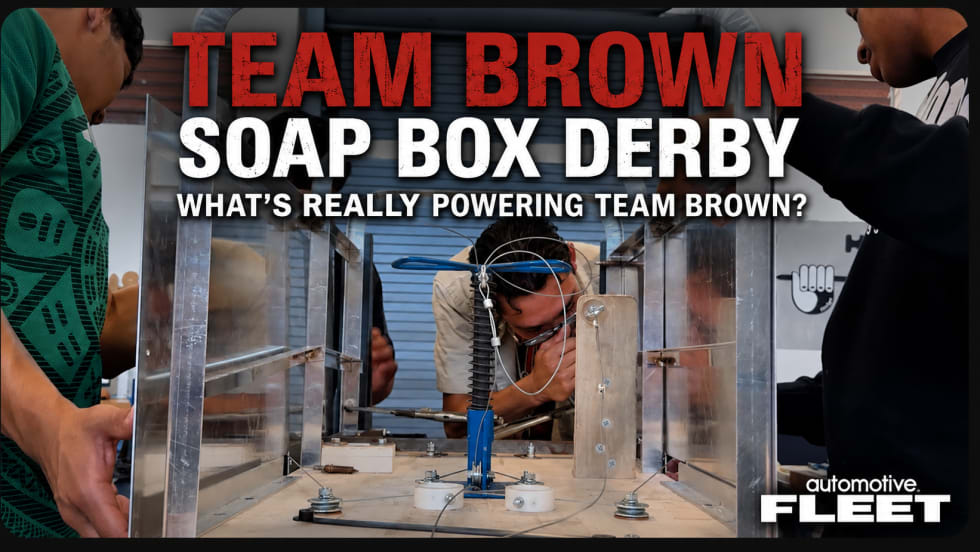
Soap Box Derby Challenge: What’s Powering Team Brown
The car is coming together, the students are solving real build problems, and the fleet industry is helping push Team Brown toward the starting line.
Read More →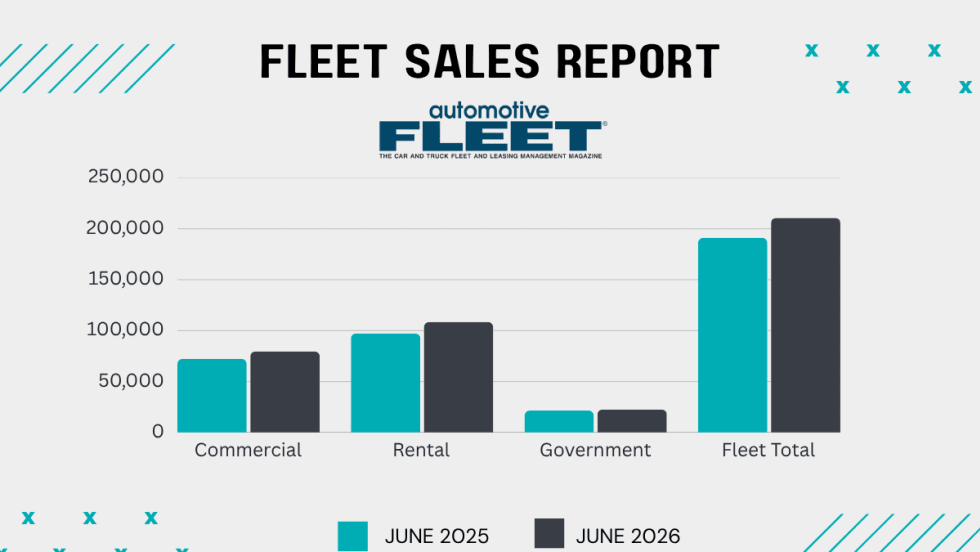
Commercial Fleet Sales Contribute To June, YTD Gains
The fleet sector has boosted its vehicle purchases at a reliable pace in the first half of this year compared with 1H 2025.
Read More →
What Fleet Managers Really Want From Vendors
From customer service frustrations and technology breakdowns to RFQs, change management, and the growing impact of turnover across the industry, this conversation pulls back the curtain on the real operational challenges fleet managers are navigating every day.
Read More →
Fleet Safety Masterclass: Industry Leaders on Storytelling, Strategy & Innovation
In this special masterclass episode, industry leaders break down what it really takes to build safer fleets in today’s increasingly distracted and data-driven world.
Read More →
Integrating Legacy Fleet Systems and Historical Data
In this episode, we bring together fleet and technology leaders to unpack the realities of data integration, system migrations, and the evolving role of AI in fleet management.
Read More →
From Resistance to Results: Change Management Strategies for Fleets
From new technologies and safety programs to evolving regulations, fleets are under constant pressure to adapt. But as Dr. Betz explains, success isn’t about the system you implement—it’s about whether your people actually use it.
Read More →