





See Also: Survey: 76% of People Say Drivers are More Reckless than in 2020
Driver Monitoring System Reduces Inattention, Drowsiness by 20% on Highways
Hyundai Mobis conducted a year-long pilot project to evaluate the effectiveness of its M.Brain technology to combat drowsy driving.
April 28, 2022
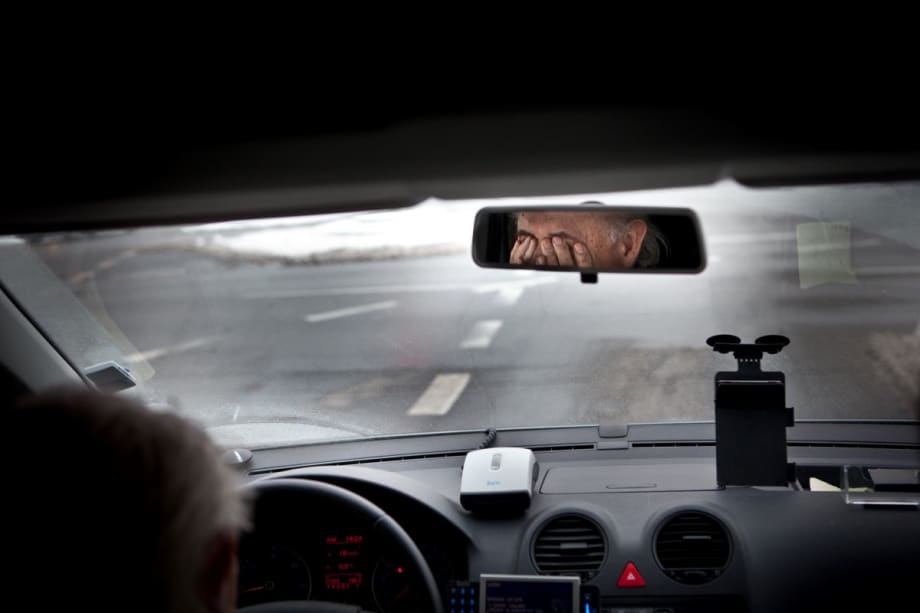
In 2019, 697 people died due to drowsy driving. New technologies can help fight the problem.
Photo: unsplash.com/Johan Funke
2 min to read
A recent analysis finds that M.Brain, a driver monitoring system that uses brain waves, can reduce drowsiness and inattentive driving by up to one-third, according to Hyundai Mobis, the developer of the technology.
Hyundai Mobis teamed up with the Gyeonggi Research Institute to conduct a year-long pilot project on the practical effects of M.Brain, which was applied on drivers on Gyeonggi-do public buses.
M.Brain is a technology that grasps the driver's condition in real time by monitoring the brain waves around the ears through a pair of earsets worn by the user. When a driver becomes inattentive, M.Brain uses visual, sound, and haptic alerts to help the driver recover his or her attention.
The findings were significant. Drivers who put on M.Brain showed higher concentration levels and were less exposed to the dangers of being inattentive.
Specifically, using M.Brain, drivers cut down on their inattentiveness by up to 30% after meals, which is when drowsiness is most frequent. Inattentiveness leads to dangerous situations in which the driver falls asleep or cannot keep his or her eyes on the road ahead. M.Brain reduced inattentive driving by about 20% on highways where drowsy driving could result in a deadly collision.
In addition, M.Brain can help drivers recover and look ahead quickly even when they doze off or lose focus. The technology detects inattentive driving in real time and alerts the driver through seat vibrations or warning sounds.
The research showed that using M.Brain attention can be restored in 2.3 seconds maximum — that’s approximately three times faster than the 6.7 seconds it typically takes without the technology.
Drowsy driving was responsible for 697 lost lives in the U.S. in 2019 alone, according to the National Highway Traffic Safety Administration.
More Safety

What’s Next for Fleet? Safety, AI & Industry Recognition | AF News Recap
Could your company's culture be encouraging distracted driving? This week, we're exploring how workplace expectations affect driver safety, what AI, EVs, and autonomous vehicles could mean for the future of fleet management, and how fleet professionals can strengthen their award nominations.
Read More →
Does Your Fleet's Culture Encourage Distracted Driving?
What happens when the people responsible for enforcing safety rules are the ones setting the wrong example? The answer may reveal why some of the biggest risks to fleet drivers have little to do with what's written in the employee handbook.
Read More →
Sponsored•October 1, 2026
Fleet Manager’s Ultimate Playbook: Navigating the New Standard in OEM Connectivity
Rising operating costs, driver safety concerns, and unplanned downtime are putting unprecedented pressure on modern fleets. Discover how fleet managers use embedded OEM connectivity and real-time vehicle data to cut TCO, prevent downtime, and protect drivers without aftermarket telematics hardware.
Read More →
From Driver Well-Being to EV Charging | AF News Recap
Mental health belongs in the fleet safety conversation. This week, we’re looking at five ways fleets can support employee well-being before a crisis, plus Holman’s expansion in Mexico, new one-day Fleet Forward passes, and why EV charging demand is outpacing infrastructure growth.
Read More →
Nexar-Nauto Merger Aims to Give Fleets Better Safety Intelligence Through Larger Driving Dataset
Stefan Heck tells Automotive Fleet that combining more than 10 billion miles of driving history with Nexar's AI models will give fleets deeper insights into driver risk and roadway conditions than either company could provide independently.
Read More →
Don't Wait for a Crisis: 5 Ways to Build Mental Health Into Your Fleet Safety Program
For Suicide Prevention Month, fleet and safety leaders have an opportunity to put mental health where it belongs: at the center of workplace safety.
Read More →
How Camera Data Can Strengthen a Fleet’s Insurance Renewal
Insights from a commercial insurance carrier and a broker show how fleets can turn video telematic data, driver coaching, and improved claims results into a stronger case at insurance renewal.
Read More →
The Safest Fleets Aren’t the Ones with the Most Technology
You’ve made the telematics investment. Here’s how to capture the other half of its value and build the safest fleet on the road.
Read More →
Sponsored•August 7, 2026
Hidden in Plain Sight: Fleet Compliance Risks
Fleet compliance isn't just about having policies — it's about consistently enforcing them. This practical guide reveals six hidden compliance risks common in public sector and shared fleet operations and outlines proven strategies to improve visibility, accountability, and audit readiness
Read More →
NETS Sets 2026 Fleet Safety Benchmark Conference for Indianapolis
The Sept. 15–17 program will feature fleet benchmarking data, case studies, emerging technologies, and implementation strategies while running alongside the NSC Safety Congress & Expo.
Read More →