




DOT to Limit Hours of Long-Haul Truckers
The U.S. Department of Transportation has proposed limiting truck drivers to 12 hours a day behind the wheel and requiring that long-haul rigs carry electronic recorders to monitor their schedules.

The U.S. Depart of transportation has proposed limiting truck drivers to 12 hours a day behind the wheel and reuiring that long-haul rigs carry electronic recorders to monitor their schedules. The proposed regulations are part of a broader government effort to address long-standing safety problems from a growing number of bigger, faster trucks on the highways. Responding to public concern, Congress last year created a truck safety agency to improve the industry’s record. Large trucks accounted for three percent of vehicles, but crashes involving them represent 13 percent of traffic deaths, 5,203 in 1999. Drowsy truck drivers are estimated to cause more than 750 fatalities annually. The contentious issues could take a year or more to resolve, but the government finally seems on its way to modernizing 60-year-old safety rules written when trucks averaged 25 mph. The use of on-board recorders quickly emerged as one of the most controversial parts of the proposal. The recoders would replace paper logbooks, which are easy to falsify, on which drivers now notes their hours. National Transportaion Safety Board Chairman Jim Hall has long urged the use of recorders on trucks and buses. Only long-haul trucks would be required to carry the devices, which would automatically register start and stop times. Studies show that the average driver now works 65 to 70 hours a week, above the legal limit of 60 hours. In another change, drivers could spend no more than 12 hours behind the wheel in a 24-hour period. This is controversial with safety groups, though all sides expect the hour rules to be somewhat negotiable. Current rules require drivers to rest after 10 hours behind the wheel. However, in practice, schedules can be drawn up so a driver legally spends as much as 16 hours behind the wheel in a 24-hour period. The Department of Transportation said its proposed 12-hour-a-day limit will help establish a more natural balance between work and rest. But safety groups say 12 hours is too much. The trucking industry feels that 12 hours of rest is excessive. The American trucking Associations predicted such as requirement would dramatically worsen the current shortage of drivers and create economic bottlenecks and more traffic. “This would force today’s sophisticated e-commerce, point-and-click, just-in-time delivery systems into old economy inefficiencies,” said Walter McCormick, president of the American Trucking Associations in Alexandria, VA. “Warehouses would bulge with goods as the freight backlog ballooned due to the massive shortage of trucks and drivers.” McCormick also said the proposal would result in a 50 percent increase in the number of trucks on the highways. “That translates into as many as 180,000 aditional drivers and trucks on the road just to keep the current economy moving,” he said.
More Operations

Gary Van Orden Retires After Nearly Four Decades in Commercial Fleet
From answering customer calls at Ford Motor Company to leading fleet sales across multiple OEMs and a fleet management company, Gary Van Orden's career reflects nearly four decades of leadership in commercial fleet.
Read More →
How Stellantis Plans to Get Ahead of Fleet Downtime
Vehicle acquisition may grab the headlines, but fleet uptime increasingly determines operating success. Darren Bradshaw of Mopar North America gives the details.
Read More →
Hyundai Releases 2027 Commercial Program Incentives
The 2027 Model Year "Fleet Street Incentives" are available to commercial and government fleets.
Read More →


It's All Downhill from Here! Fleet Industry Raises $22,000 for Skilled Trades Scholarships
Work Truck’s Lauren Fletcher and Automotive Fleet’s Chris Brown turned a friendly racing rivalry into $22,000 for automotive technology and skilled trades scholarships.
Read More →
The Top 300 Commercial Fleets
The Top 300 Commercial Fleets: See the List
Read More →

Your Local Dealer Knows More Than You Think
Your local dealer can provide an information advantage that extends well beyond courtesy deliveries.
Read More →
Fleet Meets: Austin Schutte
Here are some industry insights, personal touches, and words of advice from the CEO and Founder of Anew Solutions.
Read More →
Soap Box Derby Challenge: What’s Powering Team Brown
The car is coming together, the students are solving real build problems, and the fleet industry is helping push Team Brown toward the starting line.
Read More →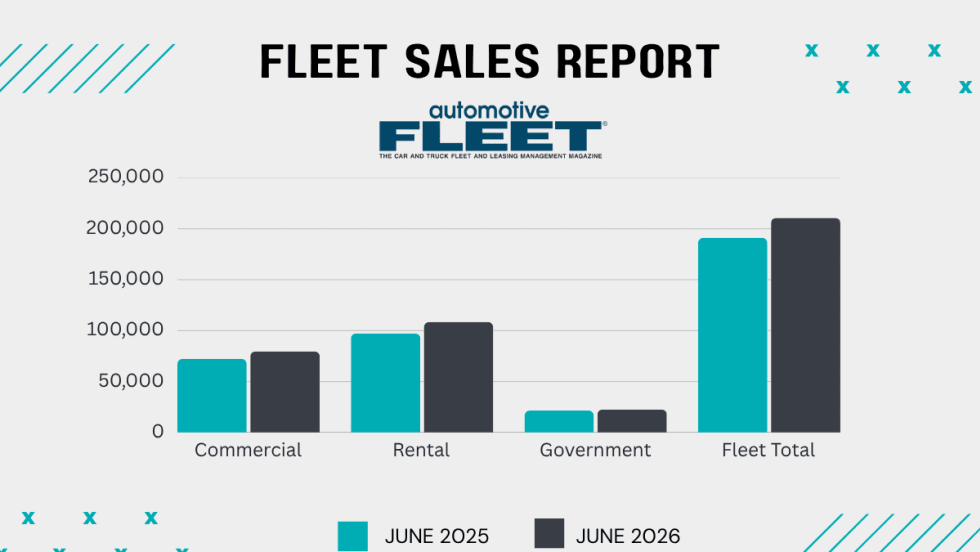
Commercial Fleet Sales Contribute To June, YTD Gains
The fleet sector has boosted its vehicle purchases at a reliable pace in the first half of this year compared with 1H 2025.
Read More →