




Daylight Saving Time May Bring More Drowsy Drivers
Daylight saving time came to an end on Nov. 4 and for many fleet drivers that means more time each day driving in the dark. Less hours of sunlight can lead to fatigue behind the wheel during the fall and winter months.

The end of daylight saving time can also bring increased risk of drowsy fleet drivers.
Photo via Kate Sumbler/Flickr.
Daylight saving time came to an end on Nov. 4 and for many fleet drivers that means more time each day driving in the dark. Less hours of sunlight can lead to fatigue behind the wheel during the fall and winter months.
Several organizations from state motor vehicle departments to insurance companies are using this time to caution motorists about the dangers of drowsy driving. Now is a good time for fleet managers to remind commercial drivers about the perils and the precautions they should take.
Drowsy driving remains a serious problem. An estimated 5,000 people lost their lives in crashes that involved a drowsy driver in 2015, according to a report from the Governors Highway Safety Association.
What can fleet managers do? For starters, drivers should be encouraged to get enough sleep. The National Institutes of Health recommends eight hours every night.
The 2018 Sleep in America poll from the National Sleep Foundation shows that only 10% of American adults prioritize their sleep over other aspects of daily living such as fitness/nutrition, work, social life, and hobbies/personal interests.
The National Safety Council likens drowsy driving to driving under the influence of alcohol. Drivers should be reminded that when they are fatigued their reaction time, awareness of hazards and ability to sustain attention all worsen.
In fact, a drowsy driver is three times more likely to get into a crash than an alcohol-impaired driver.
A study by the AAA Foundation for Traffic Safety estimated that 328,000 drowsy driving collisions occur annually. That's more than three times the police-reported number. The same study found that 109,000 of those drowsy driving crashes resulted in an injury and about 6,400 were fatal.
The researchers suggest the prevalence of drowsy driving fatalities is more than 350% greater than reported.
In addition to getting enough sleep, drivers should be reminded to take the following steps in order to avoid fatigue behind the wheel:
Be alert to warning signs: Yawning, struggling to keep one's eyes open and focused; forgetting the last few miles; tailgating or missing traffic signals; and swerving or drifting between lanes of traffic are all signs of fatigue. If a driver has any of these, he or she should pull over and take a walk or a brief 20-minute nap.
Check medications: Drivers should make sure that both their prescriptions and over-the-counter medications do not cause drowsiness.
Take regular breaks: Even when a driver does not think he or she is fatigued, experts recommend taking a break about every 100 miles or two hours.
Get checked for sleep disorders: Drivers who are continually fatigued, should ask their doctors to test them for sleep disorders such as obstructive sleep apnea.
More Safety

Nexar-Nauto Merger Aims to Give Fleets Better Safety Intelligence Through Larger Driving Dataset
Stefan Heck tells Automotive Fleet that combining more than 10 billion miles of driving history with Nexar's AI models will give fleets deeper insights into driver risk and roadway conditions than either company could provide independently.
Read More →
Don't Wait for a Crisis: 5 Ways to Build Mental Health Into Your Fleet Safety Program
For Suicide Prevention Month, fleet and safety leaders have an opportunity to put mental health where it belongs: at the center of workplace safety.
Read More →
How Camera Data Can Strengthen a Fleet’s Insurance Renewal
Insights from a commercial insurance carrier and a broker show how fleets can turn video telematic data, driver coaching, and improved claims results into a stronger case at insurance renewal.
Read More →
The Safest Fleets Aren’t the Ones with the Most Technology
You’ve made the telematics investment. Here’s how to capture the other half of its value and build the safest fleet on the road.
Read More →
Hidden in Plain Sight: Fleet Compliance Risks
Fleet compliance isn't just about having policies — it's about consistently enforcing them. This practical guide reveals six hidden compliance risks common in public sector and shared fleet operations and outlines proven strategies to improve visibility, accountability, and audit readiness
Read More →
NETS Sets 2026 Fleet Safety Benchmark Conference for Indianapolis
The Sept. 15–17 program will feature fleet benchmarking data, case studies, emerging technologies, and implementation strategies while running alongside the NSC Safety Congress & Expo.
Read More →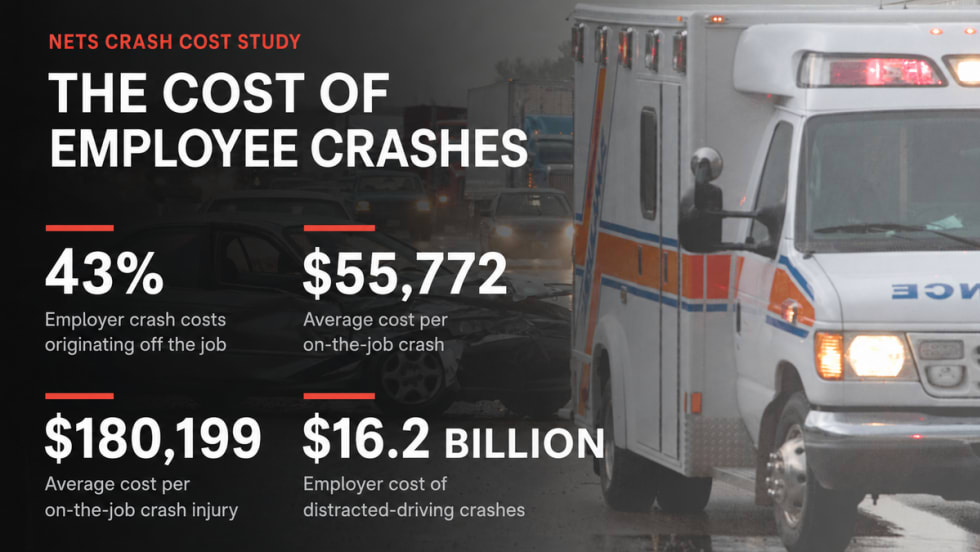
Off-the-Job Crashes Account for 43% of Employers’ $61.7 Billion Crash Burden
NETS quantifies costs dispersed across fleet, risk, HR, and other departments while providing new per-crash benchmarks for employers.
Read More →
Ram Recalls More Than 1.27 Million 1500 Pickups for Seat Belt Anchor Issue
The recall affects certain 2019-2026 Ram 1500 pickups that may have improperly attached second-row seat belt buckle anchors.
Read More →
How Better Visibility Cut Speeding Violations by 48%
Fleet leaders don't need more data, they need clearer visibility into what the data is saying. This case study explores how one utility replaced speeding-event counts with a single metric — miles driven in violation — to strengthen safety and significantly reduce speeding violations.
Read More →
Operation Safe Driver Week: Why the Industry's Oldest Safety Campaign Still Matters to Fleets
A look at how a 2007 enforcement initiative became one of the most consequential weeks on the fleet safety calendar, and what it means for your drivers in 2026.
Read More →