




DaimlerChrysler Outlines Commitment to Alternative Fuels at National Biodiesel Board Conference
SAN ANTONIO – In a speech at the National Biodiesel Board Annual Conference, Deb Morrissett, vice president of regulatory affairs for the Chrysler Group, encouraged the biodiesel industry to continue its development of a national standard for B-20 as automobile manufacturers focus more resources on producing diesel vehicles capable of running on the fuel. “To speed the adoption of biodiesel, and to help harness and direct the diverse research and investment efforts going into its development, we need to expedite setting a national fuel specification for biodiesel, just as we have for other fuels,” said Morrissett. “I'm looking forward to the time when anyone can fuel up with B20, but we're not there yet.” Morrissett also promised that more vehicles capable of running on the renewable fuel are on the horizon. Last month, DaimlerChrysler AG's Chairman Dieter Zetsche introduced the 2007 Dodge Ram 2500 and 3500 with 6.7L Cummins turbodiesel engine offered with B-5 and B-20 biodiesel, available to consumers in March. The heavy-duty truck will meet 2010 truck emissions standards in all 50 states. He also announced the Dodge Ram clean, light-duty turbodiesel engine, that will provide up to 30-percent improved fuel economy and meet 50-state 2010 emissions standards, will be available after 2009. Approximately 15,000 Jeep Liberty CRD diesels were delivered to customers running on B-5. In 2007, Dodge Ram diesel pickups and the Jeep Grand Cherokee CRD with 3.0L common rail turbo-diesel engine will also be fueled with B-5 at the factory. These vehicles are approved for regular use with B-5 biodiesel fuel, and the 2007 Dodge Ram is approved for use of B-20 for commercial, government, and military fleets which use military specification biodiesel fuel. In addition to Morrissett's remarks, Loren Beard, manager of Fuel Legislation, Regulation, and Policy, and Scott Schramm, manager of Regulatory and Technical Affairs, also addressed the group regarding engine warranty issues, the OEM experience with alternative fuels, and navigating new regulations. Advanced diesel technology is part of the Chrysler Group's advanced propulsion technology umbrella, which also includes efficient gasoline engines, hybrids, flex-fuel vehicles, electric vehicles, and a test fleet of more than 100 fuel-cell-powered vehicles. In 2007, DaimlerChrysler will produce more than 250,000 flexible-fuel vehicles (FFVs) capable of running on E-85 fuel, conventional gasoline, or any combination of the two fuels. The company's FFV fleet will increase to nearly 500,000 in 2008. The 2007 FFV lineup includes:
Jeep Grand Cherokee, Jeep Commander, Dodge Durango, and Chrysler Aspen SUVs (4.7L engine).
Dodge Ram and Dodge Dakota pickups (4.7L engine).
Chrysler Sebring sedan (2.7L engine).
Dodge Caravan, Dodge Grand Caravan and Chrysler Town & Country minivans (3.3L engine).
The Chrysler Group’s total sales worldwide in 2006 were 2.7 million vehicles, according to the manufacturer. Sales outside of North America were the highest in a decade with an increase of 15 percent over 2005. On the heels of the company's record product launch year (Chrysler Group launched 10 all-new vehicles in 2006), the company plans to extend that streak with eight all-new products in 2007. Its product lineup includes the Chrysler 300, Jeep Commander, and Dodge Charger.
More Fuel

Study: How 2026's Gas Price Hikes Affect Different Vehicle Types
New data from iSeeCars reveals how rising fuel costs have affected different vehicle segments as gasoline prices climbed nearly 46% over the past four months.
Read More →
Are You Tracking Your Fleet's True Total Cost of Ownership?
Bobit Business Media surveyed 190 fleet professionals and found that while most fleets are tracking costs, fragmented systems and data gaps are keeping true TCO visibility out of reach. With rising pressure to control spend in an increasingly volatile environment, the gap between what fleets think they know and what the data actually shows is wider than you might expect. See how your peers are managing costs today and where the industry still has room to improve.
Read More →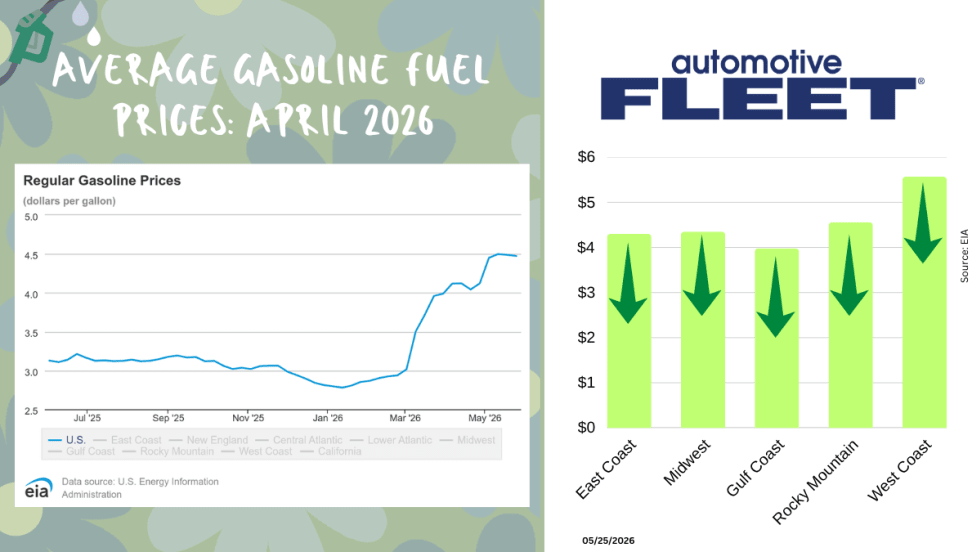
May Fuel Update: All Regions Experience Declines
Gas prices are finally easing in much of the country, but experts warn global tensions could quickly reverse the trend as the national average remains well above last month’s levels.
Read More →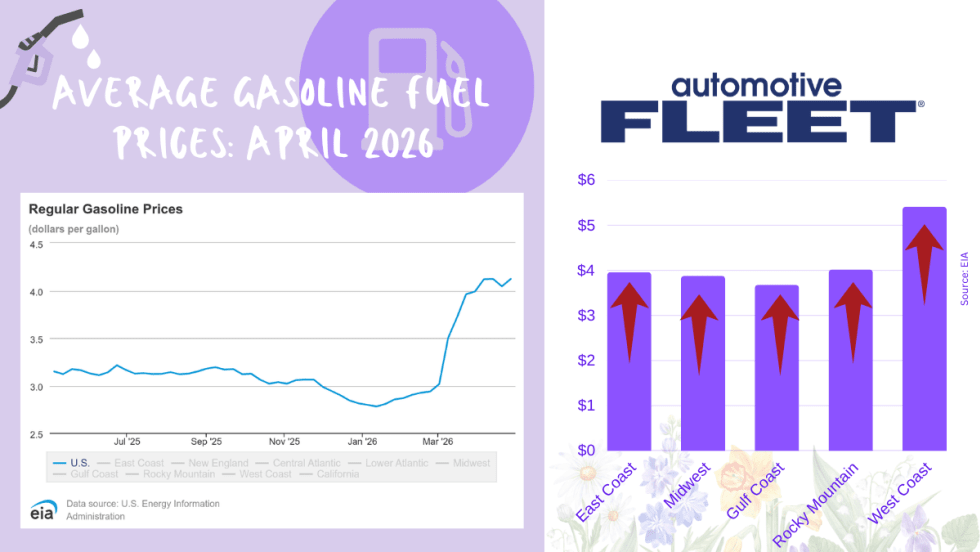
April Fuel Update: Prices Climb Above $4 as Spring Surge Accelerates
National average jumps to $4.04 per gallon, up sharply from last year, with West Coast prices topping $5 and further increases expected amid rising oil tensions.
Read More →
Tips from Fleet Managers on Saving Fuel Costs
Fleet leaders share practical strategies to reduce fuel spend through smarter policy, routing, and driver guidance.
Read More →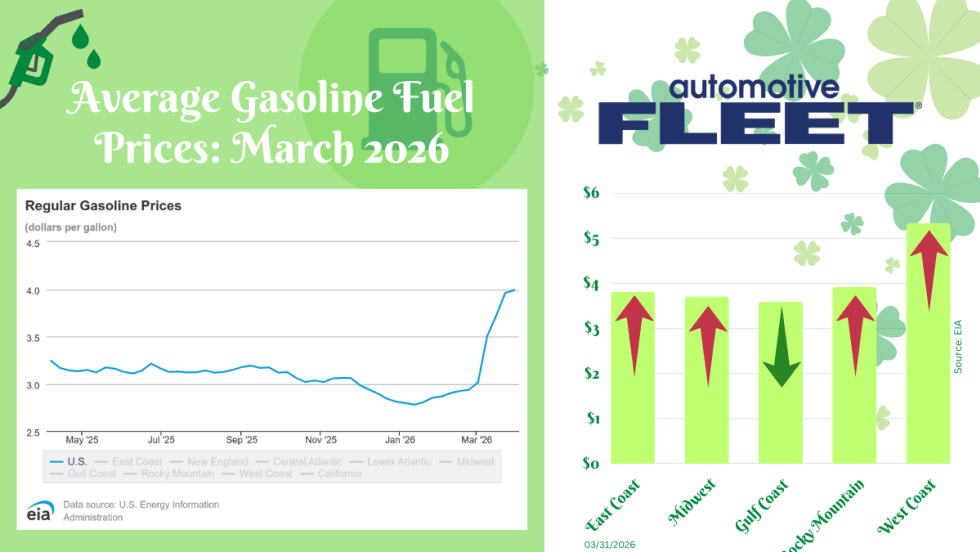
March Fuel Update: Prices Settle With a $4 Average
Fuel prices significantly slowed this week, but a $4 national average is still expected.
Read More →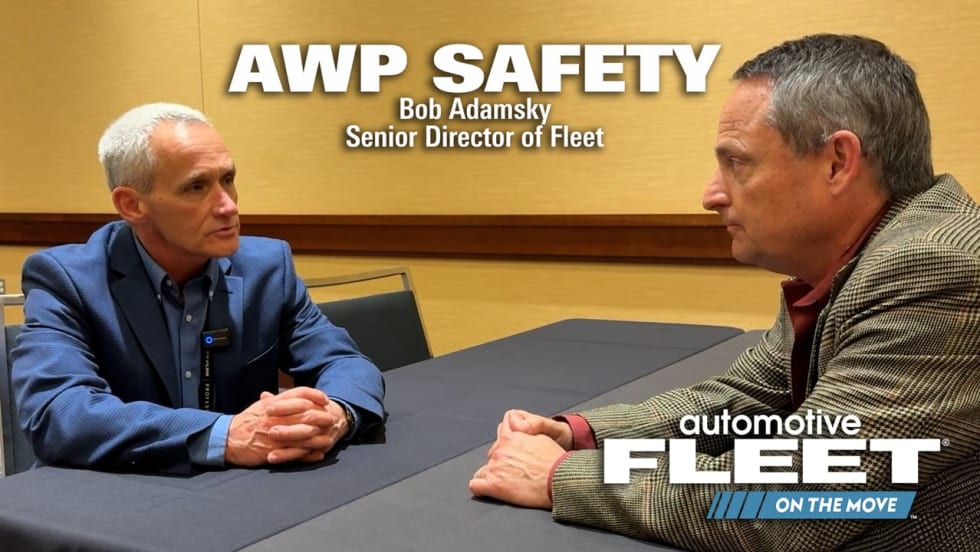
Bob Adamsky on Fuel Volatility: “Don’t Panic — Have a Plan”
With oil prices rising again, AWP Safety’s fleet manager shares how to respond to rising fuel costs and how the right strategy can turn fuel spikes into cost-saving opportunities.
Read More →
Oil Market Turbulence Is Complicating Fleet Cost Planning
Rapid swings in crude oil prices driven by the conflict in the Middle East could create longer-term cost pressures for fleets, affecting fuel prices, supply chains, and vehicle strategy, says NTEA’s Andrew Wrobel.
Read More →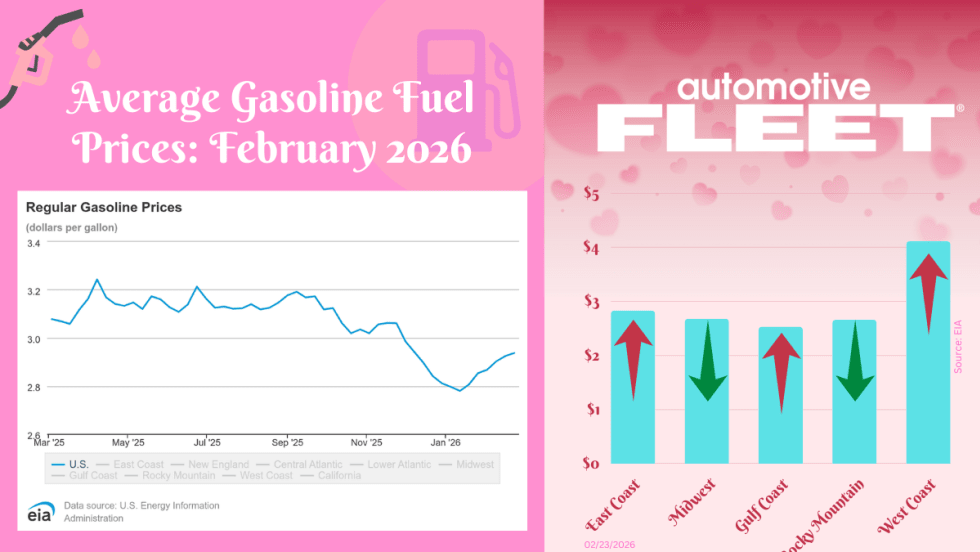
February Fuel Update: Prices Inch Higher for Third Week in a Row
The final February fuel update reveals prices continuing to inch higher for the third week in a row.
Read More →
The 2026 Fuel Economy Guide: Updated Cost and Efficiency Benchmarks for Fleets
Fleet managers can use the DOE’s 2026 Fuel Economy Guide to benchmark MPG across powertrain types using side-by-side vehicle ratings and compare new model-year options.
Read More →