




Daimler Chair and GM Vice Chair Discuss Fuel Reduction
DETROIT – Daimler AG Chairman Dieter Zetsche and General Motors Corp. Vice Chairman Robert A. Lutz recently discussed the financial aspects of environmentally friendly cars, why diesel engines haven't caught on in the U.S. the way they have in Europe, and other issues, with The Wall Street Journal's (WSJ) Jeffrey Ball.
DETROIT – Daimler AG Chairman Dieter Zetsche and General Motors Corp. Vice Chairman Robert A. Lutz recently discussed the financial aspects of environmentally friendly cars, why diesel engines haven't caught on in the U.S. the way they have in Europe, and other issues, with The Wall Street Journal's (WSJ) Jeffrey Ball. Here are edited excerpts from that discussion.
WSJ: I remember talking to people at both your companies [years ago] about fuel economy, and everyone said it ranked far below cup holders on the list of what mattered to people. I also remember people saying that $2.50 gasoline would change that. Well, we're now beyond $2.50 gasoline. Has it changed? What are you seeing in the market?
ZETSCHE: We are not seeing any significant changes of our mix or of our engine types within one name plate. What we do see is the tremendous success of the [small] Smart car, which we launched in the U.S. in January, and where the demand is really blowing all of our expectations by far.
LUTZ: What we're seeing is there is a portion, a very narrow portion of the population, that will make a financial sacrifice to be green. But I don't think we can count on the majority of the American public to make a financial sacrifice, or an uneconomic decision. So I think even as gasoline goes to $4 a gallon, you're still going to see people doing the calculation. How much more do I have to pay for a hybrid system? Most people, not the ecologically committed, but most normal people are going to take a look at how much more am I paying for this fuel-saving technology and will I be able to amortize it over the life of the vehicle?
Where we're seeing we have reached the pain threshold is with the Duramax diesel engine, in the full-size pickup trucks. To meet the latest emission regulations, we are now forced to charge $11,000 for the diesel option, and that is putting a kink in diesel sales, and a lot of people are opting for the gas engine again.
To provide an economic incentive to people to buy these much higher-technology vehicles that are going to be required to meet the CAFE [Corporate Average Fuel Economy] mandates, the customer has to be put in the equation. That means that at some point, fuel prices have to rise. I think that without an economic incentive, we are not going to see a wholesale shift in demand of vehicles.
[PAGEBREAK]
WSJ: In Europe, diesel accounts for, what, nearly half the passenger-car market? In the U.S., it's a negligible percentage except for in the truck market. There's all this discussion in this country about saving oil and reducing carbon emissions, and diesel is 30 percent or so more efficient than a comparable gasoline engine typically. Yet, we're talking about fuel cells and alternative fuels that require new infrastructure. Why is it such a tough sell for diesel in this country? And second of all, despite that, why does Daimler feel like it's a good bet to roll out a diesel car, even in California, now?
ZETSCHE: This country should be ready for diesel, because you have a lot of towns or you have speed limits and you have all these SUVs. All of that calls for high torque at low RPM, and that's a diesel. [As for why] diesel hasn't been popular here: For a period of time, there were some diesels that were not too great. And on top of that, diesel fuel is more expensive here than gasoline, which is not because of production, but because of capacity. This could be changed easily with more capacity being installed for diesel.
WSJ: The oil industry is arguing for tougher CAFE standards, although maybe not saying it explicitly all the time. And the auto industry is arguing for a panoply of policies that would induce the spread of alternative fuels. One could be forgiven perhaps for saying that each industry is just trying to pass the buck, no?
ZETSCHE: It's obvious that we are investing billions and billions of dollars into those new technologies, and that's true for General Motors.
There are so many studies that are proving that the least-efficient way — the least CO2 you can save with the most money to be spent — is doing it through the vehicle. And almost all other contributions — from infrastructure to driving behavior to the biofuel — are more efficient. And then when you go to housing and other areas, it's even much more efficient, so you get more reduction for [fewer] dollars.
At the same time, we accept our responsibility. In 2010, for instance, we will offer an S-class [large sedan] which goes 44 miles per gallon. It's a diesel with a mild hybrid, which goes zero to 60 in less than eight seconds. This takes a lot of technology and it costs a lot, but we are doing that.
LUTZ: We have the 35-mile-per-gallon standard, and General Motors obviously is confident that we can meet that standard technologically, but when you add a diesel engine plus a hybrid, you are adding thousands of dollars of cost.
Ever since CAFE legislation has been in effect, General Motors has improved the efficiency of its truck fleet by 60 percent, the fuel efficiency of its passenger-car fleet by 100 percent, and fuel use in the United States has done nothing but go up. So the idea that by legislating 35 miles per gallon, we're somehow going to use less fuel, it would be the first time that it ever worked, because it inevitably results in people taking their fuel budget and buying a larger car. That's why if the customer is not in the equation in terms of feeling pain in the wallet from paying the fuel bill, it's destined not to work.
Now, technology costs money, so what is a better way to get at the problem of getting the automobile out of the environmental equation, or at least out of the petroleum and CO2 equation? I think the only rational thing to do is put less technology in the car, which is the conversion to making cars E-85 capable, and burn E-85, which is a renewable fuel that could be done from biomass.
And if you can do that for $150 a car, as opposed to meeting a 35-mile-per-gallon standard at many thousands of dollars per car, which one do you pick? It's not a question of passing the buck; it's just looking at what we have to do to the cars to attain CAFE, versus the much less we'd have to do to cars, with much less pain on the American driving public, if we had a concerted national E-85 effort.
More Fuel
Fuel Prices Surge in September | September Fuel Update
September brought major fuel price swings, including diesel crossing $6 a gallon. Here’s how gas and diesel prices changed throughout the month, and where they stood heading into October.
Read More →
Turning Fleet Payment Data into Executive Insights
Ramel Lindsay of U.S. Bank Voyager discusses how fleets can transform payment and transaction data into actionable intelligence to reduce costs, improve oversight, and support executive decision-making.
Read More →
Why the IRS Raised Its Mileage Rate in the Middle of 2026
Fuel-price volatility drove the rare increase to 76 cents per mile, the fifth midyear adjustment since 2000.
Read More →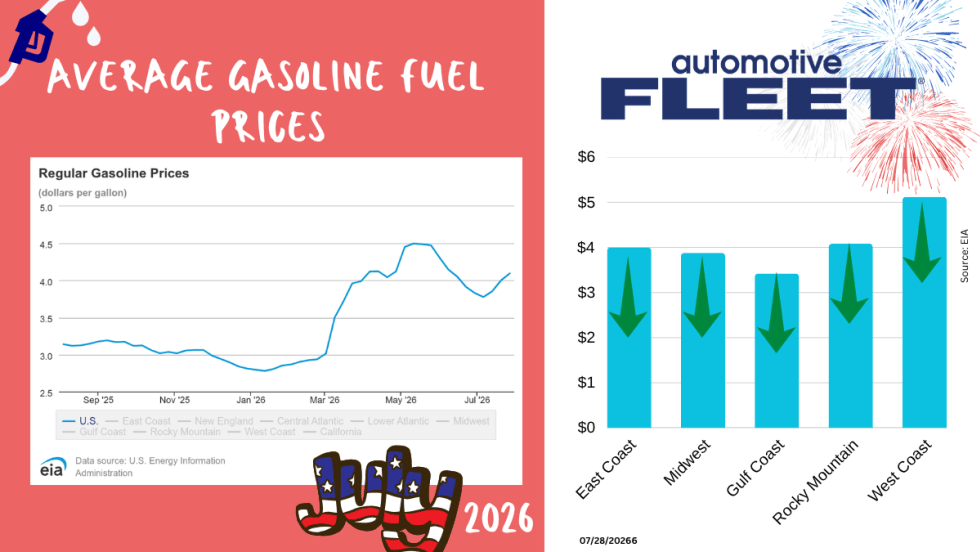
July Fuel Update: Prices Keep Rising in Light of More Conflict
Gas prices continue to rise as more and more conflicts do, too.
Read More →
Bob Adamsky on Fuel Volatility: "Don't Panic, Have a Plan."
When it comes to up and down fuel prices, Adamsky has a message for fleets: “Don’t panic.”
Read More →
How Fleets Can Gain Control of Non-Fuel Spend
Fuel often gets the spotlight, but non-fuel expenses can have a major impact on fleet costs. Ramel Lindsay of U.S. Bank Voyager discusses how fleets can gain better visibility and control over these often-overlooked expenditures.
Read More →
Fuel is Just the Start: How Middle East Tensions are Driving Up Fleet Maintenance Costs
The Middle East conflict is doing more than pushing up fuel prices. It’s also raising the cost of key maintenance products your fleet depends on, from motor oil to tires to windshield wipers. Here’s what you need to know about this budget-busting situation.
Read More →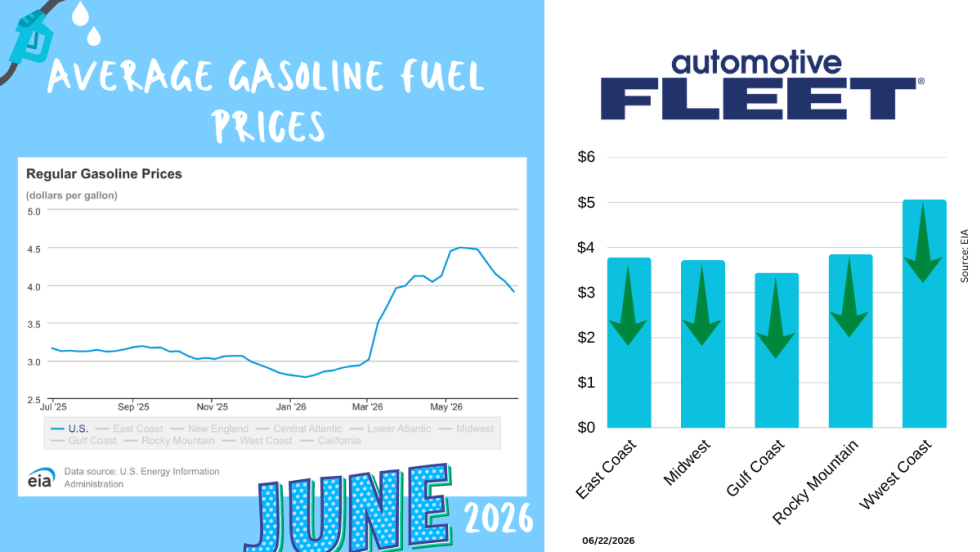
June Fuel Update: Prices Fall Below $4
Drivers are finally getting some relief at the pump. The national average gas price has dropped below $4 a gallon for the first time in months, with prices falling in 47 states as oil markets react to developments in U.S.-Iran negotiations.
Read More →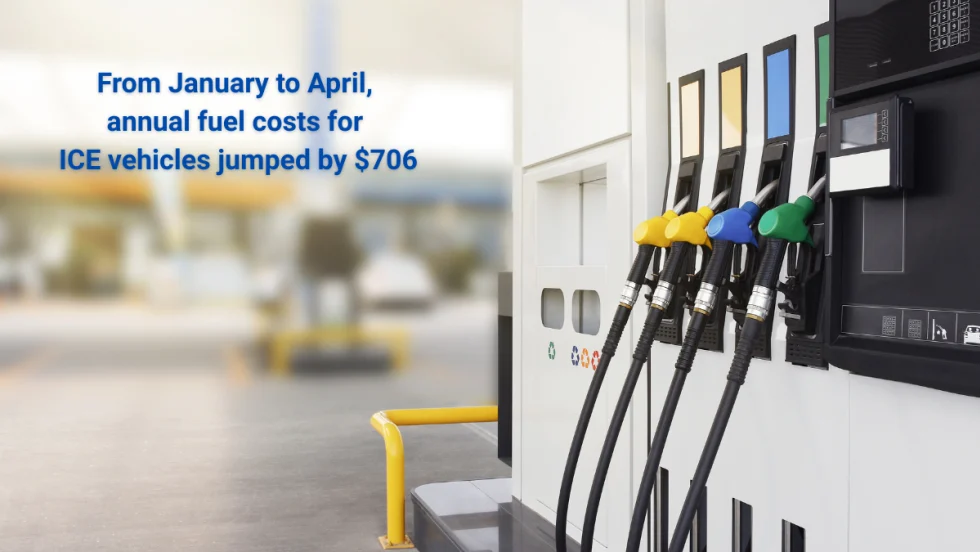
Study: How 2026's Gas Price Hikes Affect Different Vehicle Types
New data from iSeeCars reveals how rising fuel costs have affected different vehicle segments as gasoline prices climbed nearly 46% over the past four months.
Read More →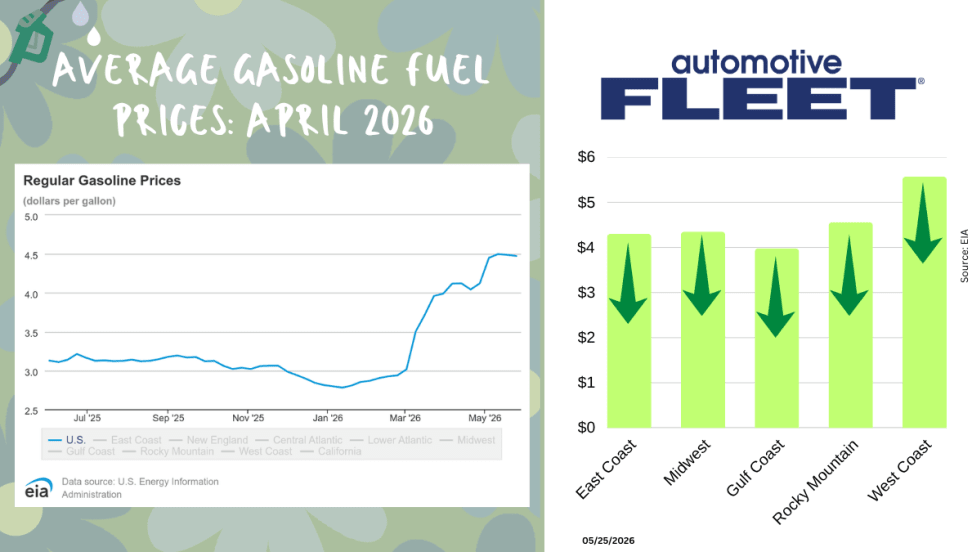
May Fuel Update: All Regions Experience Declines
Gas prices are finally easing in much of the country, but experts warn global tensions could quickly reverse the trend as the national average remains well above last month’s levels.
Read More →