





Related: BMW, Daimler Headquarter Joint Mobility Group in Berlin
Daimler, BMW Joint Mobility Venture Approved
Geared towards this vision of future urban mobility, a new mobility offering will be created that is easy to access, intuitive and focused on the needs of the user.
December 19, 2018
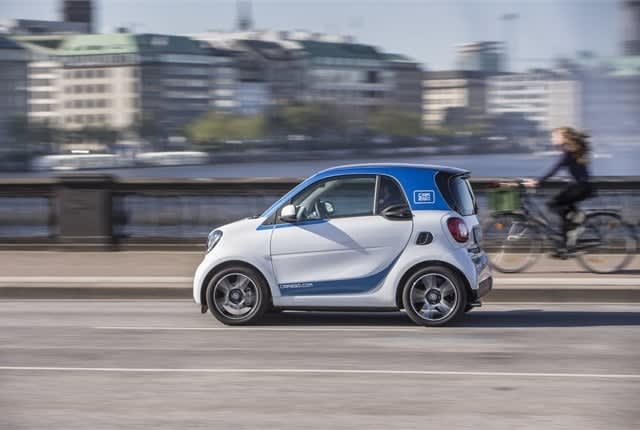
Car2Go and DriveNow operate a total of 20,000 vehicles in 30 major international cities.
Photo courtesy of Car2go.
3 min to read
The BMW Group and Daimler AG are planning the next steps for their joint mobility company, following approval by U.S. competition authorities, which was received yesterday.
This means that all antitrust authorities involved have given the green light for the new joint venture, which is owned in equal parts by the BMW Group and Daimler AG.
Geared towards this vision of future urban mobility, a new mobility offering will be created that is easy to access, intuitive and focused on the needs of the user. On their urban journey, customers will move through a seamlessly connected and sustainable ecosystem that combines carsharing, ride-hailing, parking, charging, and multimodality from a single source and is available with just a few taps.
The idea is to create the most attractive, most comprehensive mobility solution for a better life in our connected world.
Now that the approval of the competition authorities has been received, the goal is to close this transaction by Jan. 31.
Once this major transaction closes, the new mobility company will present next steps in the first quarter of 2019, in conjunction with the BMW Group and Daimler AG.
The equally-owned joint venture will comprise the following activities and services:
Multimodal and on-demand mobility with moovel and ReachNow: The well over six million users will benefit from intelligent and seamless connectivity between different mobility offerings, such as carsharing, bike rental, taxis, and public transport, including booking and payment. The multimodal platform will also offer possible solutions for the needs of urban private transport, including providing cars as a service.
Carsharing with Car2Go and DriveNow: Car2Go and DriveNow operate a total of 20,000 vehicles in 30 major international cities. Carsharing enables better utilisation of vehicles and thus helps reduce the total number of vehicles in cities. More than four million customers already use these carsharing services.
Ride-hailing with mytaxi, Chauffeur Privé, Clever Taxi, and Beat: A total of 15.9 million customers and around 250,000 drivers already use the services of mytaxi, Chauffeur Privé, Clever Taxi (all in Europe), and Beat (South America) — making Intelligent Apps GmbH one of the leading ride-hailing providers in Europe and South America. Innovative offers such as mytaximatch, which allows people who do not know each other to share a taxi at the tap of a finger, also make an important contribution to reducing inner-city traffic.
Parking with ParkNow and Parkmobile Group/Parkmobile LLC: Ticketless, cashless on-street parking or help reserving and paying for off-street parking in a garage: Parkmobile already reaches a total of more than 27 million customers in Europe and North America and offers digital parking solutions in over 1,100 cities. Innovative digital parking services reduce the time and amount of driving involved in finding a parking space. This reduces traffic significantly, as cars searching for parking spaces currently account for around 30% of road traffic.
Charging with ChargeNow and Digital Charging Solutions: Easy access to the world’s largest network of public charging stations. Combined with parking privileges in cities, this will support the expansion of electromobility, by helping people integrate this drive technology more easily into their mobility needs.
Originally posted on Auto Rental News
More Operations

Company Vehicle or Reimbursement? How Fleets Are Rethinking Assignments
As fleet costs and insurance pressures rise, fleet managers are taking a closer look at which employees need company-provided vehicles and when a reimbursement program may make more sense.

Fleetio, ASE Launch Scholarship Program for Automotive Technicians
The second annual program will award 15 scholarships totaling $35,000 to support ASE certification, testing fees, and equipment costs.

Reading the Global Signals: What AI and the Energy Transition Mean for Fleets Now
In this opening keynote of the 2026 Fleet Forward Conference, John Rossant, founder of CoMotion, How can fleet managers navigate a never-ending, changing industry landscape?

90% Use Telematics. Are Fleets Getting Safer? | AF News Recap
This week, we're breaking down which industries have the highest rates, how Jamie McKay manages 2,400 vehicles, what's happening with the 2027 fleet awards, and why software-defined vehicles could introduce new costs.

What's Best Handled by an FMC, and What's Better Done Directly?
Fleet managers continue to rely on FMCs for essential services but are taking a closer look at where working directly with suppliers can improve efficiency and responsiveness.

Fleet Meets: Erin Gilchrist
Meet Erin Gilchrist, the inaugural Mike Antich Spirit of Fleet Award winner, as she shares insights on leadership, mentorship, the power of industry connections, and why people remain at the heart of fleet's future.

How 2026 Fleet Visionary Jamie McKay Manages 2,400 Vehicles Across 37 States
How do you keep 2,400 vehicles running across 37 states? Fleet Visionary Award winner Jamie McKay shares how collaboration, flexibility, and a few simple strategies help her tackle fleet management challenges at Aptive Pest Control.

Managing Fleet Costs in an Era of Permanent Volatility
Fleet operating costs have risen more than 20% since 2020, raising a key question: When does extending a vehicle's service life stop making financial sense?

The Next Evolution of Fleet Management: Autonomous Operations
This opening keynote session at the Fleet Forward Conference highlights the future of autonomous driving for fleets.

How to Reduce the Total Cost of Risk From Catalytic Converter Theft
A stolen catalytic converter can cost fleets far more in downtime and lost productivity than in repairs. A total-cost-of-risk approach can help fleet managers quantify their exposure and prioritize theft prevention.