




Chrysler Group Outlines Fuel-Efficiency Initiatives
CHELSEA, Mich. --- Frank Klegon, Chrysler Group's executive vice president of product development, recently announced a host of new initiatives targeted at improving the fuel efficiency of future Chrysler, Jeep and Dodge vehicles.
CHELSEA, Mich. --- Frank Klegon, Chrysler Group's executive vice president of product development, recently announced a host of new initiatives targeted at improving the fuel efficiency of future Chrysler, Jeep and Dodge vehicles. Among the fuel-efficient initiatives are a commitment to developing mild-hybrid technology and expanding the company's two-mode hybrid program; new six- and eight-cylinder gasoline engines, including cylinder-deactivation in a V-6; dual-clutch transmission technology; a common axle program; weight reduction, aerodynamic and drivetrain initiatives; and another BLUETEC clean-diesel vehicle. Additionally, the company announced it is exploring the development of a 4-cylinder diesel engine for the North American market, and the expansion of its 3.0-liter V-6 diesel engine. "Chrysler Group is focused directly on improving fuel efficiency across our vehicle lineup," Klegon said. "We have developed and are implementing a series of major initiatives --- including a bigger push in hybrid and clean-diesel technology --- to meet the needs of American consumers. Many of these fuel-efficiency initiatives will be incorporated simultaneously into a single vehicle family --- our new V-6 with Multi-displacement System (MDS) mated to a dual-clutch transmission, for example --- ultimately resulting in double-digit-percentage fuel-economy gains." Within the next few years, Chrysler will offer a mild-hybrid powertrain in a Chrysler Group vehicle. Mild-hybrid vehicles provide many of the benefits of hybrid technology, with less of the cost/weight penalty that is incurred by installing a full hybrid drivetrain. Mild hybrids allow the vehicle's engine to be turned off at stops. Regenerative braking stores energy that would normally be lost. Accessories can continue to run on electrical power while the engine is off. An electric motor assist results in significant fuel efficiency gains. Chrysler Group's two-mode hybrid program will expand beyond the Chrysler Aspen Hybrid and Dodge Durango Hybrid, which debut next year. The company's two-mode hybrid system will address inefficiencies that exist in high-speed driving with traditional hybrid technology. The result will be a 25-percent improvement in fuel efficiency overall --- and nearly 40 percent in the city --- in the Chrysler Aspen Hybrid and Dodge Durango Hybrid, the company said. The new Chrysler Aspen and Dodge Durango Hybrid vehicles can be powered either by the electric motor or by the 5.7-liter HEMI V-8 engine with MDS --- or a combination of the two. When full power is needed, the system automatically adjusts for passing, driving steep grades or hauling a trailer. The 2009 Jeep Grand Cherokee will join the 2007 Dodge Ram Heavy Duty as Chrysler Group's 50-state, clean-diesel BLUETEC vehicles. BLUETEC brings together several technologies for diesel passenger vehicles, beginning with modern, efficient diesel engines and a focus on "denoxing" to reduce nitrogen oxides in the exhaust gases. The result is clean-diesel technology in vehicles that meet 50-state emissions standards for 2010. Chrysler Group announced it is exploring additional penetration of its 3.0-liter V-6 common-rail diesel (CRD) engine --- currently in the 2007 Jeep Grand Cherokee --- and the possibility of a four-cylinder diesel engine for the North American market. The company's current diesel lineup includes Dodge Sprinter, Jeep Grand Cherokee and Dodge Ram Heavy Duty. Earlier this year, Chrysler Group announced that an all-new Cummins turbodiesel engine will be available in light-duty pickup trucks after 2009. The new engine will provide up to 30-percent improvement in fuel efficiency and a 20-percent reduction in CO2 emissions compared to an equivalent gasoline engine, the company said. In February, Chrysler Group announced that an all-new family of engines --- known as "Phoenix" --- will join the Chrysler Group lineup in 2010. Since then, the company has broken ground on new plants in Trenton, Mich., Kenosha, Wis., and Mexico --- all of which will produce this family of engines. The company announced this new family of V-6 engines will feature cylinder deactivation (MDS). Specifically, this means the engine will operate efficiently on three cylinders when less power is needed, and in V-6 mode when more power is needed. This optimizes fuel economy when V-6 power is not required, without sacrificing vehicle performance or capability. The new family of V-6 engines will feature an aluminum die cast block, dual variable valve timing (VVT) and a two-stage oil pump, among other technologies. The end result is an expected V-6 fuel efficiency improvement of 6 to 8 percent --- in addition to new levels of V-6 power, performance and refinement. For 2009, Chrysler Group said it will deliver a significantly upgraded version of its renowned 5.7-liter HEMI V-8, resulting in notable gains in fuel efficiency, refinement, power and torque. The new 4.7-liter V-8 offers up to 5 percent better fuel economy than the previous 4.7-liter engine. At the same time, this E85 flex-fuel engine delivers increased performance and improved refinement, the company said. These improvements come from the 4.7-liter V-8's two spark plugs per cylinder (the only Chrysler Group engine to do so, other than the 5.7-liter HEMI), increased compression ratio, improved cylinder-head port flow and new combustion system. In addition to improved fuel economy, the result is a 30-percent increase in horsepower and a 10-percent increase in torque (up to 75 additional horsepower and 35 more lb.-ft. of torque, depending on application) compared with the previous 4.7-liter V-8 engine, the company said. A new dual-clutch transmission, developed in partnership with Getrag, joins the Chrysler Group lineup in significant volumes in 2010 model-year vehicles. The new dual-clutch transmission is expected to deliver a fuel economy improvement of up to 6 percent, based on preliminary testing. The new transmission is equipped with two independent lay-shaft style gear sets with separate clutches, using manual transmission-based components. During shifts, the next gear is anticipated and pre-selected. Then one clutch is opened while the other is closed, allowing shifting without torque interruption. The result is quicker acceleration and refined shift quality. New common axle technology will result in fuel-economy and axle-efficiency gains, while providing weight savings, cost reduction, increased refinement and less complexity. New advanced materials increase overall axle strength and reduce package size. Already featured in the Chrysler 300C SRT8, this axle will soon move to other Chrysler Group vehicles.
More Fuel

Fuel Prices Surge in September | September Fuel Update
September brought major fuel price swings, including diesel crossing $6 a gallon. Here’s how gas and diesel prices changed throughout the month, and where they stood heading into October.
Read More →
Turning Fleet Payment Data into Executive Insights
Ramel Lindsay of U.S. Bank Voyager discusses how fleets can transform payment and transaction data into actionable intelligence to reduce costs, improve oversight, and support executive decision-making.
Read More →
Why the IRS Raised Its Mileage Rate in the Middle of 2026
Fuel-price volatility drove the rare increase to 76 cents per mile, the fifth midyear adjustment since 2000.
Read More →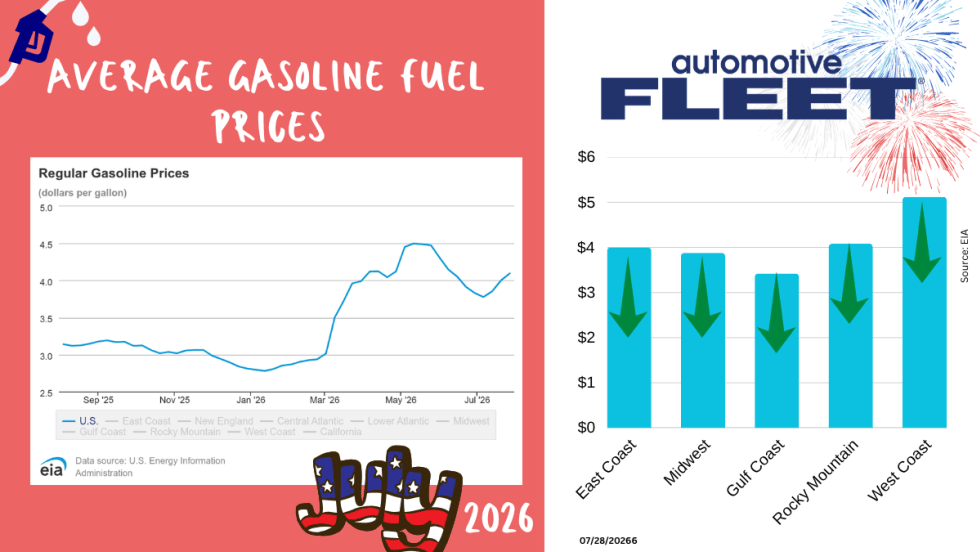
July Fuel Update: Prices Keep Rising in Light of More Conflict
Gas prices continue to rise as more and more conflicts do, too.
Read More →
Bob Adamsky on Fuel Volatility: "Don't Panic, Have a Plan."
When it comes to up and down fuel prices, Adamsky has a message for fleets: “Don’t panic.”
Read More →
How Fleets Can Gain Control of Non-Fuel Spend
Fuel often gets the spotlight, but non-fuel expenses can have a major impact on fleet costs. Ramel Lindsay of U.S. Bank Voyager discusses how fleets can gain better visibility and control over these often-overlooked expenditures.
Read More →
Fuel is Just the Start: How Middle East Tensions are Driving Up Fleet Maintenance Costs
The Middle East conflict is doing more than pushing up fuel prices. It’s also raising the cost of key maintenance products your fleet depends on, from motor oil to tires to windshield wipers. Here’s what you need to know about this budget-busting situation.
Read More →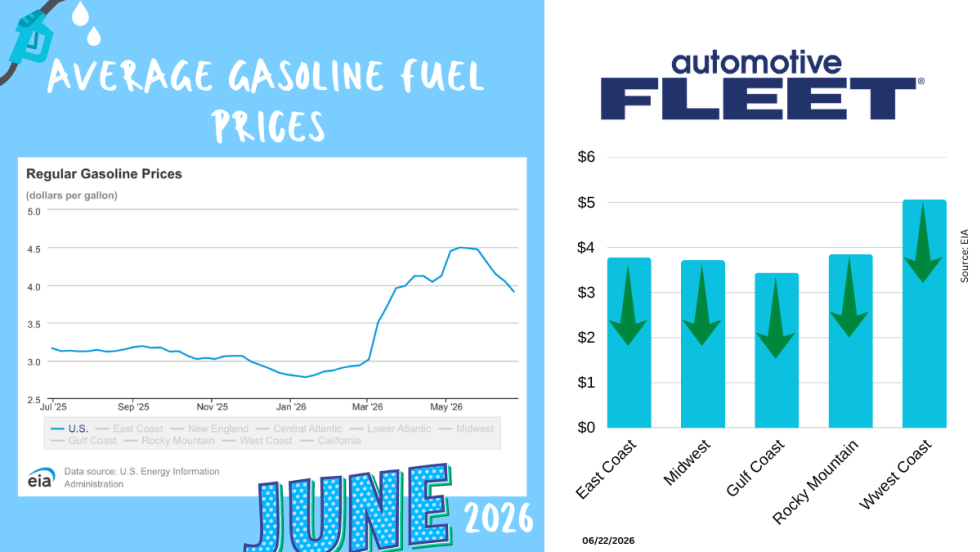
June Fuel Update: Prices Fall Below $4
Drivers are finally getting some relief at the pump. The national average gas price has dropped below $4 a gallon for the first time in months, with prices falling in 47 states as oil markets react to developments in U.S.-Iran negotiations.
Read More →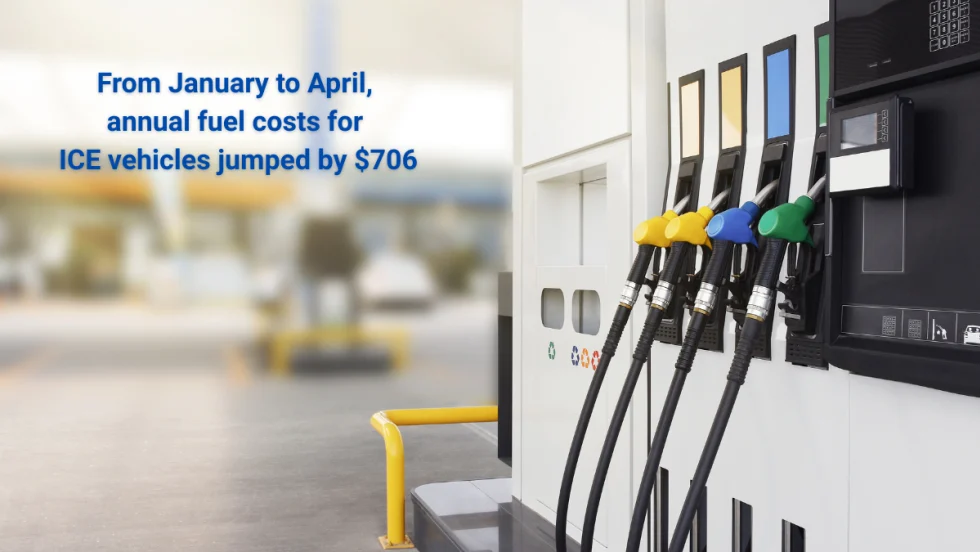
Study: How 2026's Gas Price Hikes Affect Different Vehicle Types
New data from iSeeCars reveals how rising fuel costs have affected different vehicle segments as gasoline prices climbed nearly 46% over the past four months.
Read More →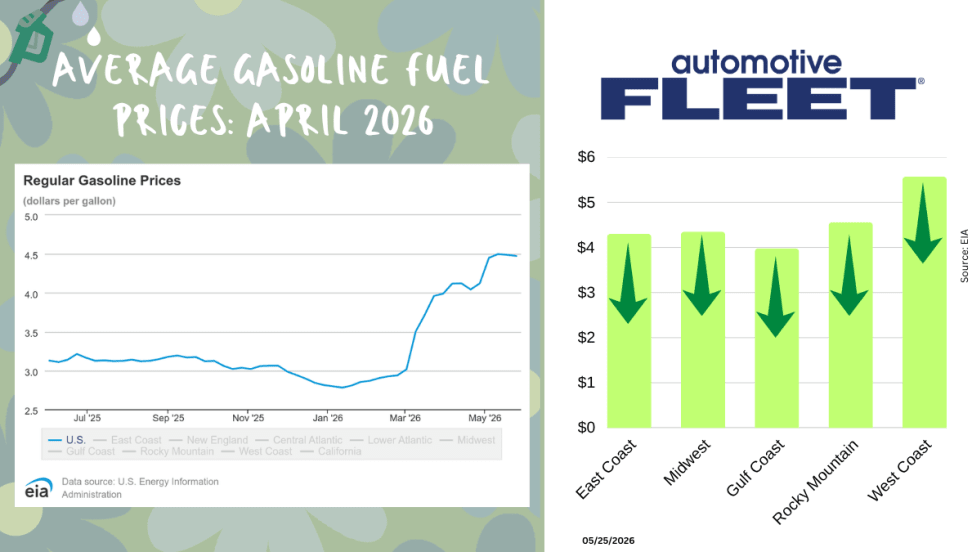
May Fuel Update: All Regions Experience Declines
Gas prices are finally easing in much of the country, but experts warn global tensions could quickly reverse the trend as the national average remains well above last month’s levels.
Read More →