




Chevrolet Tahoe Hybrid Named 2008 Green Car of the Year
LOS ANGELES – The 2008 Chevrolet Tahoe Hybrid – the first General Motors vehicle to use the company's all-new two-mode hybrid system – has been named Green Car Journal's 2008 Green Car of the Year.
LOS ANGELES – The 2008 Chevrolet Tahoe Hybrid – the first General Motors vehicle to use the company’s all-new two-mode hybrid system – has been named Green Car Journal’s 2008 Green Car of the Year. The award was presented at a press conference Nov. 15 at the Los Angeles Auto Show.
“This is a milestone in many respects,” says Green Car Journal editor and publisher Ron Cogan. “People don’t think ‘green’ when SUVs are concerned, and for generally good reason since SUVs often get poor fuel economy compared to most other vehicles. Chevrolet’s Tahoe Hybrid changes this dynamic with a fuel efficiency improvement of up to 30 percent compared to similar vehicles equipped with a standard V-8.”
According to the EPA’s 2008 estimated fuel economy ratings, Chevrolet’s achievement is even more apparent during city driving where a large percentage of SUVs spend their time every day. In this environment, the 6.0L two-mode hybrid Tahoe achieves 50-percent better fuel economy than a Tahoe powered by a standard 5.3L V-8. What’s equally eye-opening is that the Tahoe’s 21 mpg city fuel efficiency rating is the same as that of the city EPA rating for the four-cylinder Toyota Camry sedan.
"We're thrilled to receive this recognition from Green Car Journal for our Chevrolet Tahoe Hybrid,” says Ed Peper, Chevrolet general manager. “We've felt that the Tahoe Hybrid represents the best of both worlds – the great utility you'd expect from a Tahoe with fuel economy on par with today's mid-size cars. It's satisfying to receive this validation from such an authority on environmentally-friendly vehicles."
The Chevrolet Tahoe Hybrid was selected in a majority vote by a jury of high-profile environmental and industry leaders, along with four Green Car Journal editors. Invited jurors this year included Carroll Shelby, Jay Leno, Carl Pope (Sierra Club), Christopher Flavin (Worldwatch Institute), Jonathan Lash (World Resources Institute), and Jean-Michel Cousteau (Ocean Futures Society).
"GM promised they would use hybrid technology, and use it where it would make the most difference – on their biggest vehicles. They have delivered with the Chevy Tahoe,” says Carl Pope, executive director of the Sierra Club, pointing out that this vehicle ends the argument that efficiency and vehicle choice are incompatible. He adds that automakers should now make their entire fleets fuel efficient as fast as they can retool.
The Tahoe Hybrid is the industry’s first application of hybrid technology in a full-size SUV. While a few vehicles with V-6 and V-8 engines are offered with hybrid options, most hybrid technology is incorporated into mid-size or smaller vehicles with four-cylinder engines because this is where big fuel economy gains are most readily achieved. It’s a different challenge to achieve meaningful mpg increases on large vehicles of greater weight where substantial cargo hauling and towing may be needed, and larger engines are required for the job. For instance, the Tahoe Hybrid features seating for up to eight passengers, a 60 cubic foot cargo volume with the second and third row seats folded, the ability to carry up to 1400 pounds of cargo, and a tow rating of up to 6,200 pounds.
“The importance of GM’s accomplishment can’t be overstated,” says Cogan. “For years, consumers have been buying SUVs in increasing numbers because of their functionality, making them the number one class of vehicle on the market. The problem has been obvious: With larger vehicles generally comes poorer fuel economy because of greater size and curb weight. An ‘equalizer’ has been needed…and the two-mode hybrid system in the Tahoe is clearly that equalizer.”
Along with the Tahoe Hybrid, the jury considered 2008 Green Car of the Year nominees including the Chevrolet Malibu Hybrid, Mazda Tribute Hybrid, Nissan Altima Hybrid, and the Saturn Aura Hybrid. Dozens of 2008 model year vehicles using all technologies and fuels were considered by the Green Car Journal staff in narrowing down the field to five nominees.
Along with their considerable achievements in raising the bar in environmental performance, each of those making the final cut had to meet the requirement of being on sale and widely available to the public by Jan. 1, 2008. “Newness” was also a factor in the nomination process, with nominees ideally in the earlier phases of their production cycle rather than near the end. Other factors that weigh in on the decision making include production volume and the likelihood of a candidate vehicle’s environmentally-focused technologies leading to further implementation in other vehicles.
More Fuel

Turning Fleet Payment Data into Executive Insights
Ramel Lindsay of U.S. Bank Voyager discusses how fleets can transform payment and transaction data into actionable intelligence to reduce costs, improve oversight, and support executive decision-making.
Read More →
Why the IRS Raised Its Mileage Rate in the Middle of 2026
Fuel-price volatility drove the rare increase to 76 cents per mile, the fifth midyear adjustment since 2000.
Read More →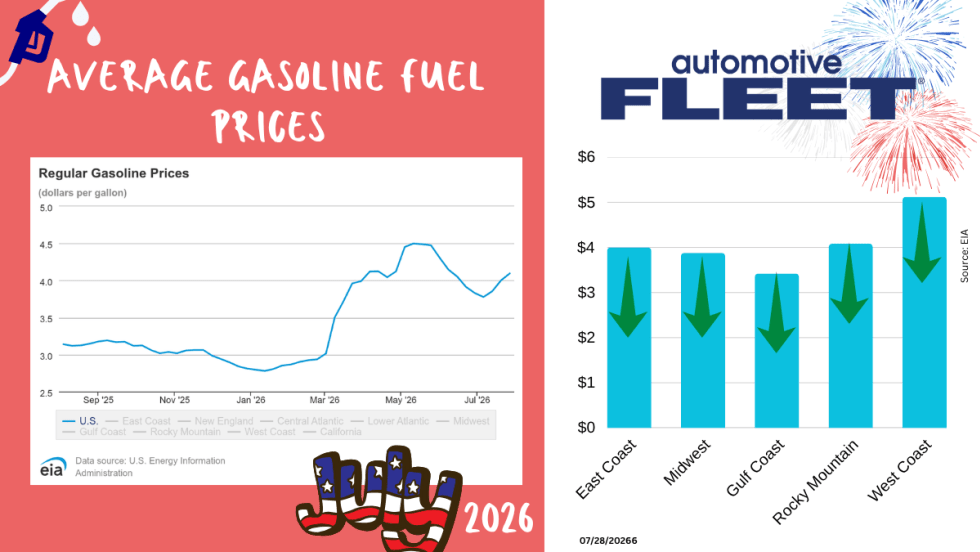
July Fuel Update: Prices Keep Rising in Light of More Conflict
Gas prices continue to rise as more and more conflicts do, too.
Read More →
Bob Adamsky on Fuel Volatility: "Don't Panic, Have a Plan."
When it comes to up and down fuel prices, Adamsky has a message for fleets: “Don’t panic.”
Read More →
How Fleets Can Gain Control of Non-Fuel Spend
Fuel often gets the spotlight, but non-fuel expenses can have a major impact on fleet costs. Ramel Lindsay of U.S. Bank Voyager discusses how fleets can gain better visibility and control over these often-overlooked expenditures.
Read More →
Fuel is Just the Start: How Middle East Tensions are Driving Up Fleet Maintenance Costs
The Middle East conflict is doing more than pushing up fuel prices. It’s also raising the cost of key maintenance products your fleet depends on, from motor oil to tires to windshield wipers. Here’s what you need to know about this budget-busting situation.
Read More →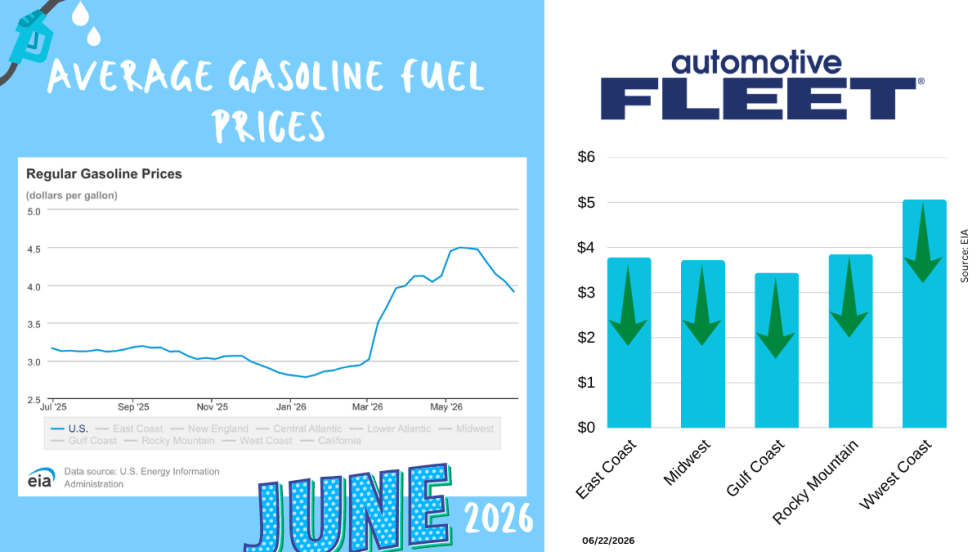
June Fuel Update: Prices Fall Below $4
Drivers are finally getting some relief at the pump. The national average gas price has dropped below $4 a gallon for the first time in months, with prices falling in 47 states as oil markets react to developments in U.S.-Iran negotiations.
Read More →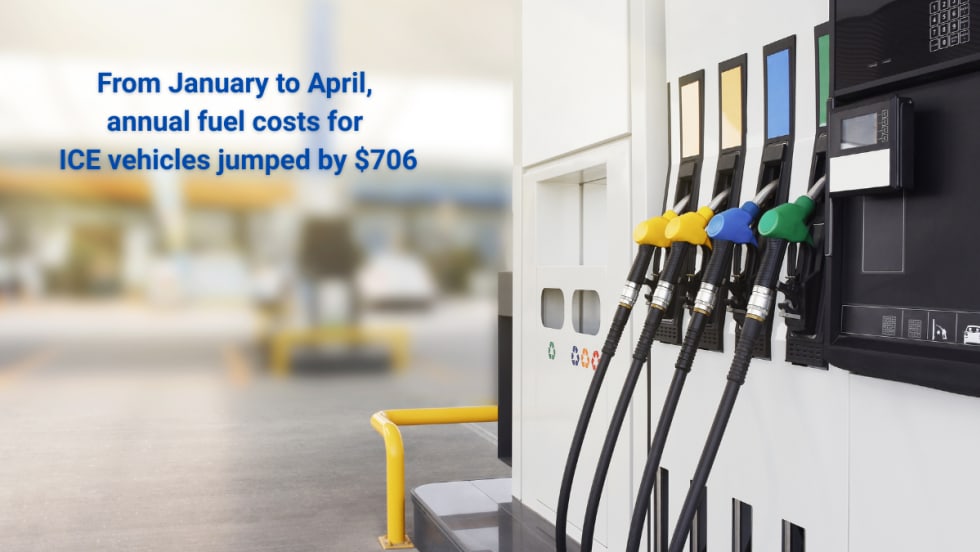
Study: How 2026's Gas Price Hikes Affect Different Vehicle Types
New data from iSeeCars reveals how rising fuel costs have affected different vehicle segments as gasoline prices climbed nearly 46% over the past four months.
Read More →
Are You Tracking Your Fleet's True Total Cost of Ownership?
Bobit Business Media surveyed 190 fleet professionals and found that while most fleets are tracking costs, fragmented systems and data gaps are keeping true TCO visibility out of reach. With rising pressure to control spend in an increasingly volatile environment, the gap between what fleets think they know and what the data actually shows is wider than you might expect. See how your peers are managing costs today and where the industry still has room to improve.
Read More →
May Fuel Update: All Regions Experience Declines
Gas prices are finally easing in much of the country, but experts warn global tensions could quickly reverse the trend as the national average remains well above last month’s levels.
Read More →