




Cell Phone Bans Don't Reduce Crashes, Study Says
ARLINGTON, VA - As more state legislatures across the U.S. enact laws that ban phoning and texting while driving, a new Highway Loss Data Institute study has found no reductions in crashes after hand-held phone bans take effect.
ARLINGTON, VA - As more state legislatures across the U.S. enact laws that ban phoning and texting while driving, a new Highway Loss Data Institute study has found no reductions in crashes after hand-held phone bans take effect.
Comparing insurance claims for crash damage in four U.S. jurisdictions before and after such bans, the researchers found steady claim rates compared with nearby jurisdictions without such bans. The Highway Loss Data Institute (HLDI) is an affiliate of the Insurance Institute for Highway Safety.
HLDI researchers calculated monthly collision claims per 100 insured vehicle years (a vehicle year is one car insured for one year, two insured for six months each, etc.) for vehicles up to three years old during the months immediately before and after hand-held phone use was banned while driving in New York (November 2001), the District of Columbia (July 2004), Connecticut (October 2005), and California (July 2008).
Comparable data were collected for nearby jurisdictions without such bans. This method controlled for possible changes in collision claim rates unrelated to the bans -- changes in the number of miles driven due to the economy, seasonal changes in driving patterns, etc.
Month-to-month fluctuations in rates of collision claims in jurisdictions with bans didn't change from before to after the laws were enacted. Nor did the patterns change in comparison with trends in jurisdictions that didn't have such laws.
"The laws aren't reducing crashes, even though we know that such laws have reduced hand-held phone use, and several studies have established that phoning while driving increases crash risk," said Adrian Lund, president of both the Insurance Institute for Highway Safety and HLDI.
For example, an Insurance Institute for Highway Safety study that relies on driver phone records found a four-fold increase in the risk of injury crashes. A study in Canada found a four-fold increase in the risk of crashes involving property damage. Separate surveys of driver behavior before and after hand-held phone use bans showed reductions in the use of such phones while driving.
The HLDI database doesn't identify drivers using cell phones when their crashes occur. However, reductions in observed phone use following bans were so substantial and estimated effects of phone use on crash risk were so large that reductions in aggregate crashes would be expected.
In New York the HLDI researchers did find a decrease in collision claim frequencies, relative to comparison states, but this decreasing trend began well before the state's ban on hand-held phoning while driving and actually paused briefly when the ban took effect. Trends in the District of Columbia, Connecticut and California didn't change.
"So the new findings don't match what we already know about the risk of phoning and texting while driving," Lund pointed out. "If crash risk increases with phone use and fewer drivers use phones where it's illegal to do so, we would expect to see a decrease in crashes. But we aren't seeing it. Nor do we see collision claim increases before the phone bans took effect. This is surprising, too, given what we know about the growing use of cell phones and the risk of phoning while driving. We're currently gathering data to figure out this mismatch."
HLDI researchers compared the District of Columbia's collision claim frequency trend not only with statewide trends in Virginia and Maryland but also with the trend in the nearby city of Baltimore. Again, the finding is no difference in the pattern of collision claims. Nor were any differences apparent when the researchers applied a time-based regression model to claims data for each of the study and comparison jurisdictions.
Lund pointed to factors that might be eroding the effects of hand-held phone bans on crashes. One is that drivers in jurisdictions with such bans may be switching to hands-free phones because no U.S. state currently bans all drivers from using such phones. In this case, crashes wouldn't go down because the risk is about the same, regardless of whether the phones are hand-held or hands-free.
Twenty-one states and the District of Columbia do prohibit beginning drivers from using any type of phone, including hands-free, but such laws are difficult to enforce. This was the finding in North Carolina, where teenage drivers didn't curtail phone use in response to a ban, in part because they didn't think the law was being enforced.
"Whatever the reason, the key finding is that crashes aren't going down where hand-held phone use has been banned," Lund said. "This finding doesn't auger well for any safety payoff from all the new laws that ban phone use and texting while driving."
More Safety

Nexar-Nauto Merger Aims to Give Fleets Better Safety Intelligence Through Larger Driving Dataset
Stefan Heck tells Automotive Fleet that combining more than 10 billion miles of driving history with Nexar's AI models will give fleets deeper insights into driver risk and roadway conditions than either company could provide independently.
Read More →
Don't Wait for a Crisis: 5 Ways to Build Mental Health Into Your Fleet Safety Program
For Suicide Prevention Month, fleet and safety leaders have an opportunity to put mental health where it belongs: at the center of workplace safety.
Read More →
How Camera Data Can Strengthen a Fleet’s Insurance Renewal
Insights from a commercial insurance carrier and a broker show how fleets can turn video telematic data, driver coaching, and improved claims results into a stronger case at insurance renewal.
Read More →
The Safest Fleets Aren’t the Ones with the Most Technology
You’ve made the telematics investment. Here’s how to capture the other half of its value and build the safest fleet on the road.
Read More →
Hidden in Plain Sight: Fleet Compliance Risks
Fleet compliance isn't just about having policies — it's about consistently enforcing them. This practical guide reveals six hidden compliance risks common in public sector and shared fleet operations and outlines proven strategies to improve visibility, accountability, and audit readiness
Read More →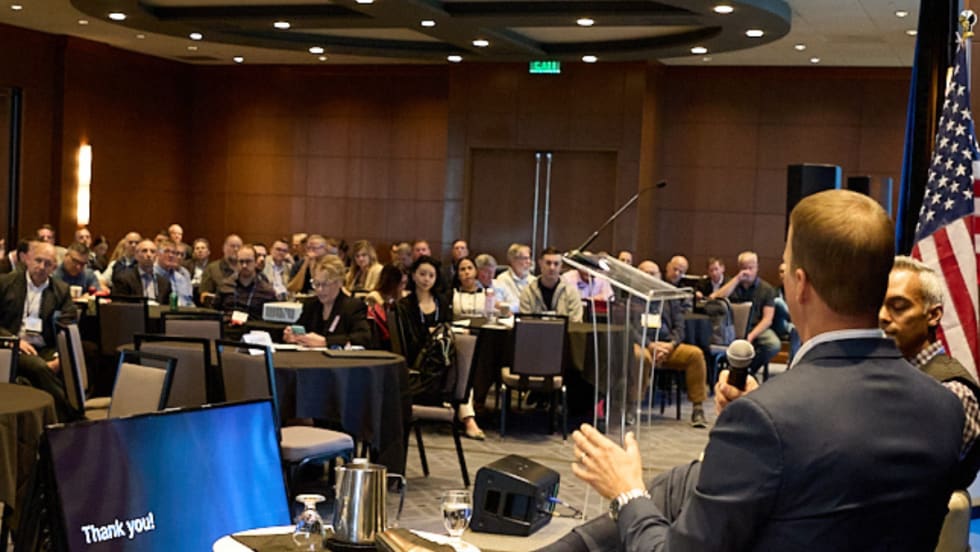
NETS Sets 2026 Fleet Safety Benchmark Conference for Indianapolis
The Sept. 15–17 program will feature fleet benchmarking data, case studies, emerging technologies, and implementation strategies while running alongside the NSC Safety Congress & Expo.
Read More →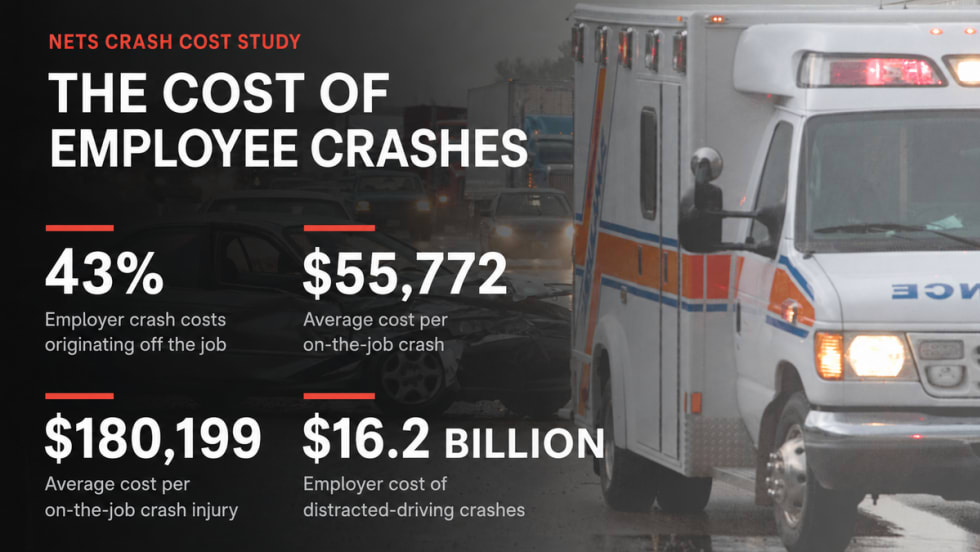
Off-the-Job Crashes Account for 43% of Employers’ $61.7 Billion Crash Burden
NETS quantifies costs dispersed across fleet, risk, HR, and other departments while providing new per-crash benchmarks for employers.
Read More →
Ram Recalls More Than 1.27 Million 1500 Pickups for Seat Belt Anchor Issue
The recall affects certain 2019-2026 Ram 1500 pickups that may have improperly attached second-row seat belt buckle anchors.
Read More →
How Better Visibility Cut Speeding Violations by 48%
Fleet leaders don't need more data, they need clearer visibility into what the data is saying. This case study explores how one utility replaced speeding-event counts with a single metric — miles driven in violation — to strengthen safety and significantly reduce speeding violations.
Read More →
Operation Safe Driver Week: Why the Industry's Oldest Safety Campaign Still Matters to Fleets
A look at how a 2007 enforcement initiative became one of the most consequential weeks on the fleet safety calendar, and what it means for your drivers in 2026.
Read More →