




CEI's DriverCare Targets Cognitive Skills to Assess and Improve Fleet Driver Safety
TREVOSE, PA - The CEI Group, Inc. has formed an alliance with CogniFit, a provider of computer-based programs that measure, train, and enhance cognitive psychomotor abilities, to add these capabilities to DriverCare, CEI's Web-based driver safety and risk management system.
TREVOSE, PA - The CEI Group, Inc. has formed an alliance with CogniFit, a provider of computer-based programs that measure, train, and enhance cognitive psychomotor abilities, to add these capabilities to DriverCare, CEI’s Web-based driver safety and risk management system. CogniFit, based in Nazareth Illit, Israel, will provide CEI with its patented FleetFit system, a personal computer-accessible program based on more than 20 years of research about how the brain works. In field studies, FleetFit has been found to be an accurate predictor of driver accidents, and its training component improves key driver safety capabilities. According to CogniFit, safe driving relies mainly on 12 major mind-body skills and psychological characteristics that can be measured at a computer workstation and improved through a series of exercises conducted at the same workstation. The skills and characteristics include: reaction time; risk-taking; obeying traffic regulations; short-term memory; assessment of time, distance and speed; focus/concentration; hand-eye coordination; confidence level; the ability to divide attention; width of field of vision; the ability to change plans, and visual scanning ability. “Studies have documented human behavior as the primary cause in over half of road accidents,” said Yossi Mazel, CogniFit vice president of marketing. “The brain, like a muscle, must be exercised to stay fit, and can be made to work better and more efficiently.” Art Liggio, CEI director of risk and insurance services, said FleetFit is another tool for DriverCare customer fleets both to measure the likelihood for an accident each driver poses, and to reduce that risk through exercises tailored to strengthen each driver’s cognitive deficiencies. DriverCare measures accident risk by collecting and analyzing driver accident claims history and motor vehicle reports of driving violations, along with other risk identifiers. DriverCare also assigns and delivers online driving training courses tailored to each driver’s specific risk issues and facilitates scheduling of behind-the-wheel training. In use by CEI client fleets, DriverCare has achieved sustained reductions in fleet accident rates, saving millions of dollars a year in the direct and hidden costs of accidents. FleetFit will initially be offered as a DriverCare feature on a dedicated website, and will be integrated into the DriverCare websites by this fall, Liggio said. FleetFit is one of several CogniFit programs in its patented DriveFit family of driver safety offerings. For use on PCs, FleetFit is a user-friendly, interactive program that uniquely adapts itself to the user’s specific strengths and weaknesses. FleetFit consist of three components: an assessment section, a training section, and a results viewing section. The assessment section requires participants, using a keyboard and mouse, to perform a series of tasks associated with the various cognitive skills employed in driving, such as reaction time, assessment of speed and distance, visual scanning, risk-taking, and others. The assessment section also contains an optional behavioral characteristics questionnaire to assess the risk-taking tendencies of drivers. Every driver’s 12 cognitive driving skills are ranked from strongest to weakest, on a scale of 1 to 5. A score of “5” means that the driver’s skill is in the top 20 percent of all drivers, while a score of “1” means it’s in the bottom 20 percent. Based on the scores for each skill, FleetFit computes a summary score, viewable only by the fleet administrator, with a “5” meaning the lowest level of accident risk, and a “1” meaning the highest risk level. Scores can be used as a screening tool for hiring new drivers, or to target current fleet drivers for training aimed at lowering their risk level. The assessment analyzes each driver's strengths and weaknesses and pinpoints where he or she needs improvement. The feedback enables the fleet safety manager to prioritize training for those most in need, and can serve as a basis for assigning behind-the-wheel-training. FleetFit’s cognitive training library consists of 24 20-minute sessions. The exercise regimen is repeatedly adapted to interim evaluation results, assuring more training is delivered for weaker cognitive skills while maintaining the level of the stronger ones. In a study of 168 instructors conducted at a leading Canadian driving school, FleetFit proved to be 88 to 90 percent accurate in predicting which drivers would be involved in accidents. Of the 29 instructors who were involved in an accident, FleetFit accurately identified 26 of them, and identified accurately 122 of the 139 who were accident-free. In another study, 75 drivers between the ages of 56 and 86 received FleetFit training four times a week for one month. The study found that their cognitive driving skills improved by between 9 and 31 percent as a result of the training.
More Safety
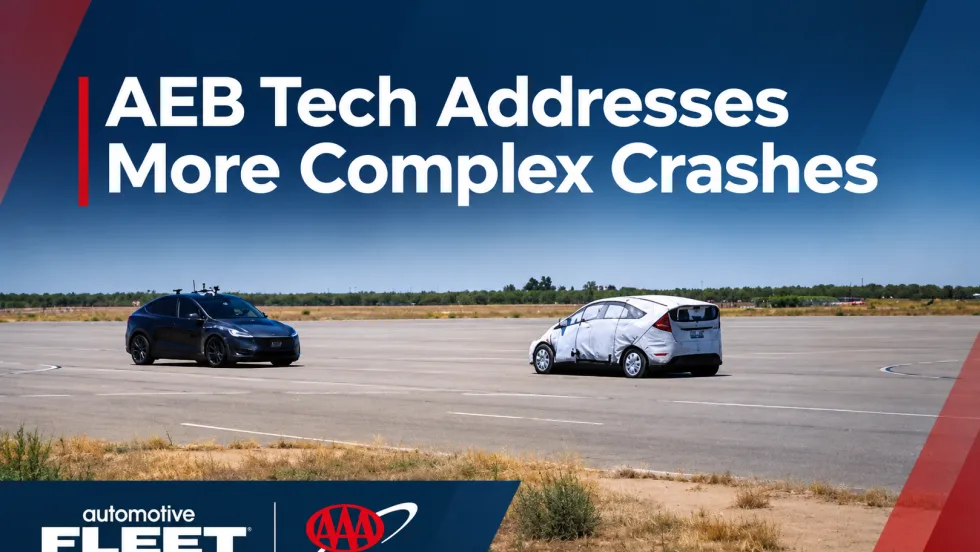
AAA Testing Finds Gaps in Intersection AEB Crash Prevention
Testing of four 2026 model-year vehicles found that automatic emergency braking prevented collisions in standardized intersection scenarios, but three vehicles failed to avoid crashes when another vehicle turned into their path.
Read More →
Which Fleet Types Have the Highest Severe Speeding Rates?
New research from SambaSafety finds significant differences in speeding rates across fleet industries, even as nearly 90% of surveyed fleets report using telematics.
Read More →
When a Cyberattack Hits Your Fleet: What Happens Next?
“You have two opportunities to test your plans: when you choose or when the threat actor chooses.” A cybersecurity expert reveals what fleet managers need to know before a cyberattack puts their operations at risk — and why the decisions made in the first moments can shape the entire recovery.
Read More →
Tips for Driving Safely on Halloween Night
This video features a reminder from the Connecticut Department of Transportation (DOT) and the Connecticut Police Chiefs Association, urging drivers to prioritize safety this Halloween.
Read More →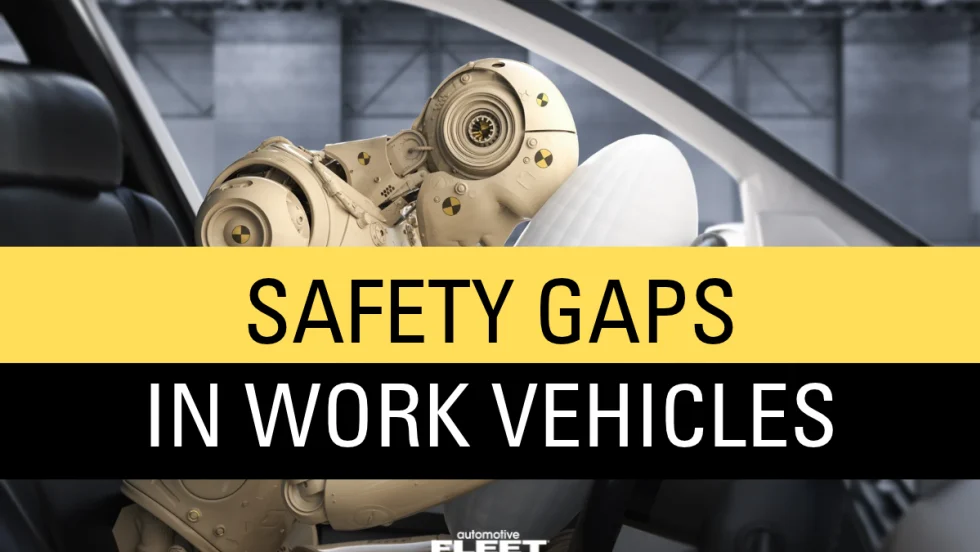
IIHS Crash Avoidance Tests Reveal Safety Gaps in Cargo Vans and Work Trucks
New IIHS crash avoidance ratings show uneven performance among cargo vans and heavy-duty pickups, with most struggling to avoid vehicle-to-vehicle collisions.
Read More →
What’s Next for Fleet? Safety, AI & Industry Recognition | AF News Recap
Could your company's culture be encouraging distracted driving? This week, we're exploring how workplace expectations affect driver safety, what AI, EVs, and autonomous vehicles could mean for the future of fleet management, and how fleet professionals can strengthen their award nominations.
Read More →
Does Your Fleet's Culture Encourage Distracted Driving?
What happens when the people responsible for enforcing safety rules are the ones setting the wrong example? The answer may reveal why some of the biggest risks to fleet drivers have little to do with what's written in the employee handbook.
Read More →
Fleet Manager’s Ultimate Playbook: Navigating the New Standard in OEM Connectivity
Rising operating costs, driver safety concerns, and unplanned downtime are putting unprecedented pressure on modern fleets. Discover how fleet managers use embedded OEM connectivity and real-time vehicle data to cut TCO, prevent downtime, and protect drivers without aftermarket telematics hardware.
Read More →
From Driver Well-Being to EV Charging | AF News Recap
Mental health belongs in the fleet safety conversation. This week, we’re looking at five ways fleets can support employee well-being before a crisis, plus Holman’s expansion in Mexico, new one-day Fleet Forward passes, and why EV charging demand is outpacing infrastructure growth.
Read More →
Nexar-Nauto Merger Aims to Give Fleets Better Safety Intelligence Through Larger Driving Dataset
Stefan Heck tells Automotive Fleet that combining more than 10 billion miles of driving history with Nexar's AI models will give fleets deeper insights into driver risk and roadway conditions than either company could provide independently.
Read More →