




Biofuel Conversion System Offered for Truck Fleets
Optimus Technologies announced the launch of its biofuel conversion system that enables the engine to run almost exclusively on pure biofuel, with diesel being used during startup, shutdown, or fallback operation if necessary.
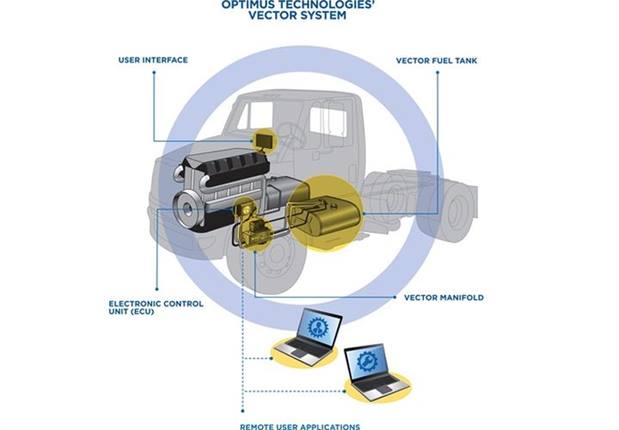
Graphic courtesy of Optimus Technologies.
Optimus Technologies announced the launch of its biofuel conversion system that enables the engine to run almost exclusively on pure biofuel, with diesel being used during startup, shutdown, or fallback operation if necessary.
The Optimus Vector System is designed for medium- and heavy-duty vehicles that are fueled in a central location. Pure or straight biofuels do not have any chemical processing or additives, a contrast to biofuel blends such as E-85 ethanol, as well as B-5 and B-20 biodiesel.
The Optimus Technologies system reduces fuel costs by up to 25% due to the lower cost of biofuel and cuts emissions up to 80% in comparison to using diesel fuel, according to the company.
Built to operate in various temperature ranges, the Vector system is compatible with all modern emission after-treatment systems such as selective catalytic reduction systems (SCRs) and diesel particulate filters (DPF). Vector prices start at $9,000, and the company claims the payback time is potentially less than one year.
The City of Pittsburgh is now testing the biofuel bi-fuel system in its fleet.
"We are impressed with the Vector systems' operations, especially during this harsh winter we have had," said Paul Ostrowski, fleet contract manager of the city's Office of Management and Budget.
Ostrowski's department used the Vector system on five trucks for asphalt maintenance and snow plowing in the past few months. The vehicles fuel at a city fueling facility that dispenses both diesel fuel and biofuel from two separate tanks. This upgrade was paid for by a state grant, an Optimus representative told Government Fleet.
"We were pleasantly surprised by how easy it was to add the conversion systems and by the emission improvements they provide to our road maintenance trucks," Otrowski said.
For now, the company expects the Vector system to be used on intermediate and beyond-useful-life engines, said Colin Huwyler, CEO and founder of Optimus Technology.
"We see the day when biofuel solutions will be provided by engine manufacturers on new trucks as well," Huwyler added.
Optimus is now seeking its first certification from the U.S. Environmental Protection Agency for use with the Navistar DT466 engines between the model years 2004 and 2006. Certification and full production shipments are expected in the second quarter of 2014. Field trials, certifications, and shipments supporting other engines are planned for later this spring and summer.
Field trials are being conducted on dump trucks, day-cab tractors, and construction equipment. Optimus says the system can be successful for a range of home-fueled fleets in the commercial and government sectors including retail/wholesale delivery and transport, waste services, on-road construction, and road maintenance vehicles.
Although the system will not be available for purchase until after EPA certification, fleets may pilot the system at any time. Optimus will assist potential customers with locating biofuel providers in their areas.
More Green Fleet

Merchants Fleet Reports 290M EV Miles as Fleets Navigate Changing Electrification Market
From millions in operating savings to hundreds of millions of EV miles, Merchants Fleet’s latest report reveals what’s working and what’s changing in fleet electrification.
Read More →
The EV Breakdown Nobody's Talking About: Why Most Electric Vehicle Roadside Calls Aren't Mechanical Failures
Here's why EV breakdowns are widely misunderstood.
Read More →
ChargePoint Now Available in Energy Pass
ChargePoint and additional planned charging network integrations were added to GM's Energy Pass.
Read More →

First Look: Slate Auto's Electric Fleet Pickup
Could an affordable, modular EV pickup make electrification more practical for fleets?
Read More →
Slate Debuts Colorful, Unique EV Models
A recent media and client event, studded with electric vehicles dressed up on platforms, planted a new position for the manufacturer in the wider EV market. Fleets will find cost-saving advantages.
Read More →
Slate Electric SUV, Pickup Switchable Model Aims For Light-Duty Fleets
Everything about this EV is counterintuitive and understated, making it stand out from the crowd.
Read More →
Inspiration Mobility Acquires Key Electrada Assets
Inspiration Mobility Group has acquired select assets of Electrada, adding the fleet electrification provider's team, technology, and charging infrastructure development capabilities to its energy management business.
Read More →
Turning Connected Vehicle Data Into Decisions That Matter
Fleet leaders have more data than ever, but turning that data into clear, actionable decisions remains a challenge. This white paper shows how leading organizations are using connected vehicle data to improve safety, reduce costs, and optimize fleet performance. Learn how to turn insight into action across your fleet.
Read More →
Are You Tracking Your Fleet's True Total Cost of Ownership?
Bobit Business Media surveyed 190 fleet professionals and found that while most fleets are tracking costs, fragmented systems and data gaps are keeping true TCO visibility out of reach. With rising pressure to control spend in an increasingly volatile environment, the gap between what fleets think they know and what the data actually shows is wider than you might expect. See how your peers are managing costs today and where the industry still has room to improve.
Read More →