




Autonomous Vehicle Sales to Reach 21M by 2035
Nearly 21 million autonomous vehicles will be sold globally by 2035, according to IHS Automotive, which also predicts the U.S. will lead the world in initial deployment and early adoption of self-driving vehicles.
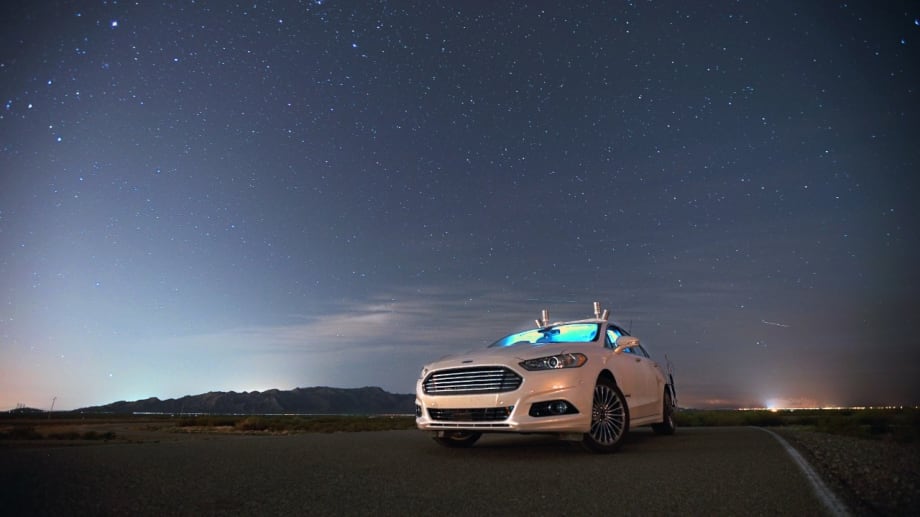
Photo of Ford Fusion Hybrid autonomous research vehicle courtesy of Ford.
Photo of Ford Fusion Hybrid autonomous research vehicle courtesy of Ford.
Nearly 21 million autonomous vehicles will be sold globally by 2035, according to the latest forecast from industry research and consulting firm IHS Automotive.
This estimate, which represents a substantial increase from previous forecasts, reflects recent research and development investments by automotive OEMs, suppliers, and technology companies, the firm said.
Analysts predicted the U.S. will assume a leadership role in initial deployment and early adoption of autonomous vehicles, while Japan will simultaneously ramp up industry coordination and investment ahead of the Summer Olympics in Tokyo in 2020.
“Global sales of autonomous vehicles will reach nearly 600,000 units in 2025,” said Egil Juliussen, director of research at IHS Automotive. “Our new forecast reflects a 43% compound annual growth rate between 2025 and 2035 — a decade of substantial growth, as driverless and self-driving cars alike are more widely adopted in all key global automotive markets.”
IHS Automotive said its forecasts also take into account such key factors as regulatory action and new mobility solutions including ride sharing and car sharing programs.
“Future mobility will connect and combine many different modes and technologies, and autonomous vehicles will play a central role,” said Jeremy Carlson, principal analyst at IHS Automotive. “IHS expects entirely new vehicle segments to be created, in addition to traditional vehicles adding autonomous capabilities. Consumers gain new choices in personal mobility to complement mass transit, and these new choices will increasingly use battery electric and other efficient means of propulsion.”
Despite challenges posed by regulation, liability, and consumer acceptance, deployment in the U.S. is expected to begin with several thousand autonomous vehicles in 2020. That number will balloon to nearly 4.5 million vehicles by 2035, according to IHS Automotive analysis.
IHS Automotive forecasts that more than 5.7 million vehicles equipped with some level of autonomy will be sold in China in 2035. China represents the single largest market for the technology. The sheer volume of vehicles sold there, as well as consumer demand for new technologies, is expected to drive growth. Additionally, regulators may recognize the potential of autonomous mobility to address growing safety and environmental concerns.
Major markets in Western Europe will maintain industry technology leadership through the premium segment, with a little more than 3 million autonomous vehicles sold in 2035, according to forecasts. Another 1.2 million vehicles will be sold in Eastern Europe, analysts estimated.
The research firm also forecasts more than 1 million vehicles with some level of autonomy in the Middle East and Africa in 2035.
In Japan and South Korea collectively, IHS Automotive research indicates nearly 1.2 million vehicles will be enabled with some form of autonomous driving capability by 2035. Demographics and an affinity for technology help both markets.
Challenges to autonomous vehicle deployment include persistent concerns about software reliability and cybersecurity. Both of these issues, however, are showing improvements as technology evolves and the industry addresses the threats, according to analysts.
In addition, the implementation of local and federal guidelines and regulatory standards — as well as development of a legal framework for self-driving cars — continues to prove challenging. Various states and regions have begun to develop these frameworks, while others are still crafting their approach.
“The future fleets of driverless vehicles will provide mobility services for anyone and anything, creating exciting and new opportunities for the automotive industry,” said Juliussen. “Increasing competition from the high-tech and other industries is accelerating the auto industry’s autonomous software and cybersecurity development efforts.”
Carlson added: “Those who don’t adjust to a changing world will unfortunately be left behind, or will at least face a very different industry.”
More Safety

Nexar-Nauto Merger Aims to Give Fleets Better Safety Intelligence Through Larger Driving Dataset
Stefan Heck tells Automotive Fleet that combining more than 10 billion miles of driving history with Nexar's AI models will give fleets deeper insights into driver risk and roadway conditions than either company could provide independently.
Read More →
Don't Wait for a Crisis: 5 Ways to Build Mental Health Into Your Fleet Safety Program
For Suicide Prevention Month, fleet and safety leaders have an opportunity to put mental health where it belongs: at the center of workplace safety.
Read More →
How Camera Data Can Strengthen a Fleet’s Insurance Renewal
Insights from a commercial insurance carrier and a broker show how fleets can turn video telematic data, driver coaching, and improved claims results into a stronger case at insurance renewal.
Read More →
The Safest Fleets Aren’t the Ones with the Most Technology
You’ve made the telematics investment. Here’s how to capture the other half of its value and build the safest fleet on the road.
Read More →
Hidden in Plain Sight: Fleet Compliance Risks
Fleet compliance isn't just about having policies — it's about consistently enforcing them. This practical guide reveals six hidden compliance risks common in public sector and shared fleet operations and outlines proven strategies to improve visibility, accountability, and audit readiness
Read More →
NETS Sets 2026 Fleet Safety Benchmark Conference for Indianapolis
The Sept. 15–17 program will feature fleet benchmarking data, case studies, emerging technologies, and implementation strategies while running alongside the NSC Safety Congress & Expo.
Read More →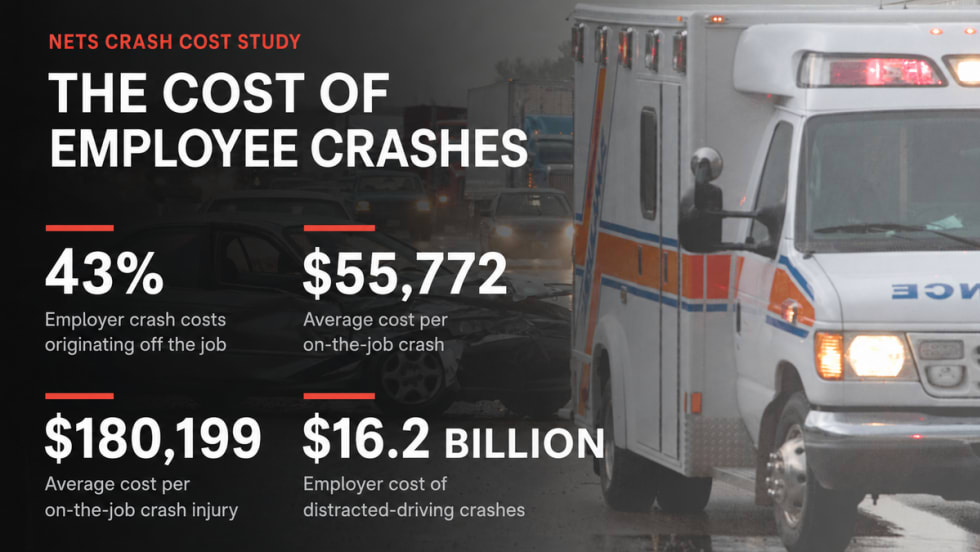
Off-the-Job Crashes Account for 43% of Employers’ $61.7 Billion Crash Burden
NETS quantifies costs dispersed across fleet, risk, HR, and other departments while providing new per-crash benchmarks for employers.
Read More →
Ram Recalls More Than 1.27 Million 1500 Pickups for Seat Belt Anchor Issue
The recall affects certain 2019-2026 Ram 1500 pickups that may have improperly attached second-row seat belt buckle anchors.
Read More →
How Better Visibility Cut Speeding Violations by 48%
Fleet leaders don't need more data, they need clearer visibility into what the data is saying. This case study explores how one utility replaced speeding-event counts with a single metric — miles driven in violation — to strengthen safety and significantly reduce speeding violations.
Read More →
Operation Safe Driver Week: Why the Industry's Oldest Safety Campaign Still Matters to Fleets
A look at how a 2007 enforcement initiative became one of the most consequential weeks on the fleet safety calendar, and what it means for your drivers in 2026.
Read More →