





Further Reading: Leading the Charge for EV Battery Recycling
Audi Tests Methods to Recycle/Reuse Plastic in Vehicles
With the goal of making recycling and reuse—cycling—an integral part of its automotive value chain, Audi seeks to gain experience with wide range of processing techniques and produce derivatives for future application of specific raw materials.
September 28, 2022
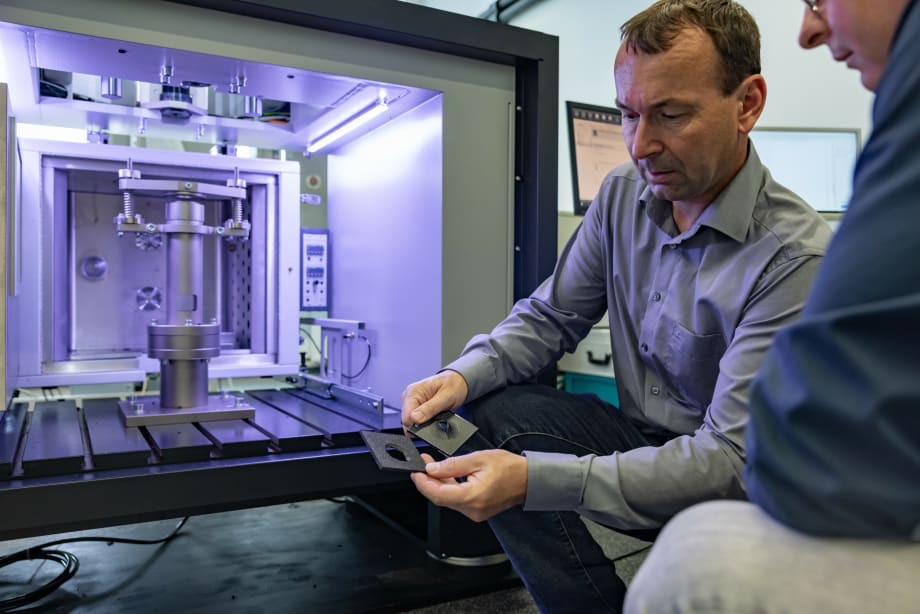
The company envisions qualifying an increasing number of materials for diverse and demanding applications in cars and identifying optimal processing and recycling techniques, with the final goal of creating closed cycles.
Photo: Audi
2 min to read
German luxury vehicle manufacturer Audi is launching pilot reprocessing projects to research ways of improving material recyclability and saving primary materials. Collaborating with the Fraunhofer Institute, a German applied science research center, the automaker is testing an additional method of recycling plastics, to make them usable for mass production.
With the goal of making recycling and reuse—cycling—an integral part of its automotive value chain, Audi seeks to gain experience with wide range of processing techniques and produce derivatives for future application of specific raw materials.
While tracking the energy required for recycling—anything ecologically unfeasible will not be pursued after the pilot phase—Audi is investigating a variety of technologies at the same time: mechanical, chemical and, most recently, physical recycling.
The company envisions qualifying an increasing number of materials for diverse and demanding applications in cars and identifying optimal processing and recycling techniques, with the final goal of creating closed cycles.
“Our focus is always on getting as many plastic contents as possible out of the car at the end of its life in order to be able to recycle them again,” says Mike Herbig, Audi’s polymer team.
According to the automaker, today’s vehicles typically contain more than 200 kilograms (440 lbs) of plastics and plastic composites. Bumpers, radiator grilles, various interior parts, as well as drive system and air conditioning components all made from plastic materials. This sometimes mixed plastic waste is first mechanically crushed and separated from other materials, and then reprocessed into plastic granules in a subsequent process.
Recycled components must meet the same criteria as virgin materials, including crash safety, heat resistance, and media resistance, e.g., against organic solvents, oil, or hydraulic fluids. The elements of dimensional stability and quality, feel, appearance, and smell throughout the vehicle’s entire service life must also meet standards. Environmental requirements also must be considered.
In addition to mechanical plastics recycling, Audi, together with the Karlsruhe Institute of Technology (KIT) and industry partners, has developed a chemical recycling method.
The company also is conducting a feasibility study with the Fraunhofer Institute for Process Engineering and Packaging IVV to investigate the possibilities of physically recycling automotive plastic waste and its reuse in vehicles, a process that can create very pure plastic granulate equal to the quality of virgin material.
In the future, Audi plans to use the various recycling technologies to complement each other in recovering plastics from old vehicles for high-quality reuse and increase the proportion of recycled materials in vehicles.
More Global Fleet
GeoFencing Adds to Your Truck Security Arsenal
Geofencing is a familiar fleet tool today, but its early adoption marked a major shift in vehicle tracking, route monitoring, and the debate over employee privacy.
Read More →
Holman Takes Full Ownership of ARIZA in Mexico
Holman is bringing its Mexican fleet management operation fully under its own brand after more than 30 years as a joint venture. The change gives multinational fleet customers a single Holman operation across the U.S., Canada, and Mexico.
Read More →
5 Tire Maintenance Tips to Help Prevent Work Truck Downtime
Regular tire checks can do more than extend tread life. These five maintenance practices can help work truck fleets catch problems early, reduce costs, and prevent downtime.
Read More →

Proven Ways to Reduce Work Truck Downtime
The age-old problem of downtime will always be a reality, but with new strategies at hand, fleets have more ways to keep trucks on the road longer.
Read More →


Cameras, Safety and Insurance: From Reactive Claims to Real-Time Prevention (Part 2 of 2)
Part Two: Commercial auto remains one of the most challenging and costly lines of coverage for fleet operators and insurers alike. Continue learning more about how to effectively address these issues from Onur Aksan, Enterprise Business Development Executive, Geotab
Read More →
Cameras, Safety and Insurance: From Reactive Claims to Real-time Prevention
Commercial auto remains one of the most challenging and costly lines of coverage for fleet operators and insurers alike. Learn more about how to effectively address these issues from Onur Aksan, Enterprise Business Development Executive, Geotab.
Read More →
Fleet Costs Are Rising: Here’s How Leaders Are Responding
Fleet leaders are under pressure to reduce costs, adapt to economic uncertainty, and make smarter decisions. See how peers across North America are responding with real data, proven strategies, and forward-looking insights. Download the 2026 Market Pulse Report to benchmark your strategy and uncover where you can gain an edge.
Read More →
Enterprise Fleet Management Surpasses 900,000 Vehicles in U.S. & Canada
Enterprise Mobility connects with mobility solutions around the globe
Read More →