




All HGVs in the UK To Be Zero Emission by 2040
All-new heavy goods vehicles (HGVs) will need to be zero emission by 2040, the UK government has announced at COP26 on Transport Day (November 10, 2021). The government will phase out non-zero emission HGVs below 26 tons by 2035, with all new HGVs sold in the UK to be zero emission from 2040, making it a world first for the UK.
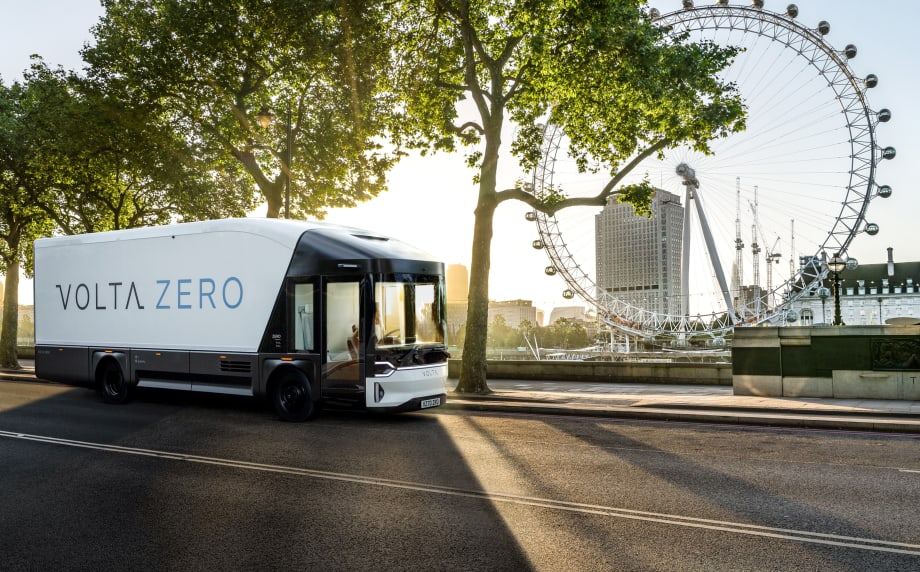
A prototype full-electric 16-tonne Volta commercial vehicle that will be used for customer evaluation in London and Paris by mid-2022, ahead of series production starting by the end of next year.
Credit: Volta Trucks
All-new heavy goods vehicles (HGVs) will need to be zero emission by 2040, the UK government has announced at COP26 on Transport Day (November 10, 2021).
In a statement from the Department for Transport conveyed by Transport Minister Grant Shapps, the government will phase out non-zero emission HGVs below 26 tons by 2035, with all new HGVs sold in the UK to be zero emission from 2040, making it a world first for the UK.
It places fleets operating in the UK at the forefront of the electric revolution, with new petrol and diesel passenger cars and light commercial vehicles banned from 2030, with a requirement to be zero emission by 2035.
Commenting on the announcement, British Vehicle Rental and Leasing Association (BVRLA) chief executive, Gerry Keaney, said:
“Today’s announcement is a welcome update and will support the industry in its drive towards decarbonization. BVRLA members are already leading the way in making positive changes and it’s vital that regulations acknowledge the different challenges experienced from one vehicle type to another.
“Use cases of HGVs vary significantly, so we welcome the government’s intention to consult on derogations that will enable a fair and achievable transition. The BVRLA looks forward to working with the government on the delivery plan that will be essential in ensuring the UK road transport network can be decarbonized successfully.”
Olly Craughan, head of corporate social responsibility at parcel delivery firm DPD in the UK and one of the brands leading the way on the decarbonization of fleets, added:
“We totally support the withdrawal of the selling of new, non-zero emission HGVs in the UK by 2035, as we do the sale of new diesel/petrol final mile fleet vehicles by 2030. We would urge all parties involved in the supply of alternative green HGVs to press the fast forward button on their development plans so businesses like ourselves can make the transition as soon as possible.”
However, Sue Robinson - the chief executive of the National Franchised Dealers Association (NFDA) Commercial Vehicle Division - was more circumspect. She added: “Whilst we fully support the government’s efforts and continue to work hard alongside our business members to decarbonize transport, we must highlight that greater investments and further clarity will be needed within the HGV sector.
“Meeting the 2035 and 2040 targets will be challenging primarily due to the lack of strategy and direction on what technology will represent a viable alternative to diesel and compressed natural gas for trucks.
“The 2035 cut-off date for trucks below 26 tonnes is concerning as, without a clear plan, it could push buyers onto heavier trucks over 26 tonnes for an additional five years.”
Caption: A prototype full-electric 16-tonne Volta commercial vehicle that will be used for customer evaluation in London and Paris by mid-2022, ahead of series production starting by the end of next year.
Photo credit: Volta Trucks
More Global Fleet

GeoFencing Adds to Your Truck Security Arsenal
Geofencing is a familiar fleet tool today, but its early adoption marked a major shift in vehicle tracking, route monitoring, and the debate over employee privacy.
Read More →
Holman Takes Full Ownership of ARIZA in Mexico
Holman is bringing its Mexican fleet management operation fully under its own brand after more than 30 years as a joint venture. The change gives multinational fleet customers a single Holman operation across the U.S., Canada, and Mexico.
Read More →
5 Tire Maintenance Tips to Help Prevent Work Truck Downtime
Regular tire checks can do more than extend tread life. These five maintenance practices can help work truck fleets catch problems early, reduce costs, and prevent downtime.
Read More →

Proven Ways to Reduce Work Truck Downtime
The age-old problem of downtime will always be a reality, but with new strategies at hand, fleets have more ways to keep trucks on the road longer.
Read More →


Cameras, Safety and Insurance: From Reactive Claims to Real-Time Prevention (Part 2 of 2)
Part Two: Commercial auto remains one of the most challenging and costly lines of coverage for fleet operators and insurers alike. Continue learning more about how to effectively address these issues from Onur Aksan, Enterprise Business Development Executive, Geotab
Read More →
Cameras, Safety and Insurance: From Reactive Claims to Real-time Prevention
Commercial auto remains one of the most challenging and costly lines of coverage for fleet operators and insurers alike. Learn more about how to effectively address these issues from Onur Aksan, Enterprise Business Development Executive, Geotab.
Read More →
Fleet Costs Are Rising: Here’s How Leaders Are Responding
Fleet leaders are under pressure to reduce costs, adapt to economic uncertainty, and make smarter decisions. See how peers across North America are responding with real data, proven strategies, and forward-looking insights. Download the 2026 Market Pulse Report to benchmark your strategy and uncover where you can gain an edge.
Read More →
Enterprise Fleet Management Surpasses 900,000 Vehicles in U.S. & Canada
Enterprise Mobility connects with mobility solutions around the globe
Read More →