




Related: IIHS Developing Ratings for Advanced Driver Assistance Systems
57 Vehicles Meet Stricter IIHS Safety Criteria for 2019
Only 30 2019-model-year vehicles have named a Top Safety Pick+, while another 27 have earned Top Safety Pick awards in a year in which the Insurance Institute for Highway Safety has raised the bar, the vehicle safety evaluator has announced.
by Marianne Mathews
December 19, 2018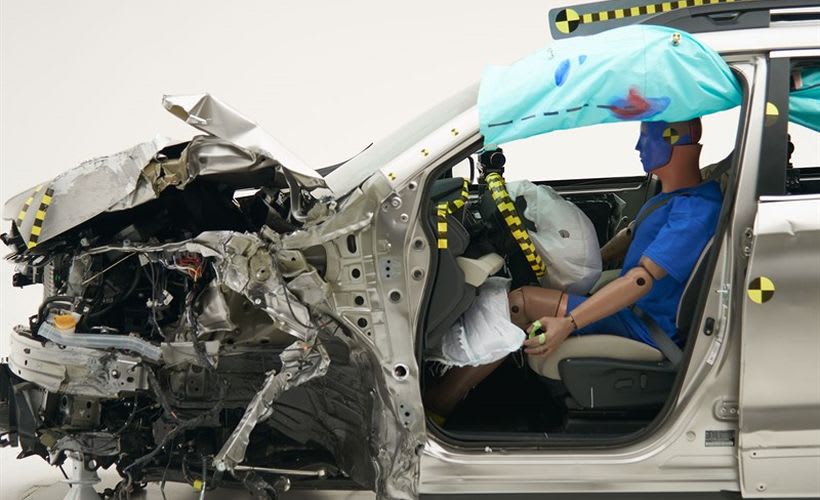
The 2019 Subaru Ascent (shown) was one of the top-performing vehicles in crash testing that included the small front overlap test.
Photo courtesy of IIHS.
3 min to read
Only 30 2019-model-year vehicles have named a Top Safety Pick+, while another 27 have earned Top Safety Pick awards in a year in which the Insurance Institute for Highway Safety has raised the bar, the vehicle safety evaluator has announced.
For a vehicle to earn 2019 Top Safety Pick+ recognition, the institute now demands a good rating in the passenger-side small overlap front test versus an acceptable or good rating for the 2018 award. For the second-tier, 2019 Top Safety Pick, an acceptable or good rating in the passenger-side test is a new criterion. Vehicles must meet the most strict criteria the institute has set since 2013.
In addition, the 57 vehicles in both categories scored good ratings in five other rigorous crashworthiness tests conducted by the institute. Finally, all 57 vehicles also feature available automatic emergency braking systems that garner advanced or superior ratings for front crash prevention.
However, according to the institute, the majority of award winners qualify only when optionally equipped because good or acceptable headlights and an advanced- or superior-rated front crash prevention system aren't part of their base trims.
Launched in 2006, the Safety Pick program has influenced automakers to improve safety systems. For example, among the 57 vehicles that qualify for one of the 2019 awards, 31 offer standard front crash prevention systems.
2019 Top Safety Picks+
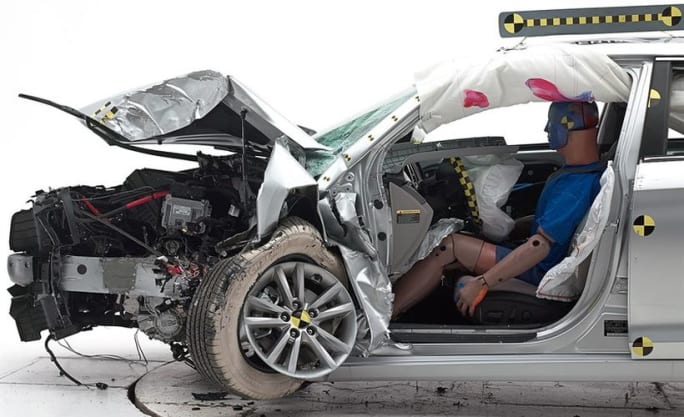
The 2019 Hyundai Sonata (shown) performed well in the small front overlap test to gain a Top Safety Pick+ award.
Photo courtesy of IIHS.
As for the kind of models and brands that fared best so far in the 2019 awards, cars and SUVs comprise the majority of Top Safety Pick+ winners.
With seven models earning the recognition, Subaru captured the most 2019 Top Safety Pick+ awards for the Ascent, Crosstrek, Impreza sedan and wagon, Legacy, Outback, and WRX.
Taking second place is Hyundai Motor Co., which owns the Hyundai, Kia, and Genesis brands. Hyundai and Kia nameplates earned four and five Top Safety Pick+ awards, respectively, while Genesis captured three.
Mercedes-Benz and Toyota Motor Corp., with its Lexus brand, qualified for three Top Safety Pick+ awards. BMW, Honda, and Acura picked up two Top Safety Pick+ awards. Mazda earned one Top Safety Pick+.
2019 Top Safety Picks
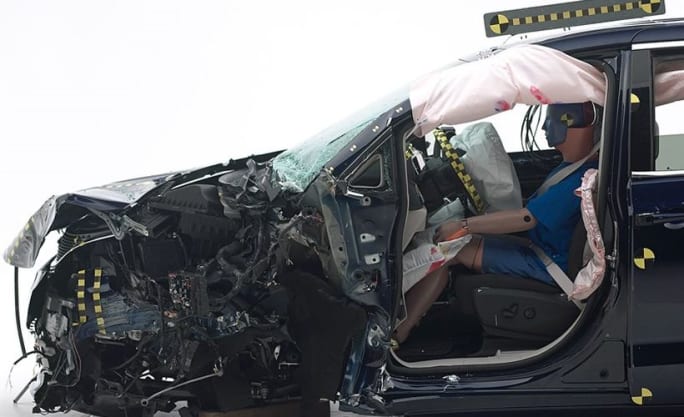
The 2019 Chrysler Pacifica (shown) performed well in the small front overlap test and other crash tests to gain a Top Safety Pick.
Photo courtesy of IIHS.
The second-tier award went to mini cars and minivans, and everything in between.
The Subaru Forester compact SUV captured a 2019 Top Safety Pick as did the BMW X2, Honda CR-V, Hyundai Tucson, Mazda CX-3, and Mitsubishi Outlander in the small SUV category.
Overall, Hyundai earned a total of six Top Safety Pick awards — three of which are in the small car category. Kia took home three Top Safety Picks for the Kia Rio four-door sedan, the Kia Soul, and the Kia Cadenza.
Several other models — among them midsize cars, large cars, and midsize luxury cars — also captured Top Safety Pick recognition.
However, several models to qualify for either award. These include Fiat Chrysler's Dodge, Jeep, and Ram brands; Ford and its Lincoln brand; General Motors' Buick, Cadillac, Chevrolet, and GMC brands; and Tesla. In addition, Volvo hasn't yet qualified for a 2019 award due to missing passenger-side small overlap front test results.
More Safety

Does Your Fleet's Culture Encourage Distracted Driving?
What happens when the people responsible for enforcing safety rules are the ones setting the wrong example? The answer may reveal why some of the biggest risks to fleet drivers have little to do with what's written in the employee handbook.
Read More →
Sponsored•October 1, 2026
Fleet Manager’s Ultimate Playbook: Navigating the New Standard in OEM Connectivity
Rising operating costs, driver safety concerns, and unplanned downtime are putting unprecedented pressure on modern fleets. Discover how fleet managers use embedded OEM connectivity and real-time vehicle data to cut TCO, prevent downtime, and protect drivers without aftermarket telematics hardware.
Read More →
From Driver Well-Being to EV Charging | AF News Recap
Mental health belongs in the fleet safety conversation. This week, we’re looking at five ways fleets can support employee well-being before a crisis, plus Holman’s expansion in Mexico, new one-day Fleet Forward passes, and why EV charging demand is outpacing infrastructure growth.
Read More →
Nexar-Nauto Merger Aims to Give Fleets Better Safety Intelligence Through Larger Driving Dataset
Stefan Heck tells Automotive Fleet that combining more than 10 billion miles of driving history with Nexar's AI models will give fleets deeper insights into driver risk and roadway conditions than either company could provide independently.
Read More →
Don't Wait for a Crisis: 5 Ways to Build Mental Health Into Your Fleet Safety Program
For Suicide Prevention Month, fleet and safety leaders have an opportunity to put mental health where it belongs: at the center of workplace safety.
Read More →
How Camera Data Can Strengthen a Fleet’s Insurance Renewal
Insights from a commercial insurance carrier and a broker show how fleets can turn video telematic data, driver coaching, and improved claims results into a stronger case at insurance renewal.
Read More →
The Safest Fleets Aren’t the Ones with the Most Technology
You’ve made the telematics investment. Here’s how to capture the other half of its value and build the safest fleet on the road.
Read More →
Sponsored•August 7, 2026
Hidden in Plain Sight: Fleet Compliance Risks
Fleet compliance isn't just about having policies — it's about consistently enforcing them. This practical guide reveals six hidden compliance risks common in public sector and shared fleet operations and outlines proven strategies to improve visibility, accountability, and audit readiness
Read More →
NETS Sets 2026 Fleet Safety Benchmark Conference for Indianapolis
The Sept. 15–17 program will feature fleet benchmarking data, case studies, emerging technologies, and implementation strategies while running alongside the NSC Safety Congress & Expo.
Read More →
Off-the-Job Crashes Account for 43% of Employers’ $61.7 Billion Crash Burden
NETS quantifies costs dispersed across fleet, risk, HR, and other departments while providing new per-crash benchmarks for employers.
Read More →