




17 House Members Prod Federal Safety Agency to Issue Stronger Vehicle Safety Standards
WASHINGTON, D.C. --- Expressing concerns about vehicle rollover deaths and injuries, 17 Democratic and Republican members of the House of Representatives have sent a letter to the administrator of the National Highway Traffic Safety Administration (NHTSA) to push for higher safety standards.
WASHINGTON, D.C. --- Expressing concerns about vehicle rollover deaths and injuries, 17 Democratic and Republican members of the House of Representatives have sent a letter to the administrator of the National Highway Traffic Safety Administration (NHTSA) to push for higher safety standards. The letter urges the federal agency to issue "strong and effective safety standards" as enacted in the "Safe, Accountable, Flexible, and Efficient Transportation Equity Act – A Legacy for Users" (SAFETEA-LU) in August 2005. The specific vehicle safety rulemakings include rollover, occupant ejection, roof strength and side impact protection. Congress members signing the letter called for the safety rules to be addressed in a "comprehensive fashion" by the agency, rather than as "stand-alone." Leading the oversight effort are several members of the House Energy and Commerce Committee who championed enactment of these vehicle safety provisions in 2005. They include Bobby Rush (D-IL), chair of the Commerce, Trade and Consumer Protection Subcommittee, and Mary Bono (R-CA), Edward Markey (D-MA) and Rep. Henry Waxman (D-CA). Also signing the letter were Ed Whitfield (R-KY), Shelley Moore Capito (R-WV), Michael Castle (R-DE), Mike Doyle (D-PA), Jay Inslee (D-WA), Lois Capps (D-CA), Richard Neal (D-MA), Virgil Goode (R-VA), Jason Altmire (D-PA), Paul Ryan (R-WI), Gene Green (D-TX), Michael Arcuri (D-NY), and Paul Gillmor (R-OH). Jacqueline Gillan, vice president of Advocates for Highway and Auto Safety, commended the committee members for writing the letter to NHTSA. "It took bipartisan support to get these provisions enacted into law and it will take bipartisan action to ensure they meet the spirit and the letter of the law," she said. "This letter clearly signals to the agency that Congress is watching and waiting for effective safety rules that will save lives and prevent disabling injuries." Annually, over 10,500 people die on the nation's roads due to rollover. While rollover occurs in only about 3 percent of all crashes, it accounts for a third of all occupant deaths. Implementing a strong roof crush standard that takes into consideration occupant ejection, the letter states, will "prevent the failure of doors, windows and shoulder belts" during a rollover crash. "Safety groups are discouraged that NHTSA is dramatically minimizing the life-saving potential of this rule," said Joan Claybrook, president of Public Citizen and former NHTSA administrator. "Proof of this is in the fact that many cars already meet the agency’s proposed rule. All of these vehicle rulemakings could save thousands of lives every year if done right. We have the technology, but NHTSA lacks the political will." Critics of the NHTSA's proposed rule, issued by the agency on July 15, 2005, say the rule is so weak that it will save only between 13 to 44 lives. Furthermore, they argue, the proposal continues to test roof strength using windshield and window glazing to provide support, even though in real-world crashes the windshield pops out and the glazing breaks. Congress also directed the agency to upgrade roof strength on both sides of the vehicle, but the proposal only requires testing on one side. Safety groups and safety technology suppliers worked together to support passage of the SAFETEA-LU provisions in 2005. "We applaud this bipartisan effort led by Representatives Bono and Rush," said Bob Hurley of the Enhanced Protective Glass Automotive Association. "This letter will send a strong signal to NHTSA that key members of Congress are working to ensure that the agency adopt performance standards that will result in important protections for the driving public. Enacting these provisions in SAFETEA-LU was the first step. In the months ahead, Congress must continue its oversight role so strong vehicle safety standards will be adopted on schedule."
More Safety

Nexar-Nauto Merger Aims to Give Fleets Better Safety Intelligence Through Larger Driving Dataset
Stefan Heck tells Automotive Fleet that combining more than 10 billion miles of driving history with Nexar's AI models will give fleets deeper insights into driver risk and roadway conditions than either company could provide independently.
Read More →
Don't Wait for a Crisis: 5 Ways to Build Mental Health Into Your Fleet Safety Program
For Suicide Prevention Month, fleet and safety leaders have an opportunity to put mental health where it belongs: at the center of workplace safety.
Read More →
How Camera Data Can Strengthen a Fleet’s Insurance Renewal
Insights from a commercial insurance carrier and a broker show how fleets can turn video telematic data, driver coaching, and improved claims results into a stronger case at insurance renewal.
Read More →
The Safest Fleets Aren’t the Ones with the Most Technology
You’ve made the telematics investment. Here’s how to capture the other half of its value and build the safest fleet on the road.
Read More →
Hidden in Plain Sight: Fleet Compliance Risks
Fleet compliance isn't just about having policies — it's about consistently enforcing them. This practical guide reveals six hidden compliance risks common in public sector and shared fleet operations and outlines proven strategies to improve visibility, accountability, and audit readiness
Read More →
NETS Sets 2026 Fleet Safety Benchmark Conference for Indianapolis
The Sept. 15–17 program will feature fleet benchmarking data, case studies, emerging technologies, and implementation strategies while running alongside the NSC Safety Congress & Expo.
Read More →
Off-the-Job Crashes Account for 43% of Employers’ $61.7 Billion Crash Burden
NETS quantifies costs dispersed across fleet, risk, HR, and other departments while providing new per-crash benchmarks for employers.
Read More →
Ram Recalls More Than 1.27 Million 1500 Pickups for Seat Belt Anchor Issue
The recall affects certain 2019-2026 Ram 1500 pickups that may have improperly attached second-row seat belt buckle anchors.
Read More →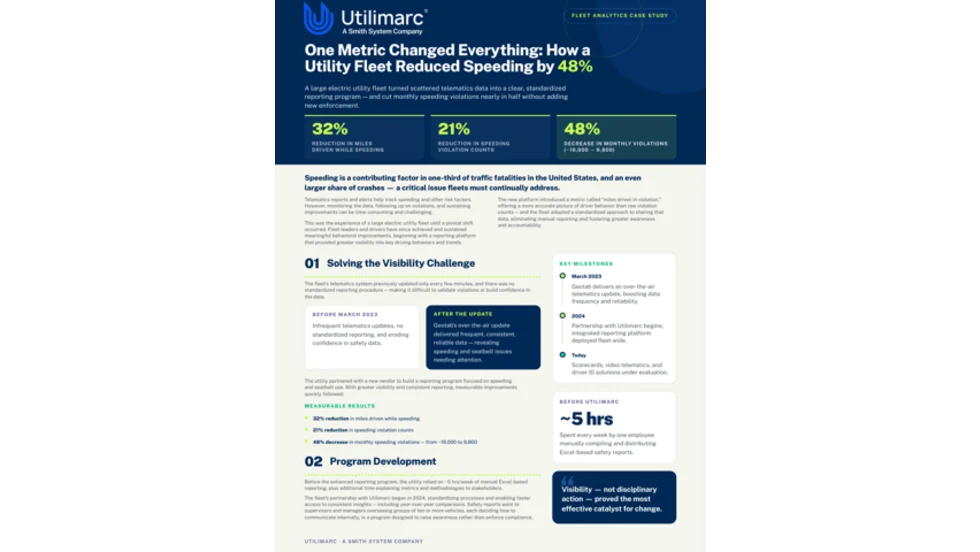
How Better Visibility Cut Speeding Violations by 48%
Fleet leaders don't need more data, they need clearer visibility into what the data is saying. This case study explores how one utility replaced speeding-event counts with a single metric — miles driven in violation — to strengthen safety and significantly reduce speeding violations.
Read More →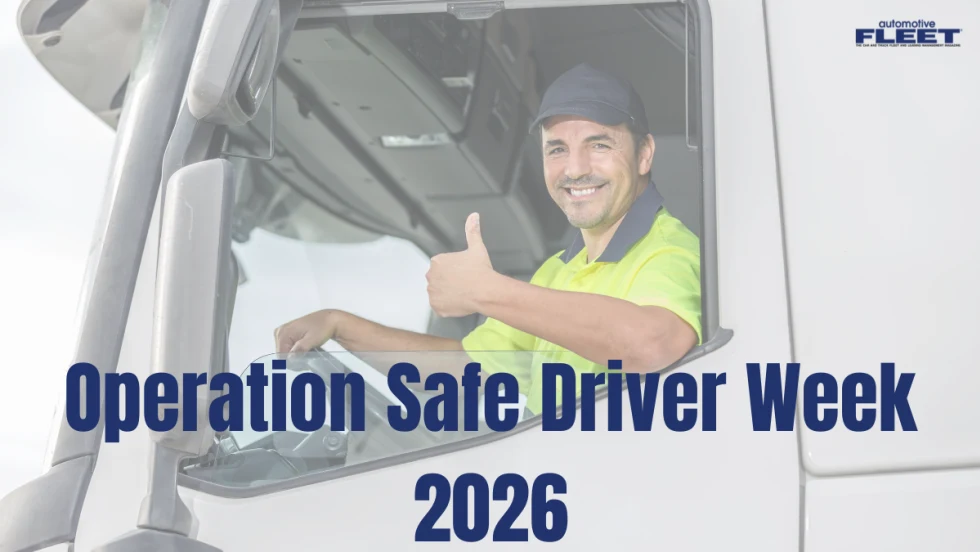
Operation Safe Driver Week: Why the Industry's Oldest Safety Campaign Still Matters to Fleets
A look at how a 2007 enforcement initiative became one of the most consequential weeks on the fleet safety calendar, and what it means for your drivers in 2026.
Read More →