




Why Certain High-Tech Firms Favor Reimbursement
Historically, IBM was the largest company offering a corporate reimbursement program. In its heyday, IBM had more than 25,000 drivers on reimbursement. However, since then, there have emerged major company-provided fleets operated by hi-tech companies, such as Hewlett-Packard, Apple, Intel, etc.. Despite this trend, certain high-tech companies continue to be more receptive to driver reimbursement programs than company-provided vehicles. Why is this so?

The total driver reimbursement market is estimated to include 1.5-2 million drivers. This includes drivers under the fixed and variable reimbursement (FAVR) program, along with those on a fixed payment monthly allowance program and a set cents-per-mile reimbursement plan. There are three types of payment plans utilized to reimburse employees driving personal vehicles for business. They are:
Fixed payments (a monthly allowance).
Variable payment (cents-per-mile).
FAVR – IRS Revenue Procedure 2010-51.
The FAVR program was first established in 1991 by the IRS. It reimburses employees on a non-taxable basis through a combination of a monthly allowance and a per-mile reimbursement. The FAVR fixed payment includes projected fixed costs, such as depreciation, insurance registration, license fees, and personal property taxes. A FAVR plan also covers projected operating costs, such as gasoline, fuel taxes, oil, tires, routine maintenance, and repairs. Hence, the name fixed and variable rate.
Business Segments Receptive to Reimbursement
The business segments that are currently “hot” for reimbursement are manufacturing, medical/dental supply companies, and computer services companies. Another industry segment receptive to reimbursement is the retail consumer products industry, which includes companies such as clothing retailer The Gap Inc. and Bed Bath & Beyond, a chain of merchandise retail stores. High employee turnover in the retail consumer products industry makes reimbursement appealing because it is easier to adminstrate than a company-provided program.
An additional business segment long identified with reimbursement is the high-tech industry. Historically, IBM was the largest company offering a reimbursement program. In its heyday, IBM had more than 25,000 drivers on reimbursement. However, since then, there have emerged major exceptions, such as Hewlett-Packard, Apple, Intel, etc., all operating company-provided fleets. Also, some high-tech companies may not have a major fleet presence in the U.S., but they have a significant fleet footprint overseas, particularly Europe, where vehicles are provided as part of the employee compensation package.
A classic example is Microsoft, which has a relatively insignificant U.S. fleet operation, but, globally, operates approximately 10,000 company-provided vehicles, mostly in Europe, with fleet management headquartered in Germany. In Europe, taxation laws, varying by country, are an important factor driving the decision to make a company vehicle part of an employee’s compensation program.
Nevertheless, why are certain high-tech companies more receptive to driver reimbursement programs in the U.S. versus company-provided vehicles?
“High-tech companies typically have a more progressive work force, where choice of vehicle matters. Also, the demographics of their work force tend to be younger, and a company-provided vehicle may not be as high on their want list as it is in other industries,” said Greg Harper, president of Runzheimer International. “But, perhaps, the biggest factor favoring reimbursement in the hi-tech industry is the tremendous swings in its workforce. When a tech company has a major product launch, it may double its field sales team and then scale back in six months. It is a highly volatile industry. A reimbursement program allows them to react very quickly to workforce changes.”
Another reason why some high-tech companies prefer reimbursement harkens back to the dot.com days. “Many high-tech companies may be looking to be acquired. They know the acquirer wants as clean a P&L as they can get, and one way to do so is by not providing company vehicles,” Harper added.
Currently, the market for driver reimbursement is growing, but not at the expense of company-provided programs. The growth is occurring due to the improvement in the economy, in particular, the manufacturing segment, which is rehiring and adding new employees into existing driver reimbursement programs. In addition, even if a business offers company vehicles to its sales and service organizations, most also have a sizeable number of employees who are reimbursed for the use of their personal vehicles to conduct company business.
Growth in Contract Labor
At many high-tech companies, a sizeable percentage of their work force is contract labor, who are typically not assigned a company-provided vehicle. The projected growth in contract labor promises to increase the frequency of reimbursement discussions at major corporations.
“The labor market seems to be going to short-term employees working at the project level. This is what we are hearing, and this is what we are seeing,” Harper said. “Five years from now, maybe 20 percent of a company’s employees might be contract employees. There also seems to be a generational preference toward this work style, especially among ‘millennials’ who like the idea of moving from project to project.”
In corporate America, reimbursement continues to be a perennial or semi-perennial issue that emerges, recedes, and re-emerges, especially during times of fuel price volatility, economic turmoil, and, in the future, by changes in work force demographics.
Let me know what you think.
mike.antich@bobit.com
More Blog Posts

Fleets Want Trust Restored with Suppliers
During this period of ongoing supply constraints, the trust that fleet managers had with OEMs, upfitters, and dealers has been strained. Fleet managers say they have had too many experiences over the past three years coping with erroneous information, adjusting to multiple price increases, and feeling betrayed by inadequate transparency from suppliers.
Read More →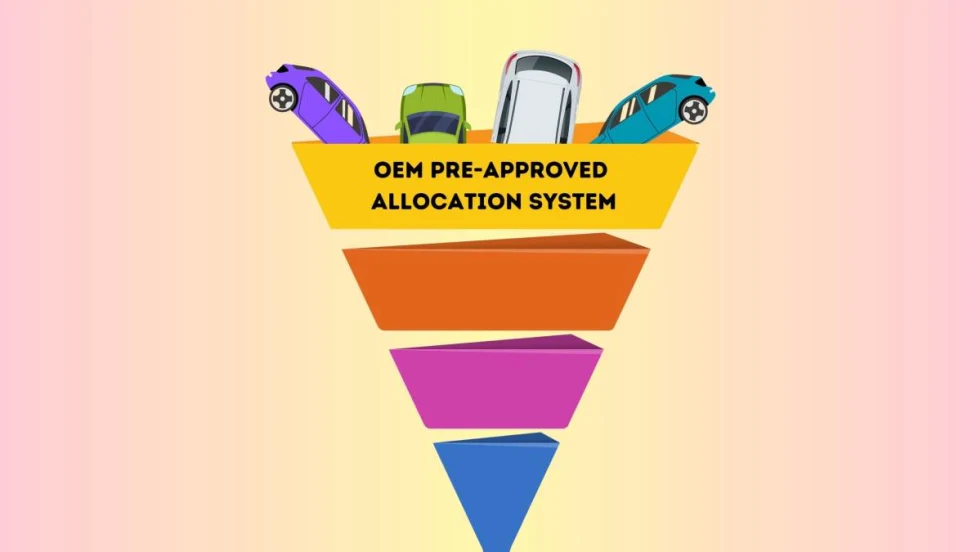
Scheduled Replacement Cycles Are Becoming a Distant Memory
The ongoing difficulty in sourcing replacement vehicles is forcing companies to extend the service lives of vehicles that are unable to be replaced, which, inevitably, increases unscheduled maintenance expenses.
Read More →
Fleet Simplification is the Antidote to Asset Variability
Fleet simplification identifies asset functions to uncover commonality among the equipment and assets. Simplification increases operational efficiency as end-users become accustomed to the controls, displays, and operation of less diverse units.
Read More →
The Dangers of Static Fleet Policies
A fleet policy is a living document, flexible enough to adapt to evolving business priorities, developing industry trends, and changing industry best practices and standards.
Read More →
Short-Term vs. Long-Term Cost Reductions
Corporate procurement staff are often driven by short-term, immediate cost reductions. However, a longer perspective to soft cost savings is critical because fixating on short-term results will hurt a company in the long run.
Read More →
Uptick in Unscheduled Maintenance Increasing Vehicle Downtime
Fleet data analysis can identify recurring downtime issues. It’s important to determine the root causes of downtime so procedures can be developed to minimize such problems.
Read More →
Eliminate Needless Curb Weight to Maximize ICE & EV Efficiencies
Vehicle weight relates directly to fuel economy. In today’s era of electrification, there is also a direct correlation between vehicle weight and battery range.
Read More →
Tech Dependence Risks Dumbing Down Fleet Manager Expertise
The line between creative thinking and problem solving and doing what the data indicates is thin. To lead in fleet management, you need to balance understanding the fundamentals and embracing what smart technology offers.
Read More →
Leverage the Synergy of Safe Driving to Achieve Sustainability and Cost Goals
Safe driving, emission reductions, and cost containment can all be achieved at the same time.
Read More →
The Playbook for Fleet Manager Success
There are many paths to success — most of them involve being flexible, open-minded, and willing to learn.
Read More →