





Read More: Ongoing Vehicle Sourcing Constraints Aggravated by Higher Fleet Costs
Scheduled Replacement Cycles Are Becoming a Distant Memory
The ongoing difficulty in sourcing replacement vehicles is forcing companies to extend the service lives of vehicles that are unable to be replaced, which, inevitably, increases unscheduled maintenance expenses.
August 23, 2023

It is becoming more difficult to maintain a scheduled replacement policy of fleet vehicles primarily due to the constraints of an OEM pre-approved allocation system that usually results in fewer vehicles ordered than what actually needs to be ordered.
Photo: Canva
4 min to read
Today's pent-up demand from fleet buyers continues to exceed model-year availability of fleet-configured new vehicles from most OEMs. Yes, fleet availability has improved in the past year but the volumes are still below actual market demand. Anecdotally, the rule of thumb cited by some fleet managers is that most fleets are now two to three years behind in vehicle replacements against the real needs of their fleets.
These multi-year fleet ordering constraints have forced companies to extend the service lives of vehicles that they are unable to replace, which, inevitably results in an uptick of unscheduled maintenance expenses.
Since fleet vehicles average 20,000 miles per year, this increased mileage typically takes them into their next PM cycle that necessitates the replacement of wear items such as tires and brakes, which in the past would have been avoided by taking vehicles out-of-service at their scheduled replacement intervals.
Sourcing Constraints Will Persist into MY-2024
Talk to any fleet manager and they will tell you it is becoming more and more difficult to maintain a scheduled replacement policy for fleet vehicles primarily due to the constraints of OEM pre-approved allocation systems that usually allow fewer vehicles to be ordered than what needs to be replaced.
There continues to be a tight supply of new vehicles that are fleet-configured. Nowadays, it is hard to find a traditional “work truck” that isn’t configured with many of the bells and whistles that cater to retail buyers. Also, medium- and heavy-duty commercial vehicles continue to be limited in supply due to end-user demand exceeding chassis production.
Plus, not only is it harder to source replacement vehicles, it is also much more expensive since today's fleet incentives are minimal or non-existent. In many cases, fleets are being forced to buy vehicles from out-of-stock dealer inventory. The reality of today's market is that pricing for dealer stock units does not start at invoice pricing, rather dealer prices tend to start at MSRP with supplemental market price adjustments tacked on top of MSRP. Invariably there is little or no room for price negotiations.
Of course, this is contingent on the fact that a fleet can even find a vehicle to buy out of dealer inventory.
Institutionalization of OEM Pre-Approved Allocation Systems
A key factor as to why sourcing constraints for replacement vehicles still persist into 2024 model-year ordering is because of the “institutionalization” of pre-approved fleet allocation ordering by most OEMs.
The creation of the fleet ordering allocation system was to create fairness in the fleet ordering system to ensure every company has an opportunity to order replacement vehicles and eliminate the prospects of inventory quickly being sold out as it did in 2020-2022 causing early closure of order banks, sometimes after a week of ordering and in a few instances closing a day after opening.
Another reason for the creation of a fleet allocation ordering system was to prevent mega-fleets from buying out major vehicle segments such as vans.
While the intentions were good for creating allocation systems, fleet managers complain that ordering through an allocation system is becoming more cumbersome to navigate due to changing rules such as the shift from quarterly allocations to semi-annual allocation or requiring a company’s fleet management company to follow verification processes that are viewed as tedious and time-consuming.
Another constriction with allocation ordering was shared with me by a fleet manager who works at a multinational corporation involving an individual business unit. “This group did not order replacement vehicles last year due to budget constraints and now needs more replacements that are beyond my allocation,” said the fleet manager.
Another ordering constraint carrying over into the 2024 model-year ordering is the shortage of compact vans as major OEMs exit this market segment. Fleets that previously sourced compact cargo vans, now have to acquire larger full-size vans or spec light-duty pickups with toppers or other aftermarket upfit equipment to provide secure storage of materials and tools previously carried in a compact van.
As the industry starts 2024 model-year ordering, Job One production of new models for some OEMs is starting much later in the calendar year. Plus, the start of production varies between OEMs making it difficult to coordinate fleet deliveries, especially as fleets are force to multi-source to meet their vehicle needs.
OTD Uncertainty is an Ongoing Challenge
Order-to-delivery (OTD) times continue to be longer than historical pre-pandemic norms. Plus there still exists the possibility that an accepted fleet order can be canceled at a later date, especially at OEMs that do not employ a fleet ordering allocation system.
This is especially problematic when companies are attempting to buy additional vehicle inventory for new hires or to accommodate business expansion. There is often inconsistency as to when vehicles are delivered with some models delivered quickly while other units are stuck in limbo status with an uncertain ETA.
One strategy employed by fleets has been to multi-source replacement units from different OEMs, but this can prove cumbersome since production schedules vary between manufacturers resulting in multiple delivery and replacement schedules. Plus, with vehicle availability continuing to remain constrained, many OEMs are hesitant to take on new fleet customers.
The reality is that flexibility of factory order options that were commonplace prior to the pandemic are starting to fade into distant memories.
Let us know what you think. Leave a comment below.
Subscribe to Our Newsletter
More Blog Posts

Fleets Want Trust Restored with Suppliers
During this period of ongoing supply constraints, the trust that fleet managers had with OEMs, upfitters, and dealers has been strained. Fleet managers say they have had too many experiences over the past three years coping with erroneous information, adjusting to multiple price increases, and feeling betrayed by inadequate transparency from suppliers.
Read More →
Fleet Simplification is the Antidote to Asset Variability
Fleet simplification identifies asset functions to uncover commonality among the equipment and assets. Simplification increases operational efficiency as end-users become accustomed to the controls, displays, and operation of less diverse units.
Read More →
The Dangers of Static Fleet Policies
A fleet policy is a living document, flexible enough to adapt to evolving business priorities, developing industry trends, and changing industry best practices and standards.
Read More →
Short-Term vs. Long-Term Cost Reductions
Corporate procurement staff are often driven by short-term, immediate cost reductions. However, a longer perspective to soft cost savings is critical because fixating on short-term results will hurt a company in the long run.
Read More →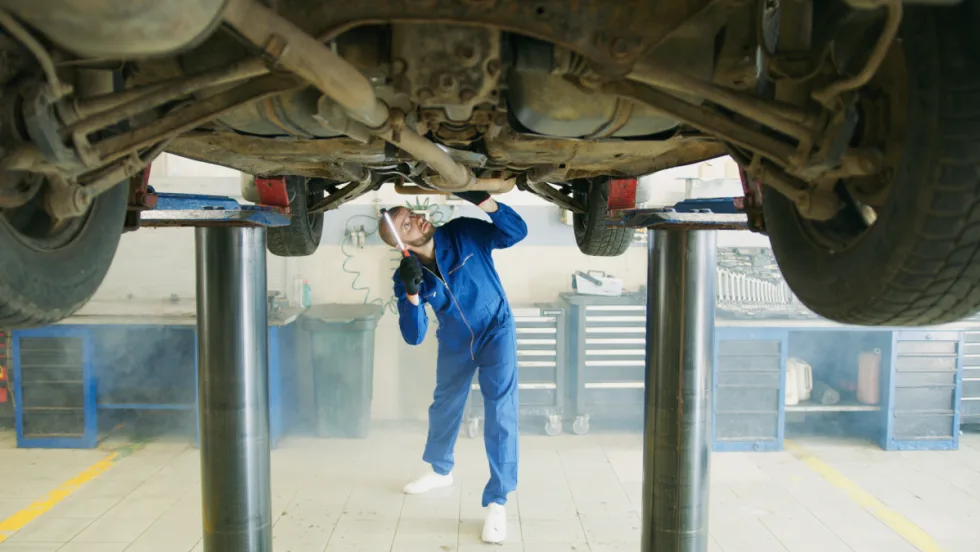
Uptick in Unscheduled Maintenance Increasing Vehicle Downtime
Fleet data analysis can identify recurring downtime issues. It’s important to determine the root causes of downtime so procedures can be developed to minimize such problems.
Read More →
Eliminate Needless Curb Weight to Maximize ICE & EV Efficiencies
Vehicle weight relates directly to fuel economy. In today’s era of electrification, there is also a direct correlation between vehicle weight and battery range.
Read More →
Tech Dependence Risks Dumbing Down Fleet Manager Expertise
The line between creative thinking and problem solving and doing what the data indicates is thin. To lead in fleet management, you need to balance understanding the fundamentals and embracing what smart technology offers.
Read More →
Leverage the Synergy of Safe Driving to Achieve Sustainability and Cost Goals
Safe driving, emission reductions, and cost containment can all be achieved at the same time.
Read More →
The Playbook for Fleet Manager Success
There are many paths to success — most of them involve being flexible, open-minded, and willing to learn.
Read More →
Drivers are the First Line of Defense in Controlling Fleet Costs
Fleet policy begins and ends with the fleet manager, a living and continually updated document, and no exceptions.
Read More →