





Related: Excessive Idling Can Create Pitfalls Voiding Warranty
TCO Is Not a Static Number
A vehicle’s total cost of ownership is comprised of its fixed costs, operating expenses, and depreciation per year or during the course of its service life, minus its anticipated resale value. During the course of a vehicle’s service life, TCO is subject to change due to a vehicle’s age and numerous external factors, which has a direct bearing on replacement policies.
March 13, 2019
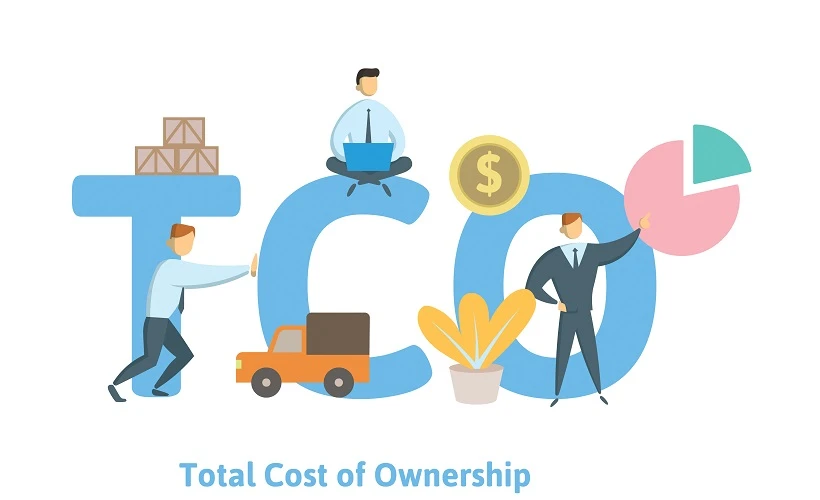
During the course of a vehicle’s service life, TCO is subject to change due to a vehicle’s age and numerous external factors.
Photo courtesy of istockphoto.com via Good Stock.
5 min to read
A vehicle’s total cost of ownership (TCO) is comprised of its fixed costs, all operating expenses, and depreciation per year or during the course of its service life, minus its anticipated resale value. Typically, this formula is calculated prior to initial acquisition to use as a selection metric, but it is important to remember that TCO is not a static number.
During the course of a vehicle’s service life, TCO is subject to change due to a vehicle’s age and numerous external factors. For instance, external market factors cause fuel prices to fluctuate, commodity costs to rise exerting upward pressure on tire and part prices, and depreciation rates tend to parallel wholesale market conditions and consumer buying preferences. These external factors can influence the TCO competiveness of one vehicle segment vis-à-vis another. For example, lower fuel prices are changing TCO considerations by lowering truck operating costs and increasing resale values, while negatively impacting residuals for compact sedans and hybrids.
TCO also influences vehicle replacement policies. Nearly all fleet-related expenses, both fixed and operating, are influenced by when a vehicle is taken out of service. The long-term trend in vehicle cycling by commercial fleets is a gradual increase in the service lives of vehicles. Over the years, automotive OEMs have dramatically improved vehicle quality and lengthened powertrain warranties, allowing companies to more confidently extend the service life of less risky fleet assets, such as fleets operating light-duty trucks.
Industry data reveal that light-duty truck and cargo van fleets have steadily pushed out their months-in-service parameters; with sedan fleets likewise extending asset use but at a slower average rate. Many fleets, especially mid-size fleets, are now moving to an 80,000-mile replacement parameter as fleet operations are pressured by senior management to rein in capital expenditures. Often, replacement cycling is only seen by management through a financial prism and viewed as a dollars-and-cents lifecycle cost decision. It is very common for companies to cut fleet costs by extending vehicle replacement cycles so the deferred cash flow can be diverted to other corporate expenditures.
Evolution from Policy to Flexible Guidelines
Traditionally, fleet replacement policy is expressed as a combination of time and mileage, such as months-in-service and mileage bands. The policy is based on the converse trending of fixed and variable expenses during the life of the vehicle. Fixed costs tend to decelerate as a vehicle ages, while variable/operating costs tend to increase. When these two costs are charted over the life of a vehicle, the conventional wisdom is to replace a vehicle when the descending fixed cost line intersects the rising variable cost line.
Today, a growing number of fleets are shifting to more flexible vehicle replacement cycles. In fact, some fleets no longer call their replacement cycle a “policy” and now refer to it as a “guideline.” The rationale is that they want to reserve the right to determine when to take a vehicle out of service based on prevailing market conditions, rather than predetermined mileage and/or months-in-service parameters. Enabling this shift is the growing sophistication of lifecycle optimization modeling, in particular, the development of analytics to calculate the various “what if” scenarios to identify the optimal vehicle replacement parameters.
A flexible replacement guideline can take diametrically opposite directions. One direction could be to extend a replacement cycle as a short-term solution to compensate for a reduction in a capital expenditure budget. For example, service fleets, which have higher cap costs due to additional upfit equipment, will keep vehicles in service longer than light-duty fleets to control capital expenditures.
The other direction in a flexible replacement guideline is to shorten service life to shortcycle vehicles to take advantage of an exceptionally strong resale market, as was the case several years ago. Some fleets have decided they don’t want to be locked into a specified vehicle replacement cycle and prefer to remain nimble with a market-driven flexible replacement strategy. This mindset believes it is financially prudent to have greater flexibility in replacement cycling since extenuating market circumstances may make it more advantageous to either keep vehicles in service longer or shorter, depending on market conditions.
Migration from TCO to a More Precise LCO
Vehicle connectivity and more sophisticated predictive maintenance data analytics will prompt a shift away from TCO to a more precise methodology focused on the “lowest cost of ownership” (LCO). In the final analysis, the most accurate lifecycle analysis in making the initial acquisition decision up through the best replacement strategy is one based on real-time data coupled with historical data.
Predictive modeling based on vehicle data continuously streamed by telematics will increase fleet efficiencies. For example, a study by IBM found that predictive analytics could cut fault diagnostic times by 70% and repair times by 20%.
Predictive modeling will provide the ability to better manage downtime and maximize fleet utilization. This will transform the traditional preventive maintenance model that is time- and mileage-based to one that is data-driven. Long-term, this will usher a shift away from a traditional reactive maintenance program to predictive maintenance model. In the future, repairs will be only completed before a disabling failure, so the utilization of vehicle assets will be maximized.
Predictive maintenance technology doesn’t prevent failures; it provides early warning of future failures that allows managers to decide where and when to repair before a failure occurs. This will help to minimize unexpected downstream failures and reduce driver/vehicle downtime. Ultimately, this data will be used to forecast the optimal time to replace a unit.
My vision is that predictive maintenance driven by real-time data analytics will fine-tune vehicle replacement cycling to a granularity that we, as an industry, have never thought possible.
Let me know what you think.
Subscribe to Our Newsletter
More Blog Posts

Fleets Want Trust Restored with Suppliers
During this period of ongoing supply constraints, the trust that fleet managers had with OEMs, upfitters, and dealers has been strained. Fleet managers say they have had too many experiences over the past three years coping with erroneous information, adjusting to multiple price increases, and feeling betrayed by inadequate transparency from suppliers.
Read More →
Scheduled Replacement Cycles Are Becoming a Distant Memory
The ongoing difficulty in sourcing replacement vehicles is forcing companies to extend the service lives of vehicles that are unable to be replaced, which, inevitably, increases unscheduled maintenance expenses.
Read More →
Fleet Simplification is the Antidote to Asset Variability
Fleet simplification identifies asset functions to uncover commonality among the equipment and assets. Simplification increases operational efficiency as end-users become accustomed to the controls, displays, and operation of less diverse units.
Read More →
The Dangers of Static Fleet Policies
A fleet policy is a living document, flexible enough to adapt to evolving business priorities, developing industry trends, and changing industry best practices and standards.
Read More →
Short-Term vs. Long-Term Cost Reductions
Corporate procurement staff are often driven by short-term, immediate cost reductions. However, a longer perspective to soft cost savings is critical because fixating on short-term results will hurt a company in the long run.
Read More →
Uptick in Unscheduled Maintenance Increasing Vehicle Downtime
Fleet data analysis can identify recurring downtime issues. It’s important to determine the root causes of downtime so procedures can be developed to minimize such problems.
Read More →
Eliminate Needless Curb Weight to Maximize ICE & EV Efficiencies
Vehicle weight relates directly to fuel economy. In today’s era of electrification, there is also a direct correlation between vehicle weight and battery range.
Read More →
Tech Dependence Risks Dumbing Down Fleet Manager Expertise
The line between creative thinking and problem solving and doing what the data indicates is thin. To lead in fleet management, you need to balance understanding the fundamentals and embracing what smart technology offers.
Read More →
Leverage the Synergy of Safe Driving to Achieve Sustainability and Cost Goals
Safe driving, emission reductions, and cost containment can all be achieved at the same time.
Read More →
The Playbook for Fleet Manager Success
There are many paths to success — most of them involve being flexible, open-minded, and willing to learn.
Read More →