




Shortcycling Re-emerges to Leverage the Strong Used-Vehicle Market
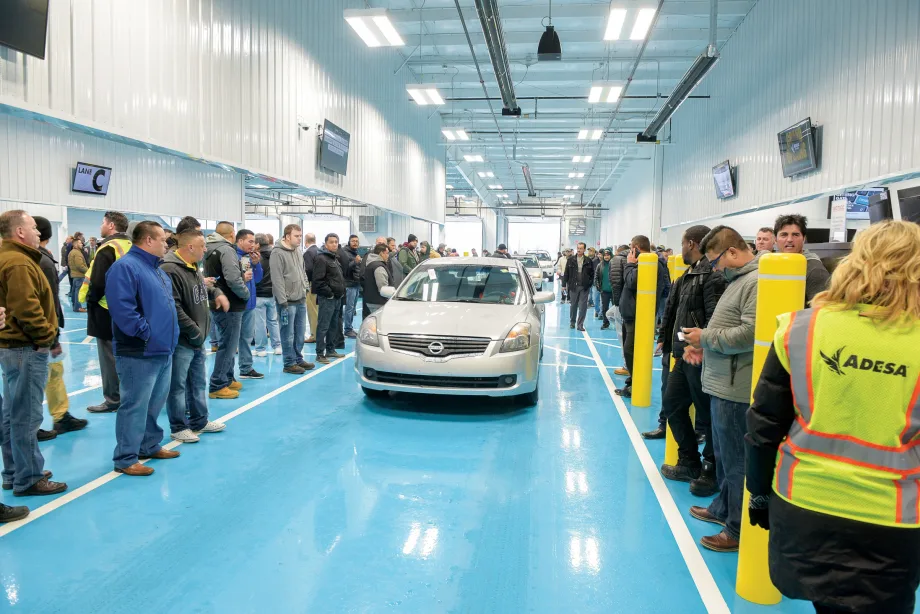
Today’s used-vehicle market is the best it’s been in the history of fleet management and my anecdotal forecast is for it to remain strong through the balance of 2021 and into calendar-year 2022. As a result of these favorable market conditions, some fleets have begun shortcycling some of fleet vehicles.

Credit: ADESA
Today’s used-vehicle market is the best it’s been in the history of fleet management and my anecdotal forecast is for it to remain strong through the balance of 2021 and into calendar-year 2022. As a result of these favorable market conditions, some fleets have launched right-sizing initiatives to remarket under-utilized units at auction to maximize their lifecycle ROI. Other fleets are likewise investigating consignment of vehicles to auction by reducing fleet size to better align with the dynamics of their businesses as more work shifts to virtual sales requiring fewer vehicles in the field.
However, the early order build-out schedules by OEMs for 2021 model vehicles and the longer lead times for many popular vocational vehicles have compounded vehicle availability issues. Consequently, fleet managers struggle to balance the risk of uncertain availability of replacement vehicles against the potential windfalls of selling their vehicles in a red hot used-vehicle market.
Here’s an example of this dilemma. When company drivers quit or are terminated, fleets have two choices – cash in on the hot resale market by selling the vehicle at auction at a premium or to put the vehicle in storage to guarantee the availability of a replacement unit when needed for a new employee. The large majority of fleets are playing it safe and storing units so they are readily available when new-hires are brought onboard and are willing to forego the allure of higher resale values at auction.
On the other hand, some fleets are actively looking for opportunities to cash in on the strong used-vehicle market by shortcycling some vehicles by taking them out of service earlier than their scheduled replacement. This strategy can be especially beneficial for companies looking to right-sze their fleets. Shortcycling is not a new phenomenon, it was first used by rent-a-car companies in the early 1990s with the advent of OEM buy-back program cars allowing them to double or even triple cycle these vehicles. In the commercial fleet market, shortcycling emerged as a remarketing strategy in the early 2000s to take advantage of the strong retail demand for late-model used compact SUVs and re-emerged again in the strong used-vehicle market of 2009-2010 following the global financial crisis. In addition to higher resale prices, there are four other potential benefits to shortcycling of fleet vehicles.
1. Operating Costs are Reduced: By shortcycling a vehicle, it remains covered under the new-vehicle warranty for a greater percentage of its service life. As a result, there is substantial operating savings by avoiding the significant maintenance expenses for fleet vehicles that occur in years 3 and 4 of their lifecycles. During the first two years of service, most maintenance expenses are for oil-filter-lube and other related preventive maintenance. By reducing vehicle service life to 24 months there are significant savings opportunities in maintenance cost avoidance. If you reduce maintenance costs, there will be a parallel reduction in downtime since drivers will experience less unscheduled maintenance.
2. New-Vehicle Order Volume is Maximized: When more vehicles are purchased, incentives from competitive assistance programs (CAP) or rifle shot incentives can increase. Some manufacturers offer fleets a staircase tiered incentive program when they acquire a certain levels of new orders during a model-year. The more new-vehicle orders, the greater the incentive, which may also give a fleet greater negotiating leverage. For instance, a 600-unit fleet on a 36-month cycle will order, on average, about 200 vehicles a year. If a fleet shortcycles to 24 months, it increases its orders to 300 vehicles, creating the potential to negotiate a greater CAP incentive. (As an aside, I use the term “CAP” generically since the program name varies by OEM.)
3. Maximized Incentives: A fleet using a shorter replacement cycle rolls over more units each year than a same size fleet with a longer cycle. A bigger model-year buy may mean larger CAP incentives may be negotiated. However, higher acquisition prices next model-year or lower incentives could offset these savings. The same-level CAP incentives taken over a 24-month service life is greater on a per-month basis than taken over 36 months.
4. Driver Morale is Improved: By shortcycling, a fleet dramatically reduces the age of its vehicles, which will raise driver morale. Drivers provided with new vehicles more often is an advantage when recruiting, hiring, and retaining talented employees. Higher morale often translates into more productive employees.
Optimal Replacement Cycle
Traditionally, the most cost-efficient point to replace a non-truck unit usually occurs during the third year in service, based on an analysis of fixed (depreciation) and variable (fuel and maintenance/repair) costs. Today’s used-vehicle market allows, at least on a temporary basis, for more frequent replacement cycles to lower depreciation due to higher resale prices.
The second major component in the replacement decision is the impact on variable expenses, namely fuel, maintenance/repair, tires, and oil drains. The maintenance expense curve differs from that of depreciation since the first year to 18 months it consists almost exclusively of regular preventive maintenance (oil changes, tire rotations, etc.). At the 35,000 to 50,000-mile range, two major wear-related maintenance expenses predictably occur — tires and brakes. The maintenance cost curve begins low, then spikes when replacement tires and brakes are purchased, subsequently declines, and spikes again with the need for new brakes and tires. The best practice is to replace units when the combination of these two expenses is at its lowest, but sometimes out-of-the-ordinary resale market conditions temporarily distort this formula.
Let me know what you think.
More Blog Posts

Fleets Want Trust Restored with Suppliers
During this period of ongoing supply constraints, the trust that fleet managers had with OEMs, upfitters, and dealers has been strained. Fleet managers say they have had too many experiences over the past three years coping with erroneous information, adjusting to multiple price increases, and feeling betrayed by inadequate transparency from suppliers.
Read More →
Scheduled Replacement Cycles Are Becoming a Distant Memory
The ongoing difficulty in sourcing replacement vehicles is forcing companies to extend the service lives of vehicles that are unable to be replaced, which, inevitably, increases unscheduled maintenance expenses.
Read More →
Fleet Simplification is the Antidote to Asset Variability
Fleet simplification identifies asset functions to uncover commonality among the equipment and assets. Simplification increases operational efficiency as end-users become accustomed to the controls, displays, and operation of less diverse units.
Read More →
The Dangers of Static Fleet Policies
A fleet policy is a living document, flexible enough to adapt to evolving business priorities, developing industry trends, and changing industry best practices and standards.
Read More →
Short-Term vs. Long-Term Cost Reductions
Corporate procurement staff are often driven by short-term, immediate cost reductions. However, a longer perspective to soft cost savings is critical because fixating on short-term results will hurt a company in the long run.
Read More →
Uptick in Unscheduled Maintenance Increasing Vehicle Downtime
Fleet data analysis can identify recurring downtime issues. It’s important to determine the root causes of downtime so procedures can be developed to minimize such problems.
Read More →
Eliminate Needless Curb Weight to Maximize ICE & EV Efficiencies
Vehicle weight relates directly to fuel economy. In today’s era of electrification, there is also a direct correlation between vehicle weight and battery range.
Read More →
Tech Dependence Risks Dumbing Down Fleet Manager Expertise
The line between creative thinking and problem solving and doing what the data indicates is thin. To lead in fleet management, you need to balance understanding the fundamentals and embracing what smart technology offers.
Read More →
Leverage the Synergy of Safe Driving to Achieve Sustainability and Cost Goals
Safe driving, emission reductions, and cost containment can all be achieved at the same time.
Read More →
The Playbook for Fleet Manager Success
There are many paths to success — most of them involve being flexible, open-minded, and willing to learn.
Read More →