




Personalized Driver Web Pages Have the Potential to Become a Powerful New Fleet Management Tool
A future development in fleet management will be the creation of personalized Web pages for every driver in a fleet.
Driver Web pages have been in existence for the past several years. However, new technology will make driver Web pages dramatically more sophisticated in coming years. They hold the promise of evolving into a powerful new fleet management tool. The latest companies to offer personalized driver Web pages are Ford Motor Co. and General Motors. Ford offers MyFord.com, found on fordvehicles.com, which provides online personalized service information to owners of Ford brand vehicles. The new service falls under ConsumerConnect, Ford's e-business unit. "MyFord.com will offer Ford customers online service information personalized just for them, based on the very car or truck they drive," said Karen Francis, vice president, Ford Motor Co., and president and CEO of ConsumerConnect, at the Automotive News World Congress, which was held last January in Detroit. "MyFord.com allows the manufacturer, the dealer, and the customer to stay in continuous touch with information on such basics as oil changes, tire care, safety advice, insurance, loans or leases, and access to financial accounts." Also, by using a personalized driver Web page, when the Ford vehicle is resold, the new owner will have a complete record of the service done at the dealership. Likewise, General Motors has launched a new retail service called Owner Center at MyGMLink.com, which provides vehicle owners with e-mail service reminders, recall information, service history tracking, online owner's manuals, maintenance tips, and promotions. "This is a retail initiative that has a perfect application for a fleet customer," said Li-Yuen Yee, interactive strategy manager for eFleet at GM Fleet and Commercial Operations. Currently, the service is available for owners of all Pontiac models, and certain Chevrolet models. It will become available to all GM vehicle owners, including those who drive Saab and Hummer models, in the U.S. during the first half of 2002. It will also be introduced in Asia, Europe, and Latin America later in the year. The GM Owner Center does not provide this service to Saturn, which uses a different system. However, plans are to integrate the Saturn system in the Owner Center at a later date. "We do not have an application for fleet customers on our www.gmfleet.com Web site as of yet," Yee said. "But the Owner Center on MyGMLink.com could help fleet drivers in the future. This tool can be of great value to a fleet manager, especially those who manage fleets of fewer than 50 vehicles and who do not have the luxury of working with a fleet management company. Plus, these managers often have other responsibilities in addition to fleet and they may not have the time to devote to managing their company vehicles. From a GM Fleet and Commercial Operations perspective, we would like to aggregate the data so that fleet managers would have the capability to generate reports specific to their vehicles." Although the Owner Center as it's designed today will most likely be used by fleets with fewer than 50 vehicles, Yee said it can be scalable and not restricted by fleet size. According to Yee, GM anticipates drivers inputting the information on their own vehicles in their personal Web pages. The system software would then aggregate this data and funnel it up to the fleet manager, said Yee. Another potentially useful feature of a driver Web page is for the delivering dealer to send an e-mail notification to a fleet manager letting him or her know that a replacement vehicle has arrived and that it is available for pick up. Looking Ahead In the coming years, the driver interface with the fleet function promises to evolve in dramatic ways, which will allow for a level of individualized fleet management that was heretofore not thought possible. Driver-specific Web pages will automate many fleet management functions into point-and-click operations and transfer the responsibility of managing these tasks to the drivers. They will help increase fleet manager productivity by minimizing the many routine calls from drivers about their company vehicles, which can be answered by information maintained on their personal Web pages. Let me know what you think.
More Blog Posts

Fleets Want Trust Restored with Suppliers
During this period of ongoing supply constraints, the trust that fleet managers had with OEMs, upfitters, and dealers has been strained. Fleet managers say they have had too many experiences over the past three years coping with erroneous information, adjusting to multiple price increases, and feeling betrayed by inadequate transparency from suppliers.
Read More →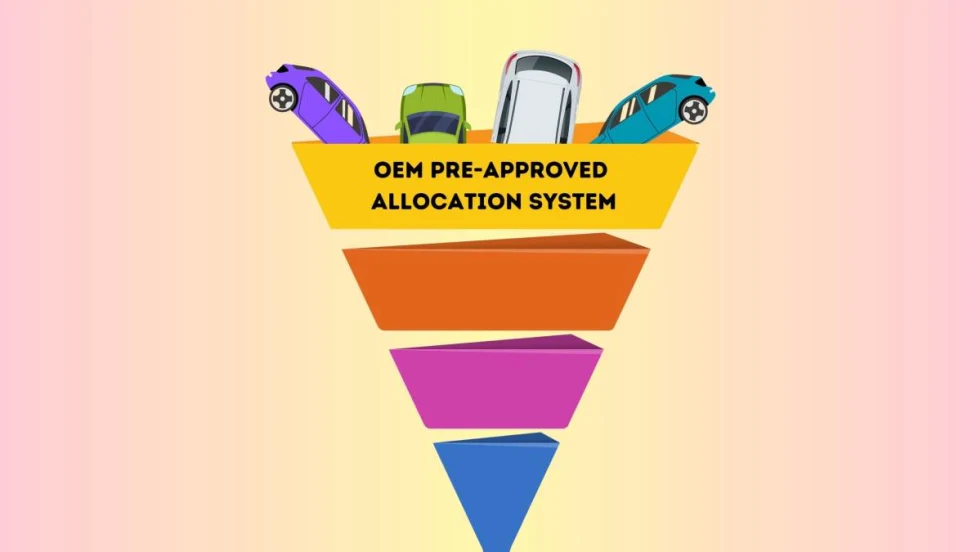
Scheduled Replacement Cycles Are Becoming a Distant Memory
The ongoing difficulty in sourcing replacement vehicles is forcing companies to extend the service lives of vehicles that are unable to be replaced, which, inevitably, increases unscheduled maintenance expenses.
Read More →
Fleet Simplification is the Antidote to Asset Variability
Fleet simplification identifies asset functions to uncover commonality among the equipment and assets. Simplification increases operational efficiency as end-users become accustomed to the controls, displays, and operation of less diverse units.
Read More →
The Dangers of Static Fleet Policies
A fleet policy is a living document, flexible enough to adapt to evolving business priorities, developing industry trends, and changing industry best practices and standards.
Read More →
Short-Term vs. Long-Term Cost Reductions
Corporate procurement staff are often driven by short-term, immediate cost reductions. However, a longer perspective to soft cost savings is critical because fixating on short-term results will hurt a company in the long run.
Read More →
Uptick in Unscheduled Maintenance Increasing Vehicle Downtime
Fleet data analysis can identify recurring downtime issues. It’s important to determine the root causes of downtime so procedures can be developed to minimize such problems.
Read More →
Eliminate Needless Curb Weight to Maximize ICE & EV Efficiencies
Vehicle weight relates directly to fuel economy. In today’s era of electrification, there is also a direct correlation between vehicle weight and battery range.
Read More →
Tech Dependence Risks Dumbing Down Fleet Manager Expertise
The line between creative thinking and problem solving and doing what the data indicates is thin. To lead in fleet management, you need to balance understanding the fundamentals and embracing what smart technology offers.
Read More →
Leverage the Synergy of Safe Driving to Achieve Sustainability and Cost Goals
Safe driving, emission reductions, and cost containment can all be achieved at the same time.
Read More →
The Playbook for Fleet Manager Success
There are many paths to success — most of them involve being flexible, open-minded, and willing to learn.
Read More →