




Loss of Control is Reimbursement’s Fatal Flaw
Score one for our side! Recently, a Fortune 100 company gave (very) serious consideration to eliminating its company-provided vehicle fleet program and switching to driver reimbursement. Initially driving this initiative was senior management’s desire to cut cost by removing the vehicle assets from the books. The option to move to an operating lease was not viable since it violated the company’s accounting policies set by finance.

By Mike Antich
Score one for our side!
Recently, a Fortune 100 company gave (very) serious consideration to eliminating its company-provided vehicle fleet program and switching to driver reimbursement. Initially driving this initiative was senior management’s desire to cut cost by removing the vehicle assets from the books. The option to move to an operating lease was not viable since it violated the company’s accounting policies set by finance. Management reasoned that by moving to an allowance, the company could write off the fleet as an expense and eliminate the financial liability of an asset. The fleet manager was given the opportunity to justify the need for a company-provided fleet.
He succeeded. Interestingly, the winning argument was not based on
cost. The nail in the coffin was management’s fear of the loss of control over
what employees would drive and the implications for corporate image and
liability exposure.
Scroll down for more...
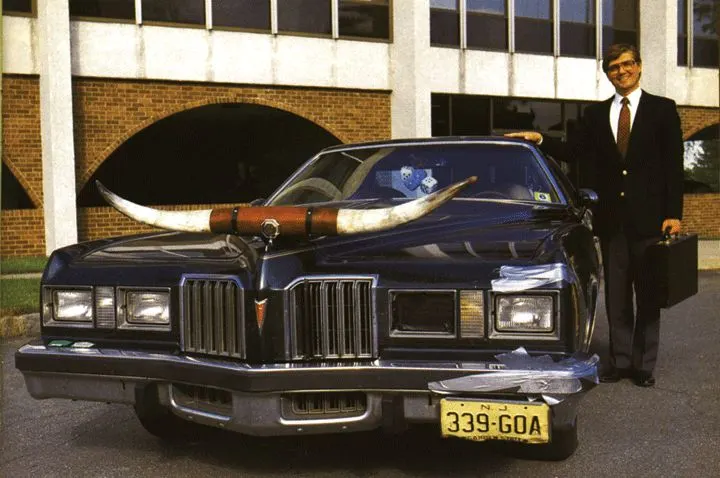
A company vehicle is part of the corporate image presented to customers and the community. With driver reimbursement, an employee determines whether a vehicle is appropriate for the type of image the company wants to project. When an employee provides the vehicle, the company surrenders this control. The wrong vehicle can send the wrong message to customers.
If the company doesn’t provide the vehicle, it has no control over what the employee drives to a customer location. Customer perception is everything, especially when it involves prospective customers. Employees may be required to entertain customers, and you don't want them to drive customers in an unsuitable vehicle. With driver reimbursement, an employee determines whether a vehicle is appropriate for the type of image the company wants to project. A reimbursement program creates a problem when someone is hired who already owns a vehicle. The company will most likely have to accept whatever he or she is driving. On the other hand, a company-provided program allows you to control the suitability and appearance of the vehicles used for your business.
With an employee-provided vehicle, how do you ensure it is properly maintained? How do you know the condition of the tires? What about the brakes? How do you know when an employee postpones a safety-related repair? If an accident is caused by deferred maintenance, what is your liability exposure if the accident occurred while the employee is conducting company business? The reality is that it is difficult, if not impossible, for a company to be aware of the condition and maintenance of every employee’s vehicle. In fact, a reimbursement program may actually contribute to poorly maintained employee-owned vehicles. For instance, if the reimbursement is not sufficient to cover actual expenses, the employee may defer preventive maintenance. Also, since maintenance is an out-of-pocket expense, there may even be a temptation (or financial necessity) to postpone more expensive mechanical repairs. The bottom line is that a business has little or no control over the condition of an employee’s personal vehicle.
In the final analysis, loss of control was the fatal flaw to this driver reimbursement initiative.
Let me know what you think.
More Blog Posts

Fleets Want Trust Restored with Suppliers
During this period of ongoing supply constraints, the trust that fleet managers had with OEMs, upfitters, and dealers has been strained. Fleet managers say they have had too many experiences over the past three years coping with erroneous information, adjusting to multiple price increases, and feeling betrayed by inadequate transparency from suppliers.
Read More →
Scheduled Replacement Cycles Are Becoming a Distant Memory
The ongoing difficulty in sourcing replacement vehicles is forcing companies to extend the service lives of vehicles that are unable to be replaced, which, inevitably, increases unscheduled maintenance expenses.
Read More →
Fleet Simplification is the Antidote to Asset Variability
Fleet simplification identifies asset functions to uncover commonality among the equipment and assets. Simplification increases operational efficiency as end-users become accustomed to the controls, displays, and operation of less diverse units.
Read More →
The Dangers of Static Fleet Policies
A fleet policy is a living document, flexible enough to adapt to evolving business priorities, developing industry trends, and changing industry best practices and standards.
Read More →
Short-Term vs. Long-Term Cost Reductions
Corporate procurement staff are often driven by short-term, immediate cost reductions. However, a longer perspective to soft cost savings is critical because fixating on short-term results will hurt a company in the long run.
Read More →
Uptick in Unscheduled Maintenance Increasing Vehicle Downtime
Fleet data analysis can identify recurring downtime issues. It’s important to determine the root causes of downtime so procedures can be developed to minimize such problems.
Read More →
Eliminate Needless Curb Weight to Maximize ICE & EV Efficiencies
Vehicle weight relates directly to fuel economy. In today’s era of electrification, there is also a direct correlation between vehicle weight and battery range.
Read More →
Tech Dependence Risks Dumbing Down Fleet Manager Expertise
The line between creative thinking and problem solving and doing what the data indicates is thin. To lead in fleet management, you need to balance understanding the fundamentals and embracing what smart technology offers.
Read More →
Leverage the Synergy of Safe Driving to Achieve Sustainability and Cost Goals
Safe driving, emission reductions, and cost containment can all be achieved at the same time.
Read More →
The Playbook for Fleet Manager Success
There are many paths to success — most of them involve being flexible, open-minded, and willing to learn.
Read More →