




Impounding a Fleet Vehicle as Physical Evidence in a Criminal Investigation
One under-discussed topic is when a fleet vehicle is impounded because it is part of a crime scene and declared by the police to be physical evidence in a criminal investigation.

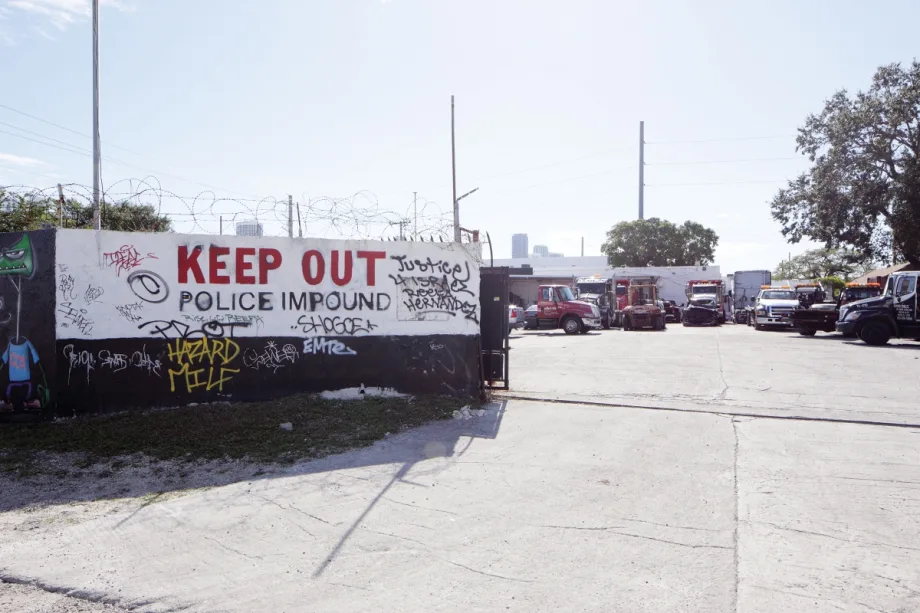
A crime scene is defined as any location associated with a crime that contains physical evidence pertinent to a criminal investigation.
Photo via Getty Images.
One under-discussed topic is when a fleet vehicle is impounded because it is part of a crime scene and declared by the police to be physical evidence in a criminal investigation. While not an everyday occurrence, many fleet managers will eventually have to deal with the headache of having a fleet vehicle impounded because it is involved in a criminal incident.
After hearing of these types of stories over the years, I can tell you they invariably are the result of being in the wrong place at the wrong time. One instance I know involved a fleet vehicle that was T-boned in an intersection by a drug dealer fleeing a police chase. The damaged fleet vehicle was impounded as physical evidence. In another instance, a parked fleet van (without occupants) was caught in the crossfire of a shootout between police and a criminal. The van was seized as evidence since some of the bullets in the gunfire exchange struck the van.
A crime scene is defined as any location associated with a crime that contains physical evidence pertinent to a criminal investigation. Governmental agencies, such as law enforcement, the district attorney’s office, and the courts have broad powers to seize evidence of a crime. If the physical evidence happens to be your fleet vehicle, they have the legal authority to impound it as evidence for a trial.
Vehicle impoundment is the legal process used to store a vehicle in an impound lot or tow yard as part of the chain of custody for evidence management. One reason to is to prevent evidence tampering/contamination and to allow a prosecutor, detectives, and forensic investigators access to the vehicle for their investigations. However, the unintended consequence is that every day a fleet vehicle sits in an impound lot it is not generating revenue and it continues to incur daily fixed costs that a company must pay.
There are many other instances that can trigger vehicle impoundment, such as when a company driver is arrested for a hit-and-run accident, reckless driving, vehicular assault, or vehicular manslaughter. In these extreme cases the police can impound the vehicle as evidence to document damage, blood, or markings left on the vehicle. If a driver is arrested for driving under the influence of drugs or alcohol, the officer may order the vehicle to be impounded if there is no one present who is legally authorized to drive the vehicle or it cannot be legally parked.
Procedure to Impound a Vehicle
The word “impound” means to place something in a pound, namely a secure storage area. Here’s the sequence of events that occur when a vehicle is impounded, which varies by jurisdiction. First, the police documents all of the vehicle’s contents on a tow/impound inventory record form, but sometimes there is an exception for contents in the trunk and locked containers. All pre-existing damage to the exterior and interior of the vehicle is documented. This procedure is performed to preclude the driver of the vehicle from saying something of value was in the vehicle at the time of impoundment and now it is missing or to fraudulently claim that pre-existing damage occurred while in storage. Sometimes, the police may require a flatbed tow truck be used to preserve evidence, which generally commands a higher tow fee. At the impound lot, the vehicle is catalogued and assigned an identification number.
How long can the police keep a fleet vehicle as physical evidence? If the vehicle is evidence in a trial, it can be held until the trial is fully adjudicated and there is no filed appeal. In addition, laws governing vehicle impoundment can vary by state and local jurisdiction, so there is no general rule of thumb that can be used by a fleet manager of a nationally dispersed fleet. Fleet managers who have dealt with these situations tell me it is not easy to navigate the system and it is difficult to find the right person to obtain the information you need. Despite these frustrations, the most important advice is not to lose your cool.
Other Reasons to Impound a Vehicle
In addition to criminal activity, a vehicle can be impounded for a variety of other reasons, such as unresolved parking violations that are beyond a certain date or exceed a specified dollar threshold. Other common reasons a vehicle is towed to an impound lot are if it is blocking a fire hydrant, parked in a tow-away zone, inhibiting snow removal, or obstructing traffic. If your vehicle is towed, a city website often, but not always, has a towing and impound section that hopefully will allow you to locate the impound lot where the vehicle is being held.
If your vehicle is seized as evidence who is responsible to pay for the impound expense to release the vehicle? Typically, you are. The auto impound business makes its money by charging an impound fees and a per diem storage fee. There may also be additional fees, which can vary by impound business, such as a per mile towing charge if the impound lot owns its own tow trucks, a flatbed fee if your vehicle is disabled, or a boot removal fee if the vehicle was immobilized before being towed. In addition, there is the possibility that your impounded vehicle may be damaged while in storage. In most cases, damage is the financial responsibility of the vehicle owner, since most impound lots waive liability, but you could have grounds to sue for negligence.
If a driver discovers their vehicle was towed and doesn’t know why, ask them to check their surroundings to see if there are restricted parking signs or whether they inadvertently parked in a tow away zone. Instruct a driver to take photos of the area and the surrounding signs, which may come in handy if you need to challenge the reason a vehicle was towed. If there is a “No Parking” sign with a phone number, call it. Do not call 911, which should only be used for true emergencies. Instead call 411 for the phone number of the local police department to confirm whether the vehicle was towed and the impound lot where it now resides.
Let me know what you think.
More Blog Posts

Fleets Want Trust Restored with Suppliers
During this period of ongoing supply constraints, the trust that fleet managers had with OEMs, upfitters, and dealers has been strained. Fleet managers say they have had too many experiences over the past three years coping with erroneous information, adjusting to multiple price increases, and feeling betrayed by inadequate transparency from suppliers.
Read More →
Scheduled Replacement Cycles Are Becoming a Distant Memory
The ongoing difficulty in sourcing replacement vehicles is forcing companies to extend the service lives of vehicles that are unable to be replaced, which, inevitably, increases unscheduled maintenance expenses.
Read More →
Fleet Simplification is the Antidote to Asset Variability
Fleet simplification identifies asset functions to uncover commonality among the equipment and assets. Simplification increases operational efficiency as end-users become accustomed to the controls, displays, and operation of less diverse units.
Read More →
The Dangers of Static Fleet Policies
A fleet policy is a living document, flexible enough to adapt to evolving business priorities, developing industry trends, and changing industry best practices and standards.
Read More →
Short-Term vs. Long-Term Cost Reductions
Corporate procurement staff are often driven by short-term, immediate cost reductions. However, a longer perspective to soft cost savings is critical because fixating on short-term results will hurt a company in the long run.
Read More →
Uptick in Unscheduled Maintenance Increasing Vehicle Downtime
Fleet data analysis can identify recurring downtime issues. It’s important to determine the root causes of downtime so procedures can be developed to minimize such problems.
Read More →
Eliminate Needless Curb Weight to Maximize ICE & EV Efficiencies
Vehicle weight relates directly to fuel economy. In today’s era of electrification, there is also a direct correlation between vehicle weight and battery range.
Read More →
Tech Dependence Risks Dumbing Down Fleet Manager Expertise
The line between creative thinking and problem solving and doing what the data indicates is thin. To lead in fleet management, you need to balance understanding the fundamentals and embracing what smart technology offers.
Read More →
Leverage the Synergy of Safe Driving to Achieve Sustainability and Cost Goals
Safe driving, emission reductions, and cost containment can all be achieved at the same time.
Read More →
The Playbook for Fleet Manager Success
There are many paths to success — most of them involve being flexible, open-minded, and willing to learn.
Read More →