




How Tesla’s Price Cuts Illustrate EV Ownership Cost Volatility for Fleets
The discounts had an immediate impact on one of the largest fleet owners of Tesla vehicles, at least on paper.


Scott Painter bought 500 Teslas in November 2022, and was $8 million underwater on them the day the discounts went into effect.
Photo: Expo Ease, Inc.
When Tesla started cutting prices in December 2022, prospective buyers rejoiced. But fleet lessors and owners winced, understanding that when automakers drop money on the hood of a vehicle to juice sales, the incremental erosion in residual values is sure to be felt downstream.
The successive discounts dropped prices on new Tesla models by 6% to 19%, enormous by historical standards, and the effects weren’t incremental, they reverberated almost immediately. According to an analysis by iSeeCars, the Tesla Model 3 saw its used value drop 21.5% in March compared to its values in September 2022.
This also had an immediate impact on one of the largest fleet owners of Tesla, at least on paper. “I bought 500 Tesla’s in November, and I was $8 million underwater on them the day they discounted,” said Scott Painter, founder of EV subscription startup Autonomy.
Painter, who also founded CarsDirect.com, TrueCar, and Fair, is in the process of fleeting 23,000 EVs worth $1.2 billion from multiple manufacturers. Painter shared these thoughts during the keynote presentation at the 2023 International Car Rental Show on April 17.
Painter also broached Tesla’s sales model as a cause: “It wasn't because (Elon Musk’s) cars were priced wrong,” he said. “It was because he doesn't have a dealer distribution system. He has no physical ability to distribute cars more quickly. He had to make the leap and start selling.”
“When Tesla did this, they didn't just discount their cars, they also changed their business model,” said Painter, “They went from ‘build to order’ to ‘sell from inventory.’”
The discounts did their job, of course. In the first quarter, Tesla sales were up 24.6% year over year. While its overall share is dropping as new EV models enter the market, Tesla continues to be both the industry’s top-selling luxury and EV brand by far. The discounts also allowed the Model Y to fall into the price range to receive the Inflation Reduction Act’s $7,500 EV tax credit.
Tesla Can Discount & Still Profit
Here’s another reason for the discounts — Tesla is making a 20% profit margin on every car.
“They can actually discount and still be profitable,” Painter said. “Other automakers can’t do that yet because they're still investing in EVs on the front end. Tesla's entrenched dominance is really powerful to understand.”
Painter called those discounts the biggest nuclear stress test of Autonomy’s young business. But again, his residual value loss is still just on paper. “We don't believe that the residual value of a Model 3 in three years is going to be affected by that choice (to discount),” he said.
Black Book’s EV Data
Black Book backs up Painter’s anecdotal experience, citing Tesla’s discounts as causing overall EV values to plummet in 2023. Black Book’s two-year residual value retention rates for EVs dropped from 81% in 2022 to 66% by April 2023. Meanwhile, values for the overall market only dropped from 86% to 80% over the same period.
Supply chain issues certainly spiked residual values for all vehicles over the last two years, but the changes were most pronounced for EVs. Since EV models were introduced into the mainstream 10 years ago, peaks and valleys in EV values have been more pronounced than the overall market.

Since EV models were introduced into the mainstream 10 years ago, Black Book data shows that the peaks and valleys in EV values have been more pronounced than the overall market.
Black Book
Looking out over the next two years, Black Book estimates that the average retention of two-year-old vehicles will hold steady at 74% in 2024 and 73% in 2025. For EVs, Black estimates a 63% retention rate for both 2024 and 2025.
The recent yo-yo swings in EV values demonstrate what the actions of one automaker can cause when it owns the lion’s share of a new market. Those value swings should subside as the market matures. And holding EVs in fleet longer than ICE vehicles should also help flatten the depreciation curve.
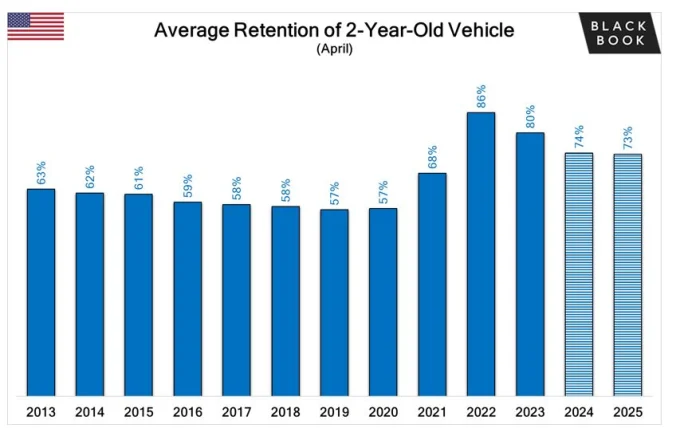
Black Book estimates that the average retention of two-year-old vehicles will drop, but hold steady at 74% in 2024 and 73% in 2025.
Black Book
But the episode also lays bare an evolving issue — fluctuations in resale value make EV ownership costs a moving target, enough to keep many prospective fleet buyers on the sidelines until the market matures.
The next question moving further into 2023: With high interest rates, slower consumer spending, and normalizing production capacity, will other automakers get boxed into new price cuts for their EVs?
More Blog Posts

How to Win a Fleet Manager Award: Make Your Nomination Count
Strong fleet accomplishments can go unrecognized when the nomination doesn’t make the case. Here’s what judges need to see.
Read More →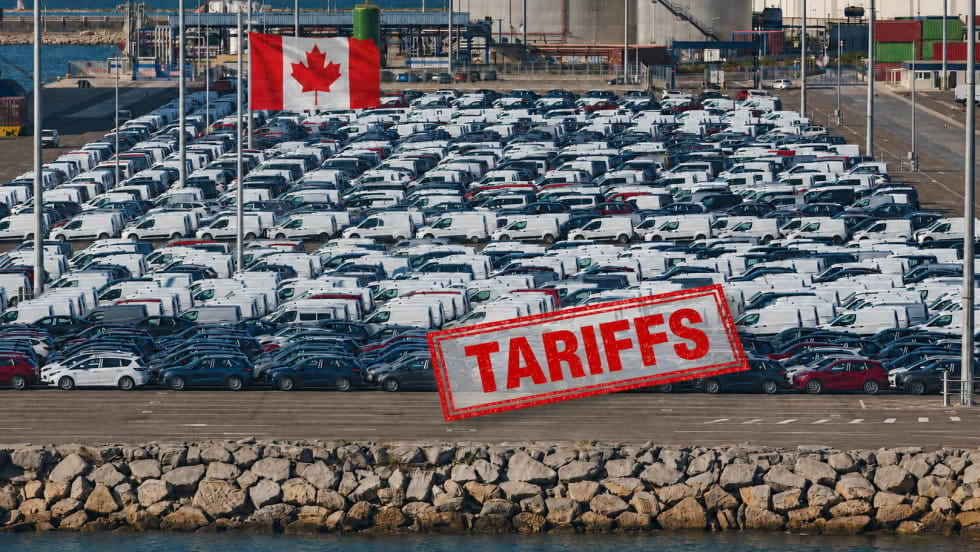
The Only Certainty with the New Tariff Threat Is Uncertainty
Trump’s Canadian tariff threat will not move production overnight, but the uncertainty could influence ordering and pricing now. Longer term, forces beyond tariffs may determine which North American plants survive.
Read More →
What Does It Mean to Embody the Spirit of Fleet?
Presented alongside Fleet Manager of the Year, Fleet Visionary, and Fleet Hall of Fame at AFLA, the new Mike Antich Spirit of Fleet Award is unique in that it recognizes service to the overall profession. Just like Mike.
Read More →
What Separates Great Fleet Managers From Everyone Else?
What do Visionary candidates with fewer than 10 years of experience have in common with Hall of Fame nominees with a lifetime under their belts?
Read More →
The Next Fleet War Won't Be Won on Specs Alone
The 2026 Stellantis Pro One Fleet Preview was less about vehicles and more about what happens after you buy them.
Read More →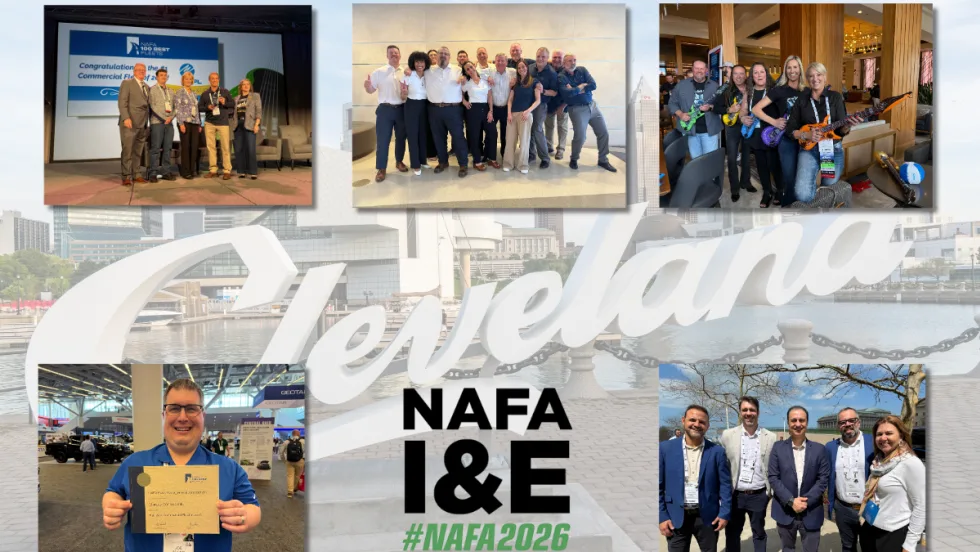
Navigating Brundlefly and Fleet AI at 2026 NAFA I&E
AI is becoming the operating layer for fleets. In Cleveland, the buzz was about harnessing AI in an increasingly complex, permanently disrupted environment.
Read More →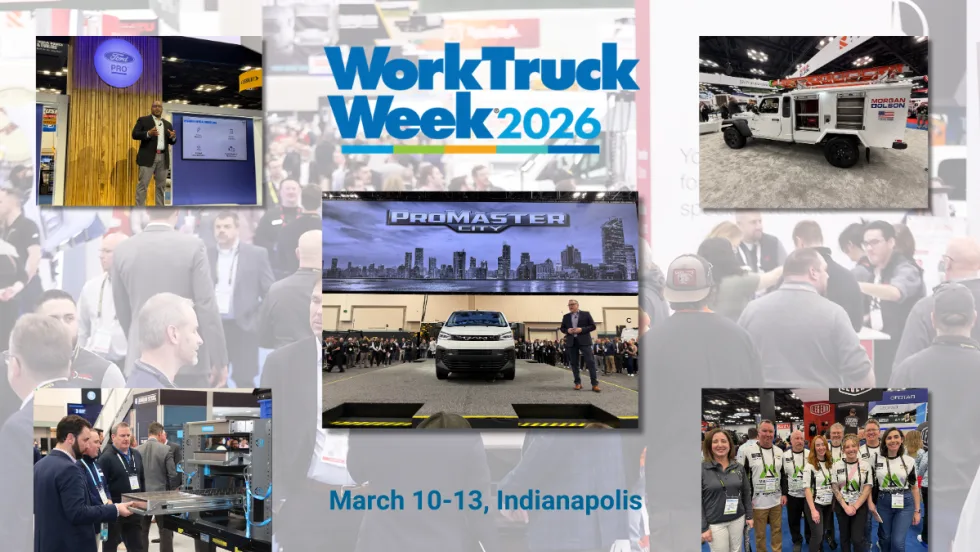
8 Trends: Work Truck Week 2026 Reveals a Fleet Industry in Reset Mode
Walking the show floor this year, the new focus was around “practical innovation” and pragmatic solutions. And oh yeah, a new small van.
Read More →
The Moment AI Became Operational
“AI isn’t assisting us anymore. It’s doing the work,” said CEO Neil Cawse at Geotab Connect 2026. What does this mean for fleet managers?
Read More →
For Mike Antich, it Was Always About the People
He stood tall in the industry in so many ways, but he measured success by the people he served.
Read More →
Solving the Flexible-Lean Fleet Paradox
The lean fleets of yesterday are the fragile fleets of today. Where do we find the balance?
Read More →