




A Paradigm Shift to Driver Risk Management
A growing trend among commercial fleets has been the shift toward driver risk management versus traditional fleet accident management. “This is really a paradigm shift for the industry because it represents the next frontier where fleets can extract significant cost reductions,” said Art Liggio, national director, risk and insurance services for The CEI Group.
A growing trend among commercial fleets has been the shift toward driver risk management versus traditional fleet accident management. “This is really a paradigm shift for the industry because it represents the next frontier where fleets can extract significant cost reductions,” said Art Liggio, national director, risk and insurance services for The CEI Group.
One enabler of this paradigm shift is automated driver risk
profiling programs. These software programs profile driver risk as one of the components of a driver risk management program. Fleet and accident management companies are seeing a need for these types of programs and are now developing driver safety and risk management applications. According to Liggio, to minimize losses and liability, fleets are realizing they need a system that continually monitors accident data as well as motor vehicle record data to determine driver risk and for targeted driver training.
Based upon pre-established guidelines, drivers are assigned points for MVR infractions, as well as claim history, and placed into risk categories. In conjunction with their individual fleet policy, fleet managers can automatically determine if a driver requires additional safety training. “These programs will no longer just recognize the problem, but will actually provide a solution. It’s bridging the gap from just accident administration to providing a safety resolution,” said Myron Zadony, president and COO of Fleet Response.
Another contributor to this paradigm shift is in-vehicle telematic devices, which will be increasingly used to control driver behavior. “New telematics capabilities, combined with enhanced information and reporting, are opening up new frontiers in a fleet or risk manager’s ability to enforce safety policies,” said David Coleman, VP, PHH Arval. “When it’s done right, it has the potential to drastically change a company’s risk profile, reducing the number of accidents and costs, while increasing safety.”
Increasingly, companies are seeking to become more proactive. “We are working towards a more proactive approach to accident management,” said Dan Shive, VP of risk management services, LeasePlan USA. “It’s important to evaluate more than just driver MVRs. Looking at the driver’s accident history, including accident severity, will help identify high risk drivers, which will aid in modifying and developing safety programs.”
For instance, the Oregon Department of Administrative Services, Risk Management Division, uses a vehicle incident prevention program to evaluate the level of risk associated with employees whose jobs require them to drive on state business. Points are assigned based on driving history and experience. The higher the final score, the greater the potential risk. Similarly, the Aon insurance company in the UK provides a Web-based driver risk assessment program for companies to measure risk exposure by individual driver and the environment in which he or she drives.
Data on a Real-Time Basis
Fleet managers are recognizing the need to take advantage of data and the technology that can present that data in meaningful ways to monitor risk and thereby reduce accidents.
“Fleet and risk managers want to see their information on a real-time basis, whether it’s live pictures of damaged vehicles, First Notice of Loss reports, repair updates, or trends analyses. Internet-based information management systems make it possible to really be on top of all accident-related data and make smarter decisions,” said Eliot Bensel, manager of PHH Arval’s Vehicle Accident Services department. “Information that links accident data, driver profiles, and trends can help a company modify driver behavior, with far-reaching implications for a company’s risk profile and collision management performance.”
Technology integration between fleets and suppliers will become increasingly important as a way to provide information and streamline claims processing, said Liggio. “Instead of being fed a few simple reports each month, fleet managers now want direct access to their data in order to track and analyze key business metrics and goals via management dashboards, scorecards, and alerting,” said Liggio.
“In the future, our data and the client’s data will be interfaced through a common link – a software program – that will feed to the client’s insurance brokerage firm. All the information is based on a risk analysis approach,” said Zadony.
Influence of Corporate Procurement
Procurement and strategic sourcing groups will continue to assume more fleet decision-making authority. Traditional decision makers, such as fleet managers, will continue to retain influence and decision-making authority, but it will be in conjunction with other departments, said Liggio. However, senior management needs to be cautious about these procurement changes. “For instance, purchasing departments will seek to combine services, such as accident management and emergency roadside assistance, for a smarter purchasing decision,” said Adrian Stone, president of LeasePlan Risk Management Services.
Let me know what you think.
mike.antich@bobit.com
More Blog Posts

Fleets Want Trust Restored with Suppliers
During this period of ongoing supply constraints, the trust that fleet managers had with OEMs, upfitters, and dealers has been strained. Fleet managers say they have had too many experiences over the past three years coping with erroneous information, adjusting to multiple price increases, and feeling betrayed by inadequate transparency from suppliers.
Read More →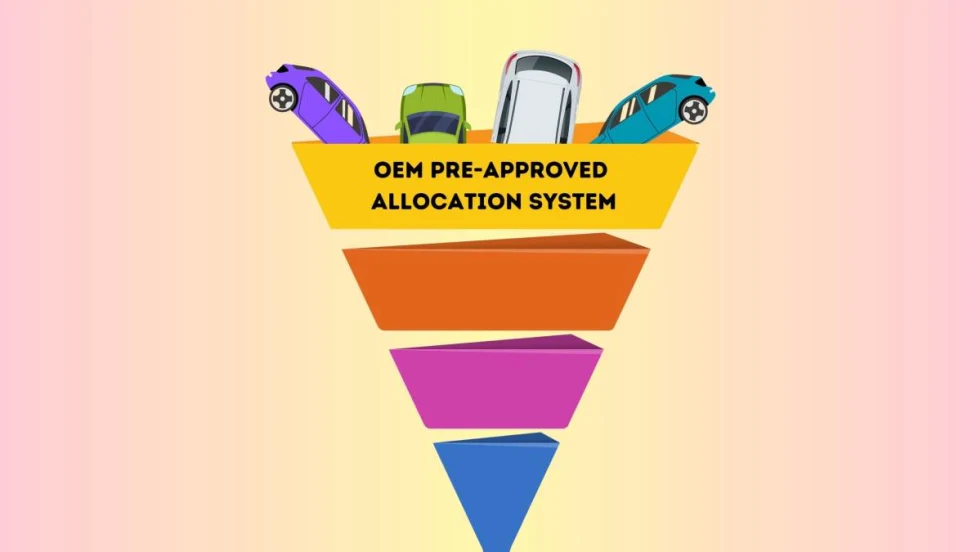
Scheduled Replacement Cycles Are Becoming a Distant Memory
The ongoing difficulty in sourcing replacement vehicles is forcing companies to extend the service lives of vehicles that are unable to be replaced, which, inevitably, increases unscheduled maintenance expenses.
Read More →
Fleet Simplification is the Antidote to Asset Variability
Fleet simplification identifies asset functions to uncover commonality among the equipment and assets. Simplification increases operational efficiency as end-users become accustomed to the controls, displays, and operation of less diverse units.
Read More →
The Dangers of Static Fleet Policies
A fleet policy is a living document, flexible enough to adapt to evolving business priorities, developing industry trends, and changing industry best practices and standards.
Read More →
Short-Term vs. Long-Term Cost Reductions
Corporate procurement staff are often driven by short-term, immediate cost reductions. However, a longer perspective to soft cost savings is critical because fixating on short-term results will hurt a company in the long run.
Read More →
Uptick in Unscheduled Maintenance Increasing Vehicle Downtime
Fleet data analysis can identify recurring downtime issues. It’s important to determine the root causes of downtime so procedures can be developed to minimize such problems.
Read More →
Eliminate Needless Curb Weight to Maximize ICE & EV Efficiencies
Vehicle weight relates directly to fuel economy. In today’s era of electrification, there is also a direct correlation between vehicle weight and battery range.
Read More →
Tech Dependence Risks Dumbing Down Fleet Manager Expertise
The line between creative thinking and problem solving and doing what the data indicates is thin. To lead in fleet management, you need to balance understanding the fundamentals and embracing what smart technology offers.
Read More →
Leverage the Synergy of Safe Driving to Achieve Sustainability and Cost Goals
Safe driving, emission reductions, and cost containment can all be achieved at the same time.
Read More →
The Playbook for Fleet Manager Success
There are many paths to success — most of them involve being flexible, open-minded, and willing to learn.
Read More →