




A Double Whammy for Truck Fleets: Ticket ‘Inflation’ and ‘Malicious Compliance’
Ticket fees have escalated dramatically and there appears to be a trend toward "malicious compliance," all for the sake of generating revenue. It's not uncommon for multiple tickets to be issued for the same violation due to overlapping regulations and the 'latitude' of interpretation afforded to officers. Plus, officers are providing fewer warnings and increasingly citing minor infractions, especially equipment violations. Increased citations negatively impact a fleet's DOT rating under CSA.

By Mike Antich
There is no shortage of ridiculous fees that governmental entities impose on truck fleets. Here's a real-world example: A fleet truck was T-boned in an intersection by a car. The car at fault was filled with illegal drugs and the driver was arrested. The fleet truck was impounded and held as evidence in the criminal trial for six months. Even though the damaged fleet truck couldn't be physically brought to the court, the district attorney didn't want to use photographs as evidence and impounded the vehicle to remain indefinitely in storage until the trial's conclusion. To add insult to injury, the fleet received a bill for $3,500 for impound storage! I realize the impound yard is privately run and charges for its services, but, it was the court that impounded the vehicle. The defendant was tried for possession of illegal drugs, not for causing an accident. If your personal car is burglarized, it's not impounded as evidence.
Let's examine another trend impacting truck fleets: malicious compliance for the sake of generating revenue. Here's a real-world example. A leasing company made an error and registered a truck in California at a lower GVW of 9,000 lbs. In actuality, the vehicle has a 13,000 lb. GVW.
The police pulled the driver over saying the truck was overweight, and the driver was told to drive to a nearby highway weigh scale. The truck weighed in at 13,180 lbs. But rather than cite the vehicle for being 180 lbs. over the actual GVW, the vehicle was cited at being 4,180 lbs. overweight, basing it on the erroneous registration. The net result was a $2,600 ticket. In incidents of malicious compliance, it's not uncommon for multiple tickets to be issued for the same overweight violation, with additional tickets for being overweight by axle, overweight by registration, overweight by FHUT (federal highway use tax) permit, and/or overweight by trailer permit.
"Due to many overlapping regulations, and especially the 'latitude' of interpretation afforded to enforcement officers, many violations can be cited in a variety of different ways. The bottom line is that one violation deserves one citation, not two or three from different angles. This is ridiculous," said one fleet manager.
One emerging trend is that police officers are giving fewer warnings than in the past and are increasingly citing drivers for minor infractions, primarily equipment violations. This isn't simply based on anecdotal observations. In many states, traffic data shows tickets for excessive speed and stop-signal violations statewide dropped from 2007 to 2009, while the number of tickets for faulty equipment violations increased.
In other cases, the officers writing the tickets are not fully versed in the complexity of DOT regs. Here's an example: "Last week, one of my semis, pulling a trailer with a drill rig, was pulled over in a small town in Illinois. We were given a ticket for being overweight and the rig impounded until we paid the $942 fine. The cab card clearly shows that it is a truck tractor (TT) not a truck (TK) for which we received the ticket. The driver had to put the fine on his credit card to get his rig back. We are fighting it."
However, governments make it difficult to fight tickets. For instance, there are counties in New York that require you to have a lawyer present regardless of the type of fine. Invariably, fleet managers are forced to grin-and-bear-it as a cost of doing business. "We had a brand-new loaded tanker cited for the rear ICC bumper being a half -inch over maximum allowable height. In reality, it was bogus and we complied even with it empty. However, the decision was to pay the $120 fine rather than travel out of state and lose a day or possibly more," said another fleet manager.
Ticket Fee 'Inflation'
Fleet drivers around the country are receiving a rude awakening over the dramatically higher fines for parking and traffic tickets. In recent years, the fees for tickets have skyrocketed. Random examples of ticket "inflation" include:
■ Parking in a fire lane in Pensacola, Fla., was increased from $10 to $100.
■ The state of California added a $4 fee to every traffic ticket to pay for emergency air transport services due to a revenue shortfall in Medi-Cal funding, California's public health insurance program.
■ Portland, Ore., increased fines for parking in a handicapped spot from $190 to $450.
In addition to ticket inflation, there are new revenue streams for vehicle-related tickets, which are financially impacting truck fleets. A major contributor is ticketing for cell-phone use while driving. In the state of California, such tickets account for two-thirds of the total growth in California Highway Patrol citations.
Another growing expense involves automated toll booth violations. For light-duty truck fleets, approximately 40-plus percent of all fleet violations are toll violations. As more automated toll systems are introduced nationwide, the volume of violations promises to increase. Typical reasons for toll violations are expired credit cards, dead transponder batteries, not transferring the transponder to a replacement vehicle, or failure to report the replacement vehicle's license plate number to the toll authority.
A new law in California (AB 2567) opens yet another door for a new parking ticket revenue stream for municipalities and counties. The law allows local agencies to install cameras on street sweepers to capture in a digital photograph the date and time of a parking violations during street sweeping hours. Local agencies would mail citations with photos to the vehicle owners, similar to the way red-light camera tickets are issued.
From a fleet's perspective, the increased volume of citations will impact a fleet's DOT rating, which under CSA can have more dramatic repercussions than simply the increased frequency of tickets and the higher expense to pay the fines.
Let me know what you think.
mike.antich@bobit.com
More Blog Posts
Fleets Want Trust Restored with Suppliers
During this period of ongoing supply constraints, the trust that fleet managers had with OEMs, upfitters, and dealers has been strained. Fleet managers say they have had too many experiences over the past three years coping with erroneous information, adjusting to multiple price increases, and feeling betrayed by inadequate transparency from suppliers.
Read More →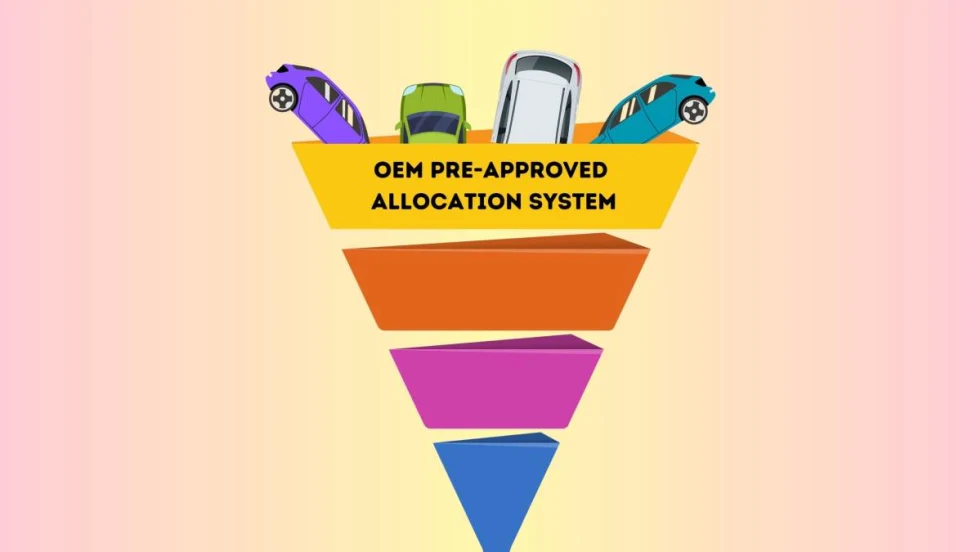
Scheduled Replacement Cycles Are Becoming a Distant Memory
The ongoing difficulty in sourcing replacement vehicles is forcing companies to extend the service lives of vehicles that are unable to be replaced, which, inevitably, increases unscheduled maintenance expenses.
Read More →
Fleet Simplification is the Antidote to Asset Variability
Fleet simplification identifies asset functions to uncover commonality among the equipment and assets. Simplification increases operational efficiency as end-users become accustomed to the controls, displays, and operation of less diverse units.
Read More →
The Dangers of Static Fleet Policies
A fleet policy is a living document, flexible enough to adapt to evolving business priorities, developing industry trends, and changing industry best practices and standards.
Read More →
Short-Term vs. Long-Term Cost Reductions
Corporate procurement staff are often driven by short-term, immediate cost reductions. However, a longer perspective to soft cost savings is critical because fixating on short-term results will hurt a company in the long run.
Read More →
Uptick in Unscheduled Maintenance Increasing Vehicle Downtime
Fleet data analysis can identify recurring downtime issues. It’s important to determine the root causes of downtime so procedures can be developed to minimize such problems.
Read More →
Eliminate Needless Curb Weight to Maximize ICE & EV Efficiencies
Vehicle weight relates directly to fuel economy. In today’s era of electrification, there is also a direct correlation between vehicle weight and battery range.
Read More →
Tech Dependence Risks Dumbing Down Fleet Manager Expertise
The line between creative thinking and problem solving and doing what the data indicates is thin. To lead in fleet management, you need to balance understanding the fundamentals and embracing what smart technology offers.
Read More →
Leverage the Synergy of Safe Driving to Achieve Sustainability and Cost Goals
Safe driving, emission reductions, and cost containment can all be achieved at the same time.
Read More →
The Playbook for Fleet Manager Success
There are many paths to success — most of them involve being flexible, open-minded, and willing to learn.
Read More →