




Winery Runs Eco-Friendly Biodiesel Fleet
With favorable fuel prices compared to diesel and local availability, biodiesel is a smart way for Willamette Valley Vineyards to help the environment.

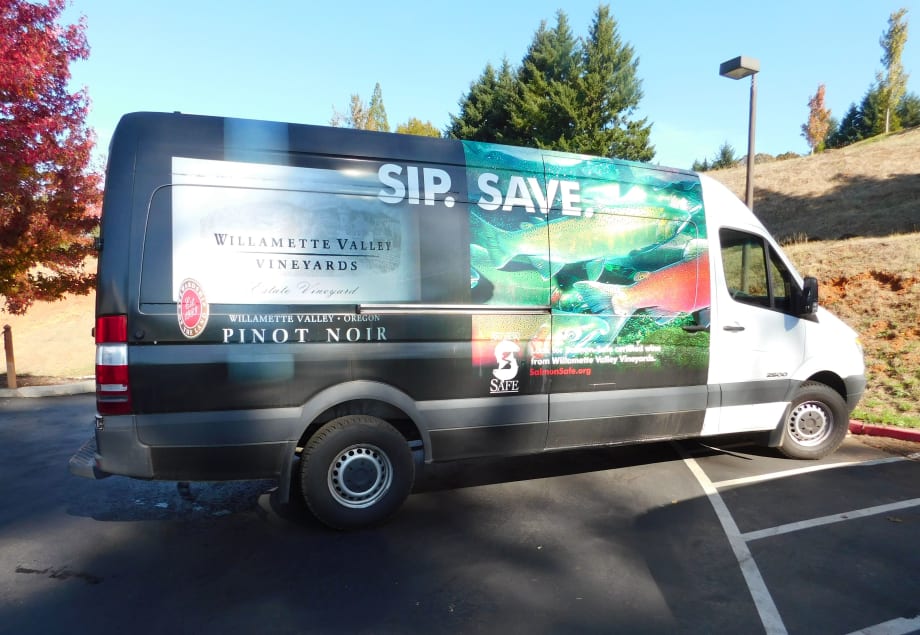
One of Willamette Valley Vineyards' Sprinters that runs on biodiesel fuel.
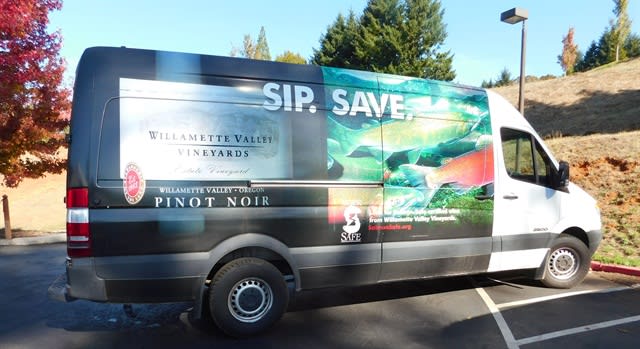
One of Willamette Valley Vineyards' Sprinters that runs on biodiesel fuel.
For Jim Bernau, it’s important for his business to be environmentally conscious. By operating a biodiesel fleet, his vehicles — and trackers — run on recycled cooking oil.
“It’s using a waste product again for a useful purpose,” says Bernau, owner of Willamette Valley Vineyards. “You are reducing your reliance on fossil fuel.”
Located in Oregon’s Willamette Valley, Bernau farms on 500 acres and has three winery locations. For 25 years, Bernau ran a wine distribution operation with a fleet of vans and trucks. After selling the distribution company a few years ago, his fleet of Sprinter vans has been reduced from eight to four. Currently, the biodiesel-running Sprinters haul wine between the company’s three different tasting rooms.
Bernau even encourages his employees to switch their personal vehicles to biodiesel. Every month, he offers each employee up to 50 gallons of biodiesel for their daily commute.
“My employees are essentially part of the marketing program promoting biodiesel,” says Bernau. “They have the materials about the benefits of biodiesel and put a sticker on the back of their cars.”
Biodiesel Benefits
Produced from renewable sources, biodiesel is a clean-burning alternative fuel that contains no petroleum. According to the National Biodiesel Board, it’s created through a refinery process called transesterification using a fat or oil.
Biodiesel is available in various percentage blends, from B10 (10% biodiesel and 90% diesel) to B20, B99 and B100 (100% biodiesel).
“Biodiesel is cleaner burning, cuts carbon significantly and is made in the U.S.,” says Jessica Robinson, director of communications at the National Biodiesel Board. “Fleets from coast to coast have turned to biodiesel as an affordable option to seamlessly convert a diesel fleet to a renewable, low carbon fuel.”
A benefit to biodiesel is the ability to switch fuels withou making any engine modifications. However, regular use is dependent on its availability in fleets' areas.
In 2004, Pacific Biodiesel opened a biodiesel production plant in Salem, only a few miles from Bernau’s vineyards. According to Bernau, the plant’s main source of biodiesel comes from the used cooking oil at Kettle Chips headquarters in Salem. Additionally, the biodiesel plant goes around to local restaurants to pick up used cooking oil.
“Our biodiesel is delivered by our local fuel distributor whenever we need it,” says Bernau.
Years ago when he didn’t have a local distributor, Bernau attempted to make his own biofuel in the barn, using cooking oil from the Kettle Chips plant. “It was messy and not very efficient.”
Favorable Fuel Prices
At SeQuential Biofuels station #1, a biofuel retail pump located near Bernau’s winery, biodiesel B99 currently costs $2.29 per gallon, biodiesel B20 costs $2.10 per gallon and regular diesel is priced at $2.19 per gallon. The price for biodiesel has dropped about 30 cents per gallon since October.
According to the U.S. Department of Energy's report on the average price of alternative fuels nationwide from Oct. 1, 2015 to Oct 15, 2015, biodiesel B20 was $2.42 per gallon, regular diesel was $2.33 per gallon and biodiesel B99-B100 was priced at $3.36 per gallon.
"The price of biodiesel varies depending on how fleets draft their RFPs and purchase the fuel," says Robinson. "Biodiesel is slightly more expensive than diesel to produce, but by the time it reaches the consumer, that cost difference is almost always offset by a $1 per gallon tax incentive and the price of a RIN credit (the renewable identification number used to track alternative fuel blended into the supply stream and required by the Renewable Fuel Standard)."
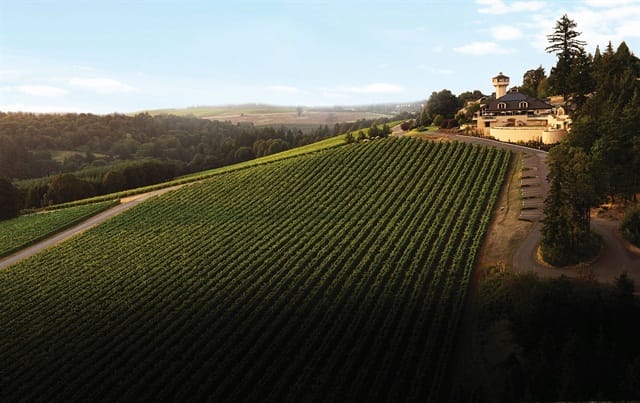
Willamette Valley Vineyards' estate vineyard.
Originally posted on Work Truck Online
More Vehicle Research

EV Realty Names Henrik Holland President as Charging Platform Expands
The former Prologis Mobility and Shell executive will help expand EV Realty’s truck charging business and move its power-first infrastructure model into autonomous vehicle depots and other fleet sectors.
Read More →
Mercedes-Benz Introduces Electric GLC With Up to 350 Miles of Range
The GLC 400 4MATIC Electric features an 800-volt architecture, 330-kW DC fast charging and a 94-kWh battery, along with Mercedes-Benz's new MB.OS operating system.
Read More →
Fleet Has a Talent Pipeline Problem, not a Talent Problem
Where will the next generation of fleet leaders come from, and what does the industry need to do differently to find them?
Read More →
Fleet Hacks: What Are You Still Doing Manually?
From daily recaps to repeatable workflows, fleet professionals share how AI can cut through busywork while keeping human judgment at the center.
Read More →
How One Fleet Manager Put a New Spin on Safety Training
Joe Lewis turned a pre-trip inspection lesson into an AI-assisted song, then four safety albums. The experiment also revealed why human oversight matters when AI enters driver training.
Read More →
2027 Ram ProMaster City Starts Under $40K
Ram is returning to the smaller commercial van market with a new ProMaster City aimed at delivery, service, trade, and passenger applications. Starting at $39,995 with destination, the 2027 van offers up to 2,000 pounds of towing capacity, more than 2,000 pounds of payload, and multiple cargo and passenger configurations.
Read More →
New Tariff Threats & a Leadership Change at Wheels | AF News Recap
A new tariff threat is creating more uncertainty for fleet ordering, Wheels has named a new president, and we’re asking whether certification is really worth the investment.
Read More →
Certification: What’s in It for the Fleet Manager?
From smarter fleet decisions to stronger career credibility, certification can give fleet managers knowledge they may never gain inside a single operation.
Read More →
Wheels Names Matthew Cole President
Cole brings more than 30 years of automotive and technology experience to the fleet management company, including leadership roles at Aptiv, Visteon and Johnson Controls.
Read More →
AI is changing what fleet managers can build & 849,000 vehicles recalled | AF News Recap
Fleet managers are learning how to build their own AI-powered tools, Stellantis is recalling nearly 849,000 vehicles, and this year’s Fleet Manager of the Year finalists have been revealed. Additionally, we’re examining how to identify repairs that warrant a second look. Here’s what you need to know this week.
Read More →