




Why Wright Express Changed Its Name to WEX
The two primary factors prompting the name change were the diversification of its product lines and the international expansion of its business. WEX provides services in the U.S., Canada, the UK, Brazil, New Zealand, and Australia.


The new WEX logo.
The new WEX logo.
Wright Express Corp. changed its name to WEX Inc. on Oct. 25, 2012. The company’s operations are organized into two segments: Fleet and other payment solutions. WEX said the new name reflects its transformation and growth strategies, focused on physical, digital, and virtual corporate card payment solutions for businesses internationally.
Headquartered in South Portland, Maine, WEX provides services in the United States, Canada, the United Kingdom, Brazil, New Zealand, and Australia. In addition, it operates a wholly owned banking subsidiary, WEX Bank. Since its beginnings as a fleet card provider in 1983 and its initial public offering in 2005, WEX now has more than 350,000 customers, representing more than 6.5 million cardholders. In 2011, its revenues were $553 million.
To learn more about the name change, AF interviewed Michael Dubyak, chairman, president, and CEO of WEX. The following is an excerpt from the interview:
AF: How did the name Wright Express originate?
DUBYAK: That’s a good question and also the reason why we’re located in South Portland. The company was founded in 1895 as a family business called A.R. Wright, which was primarily in the coal and heating oil businesses.
In the early 1980s, one of the family members developed the concept of unattended fueling, which caused the name to change from the A.R. Wright Co. to Wright Express in 1983. The Wright family sold its shares in 1990, and is no longer involved in the business.
AF: What were the primary reasons for the name change?
DUBYAK: The two driving factors prompting the name change were the diversification of our product lines and the expansion of our business internationally. Wherever the Wright Express name is used today, it will be phased out and transitioned to WEX.
AF: What percentage of your business is fleet? What percentage is non-fleet?
DUBYAK: Seventy-four percent of our business is fleet and the non-fleet business is 26 percent, which are payment solutions, mainly in travel or paycard segments.
AF: Could you describe the new logo?
DUBYAK: The logo embodies the WEX name on a tilted card, which gets to our tagline: “We see corporate payments differently.” There is a precision point on the “E” (in the WEX name), positioning us as a company that drives great value for its partners and customers with our precision, value-based products and services.
AF: Is there a key message you want to convey to commercial and government fleets about the name change?
DUBYAK: Our key strategy is to remain a leader in the Americas’ fleet business for commercial and government vehicles, and we’re looking to expand internationally in a very targeted and measured way. The majority of our business will continue to be on the fleet side and we’re making sizeable investments in that business. There will be no let up or pullback in our commitment to our fleet strategy. We’re also fuel “agnostic” and support all fuels.
More Fuel
Fuel Prices Surge in September | September Fuel Update
September brought major fuel price swings, including diesel crossing $6 a gallon. Here’s how gas and diesel prices changed throughout the month, and where they stood heading into October.
Read More →
Turning Fleet Payment Data into Executive Insights
Ramel Lindsay of U.S. Bank Voyager discusses how fleets can transform payment and transaction data into actionable intelligence to reduce costs, improve oversight, and support executive decision-making.
Read More →
Why the IRS Raised Its Mileage Rate in the Middle of 2026
Fuel-price volatility drove the rare increase to 76 cents per mile, the fifth midyear adjustment since 2000.
Read More →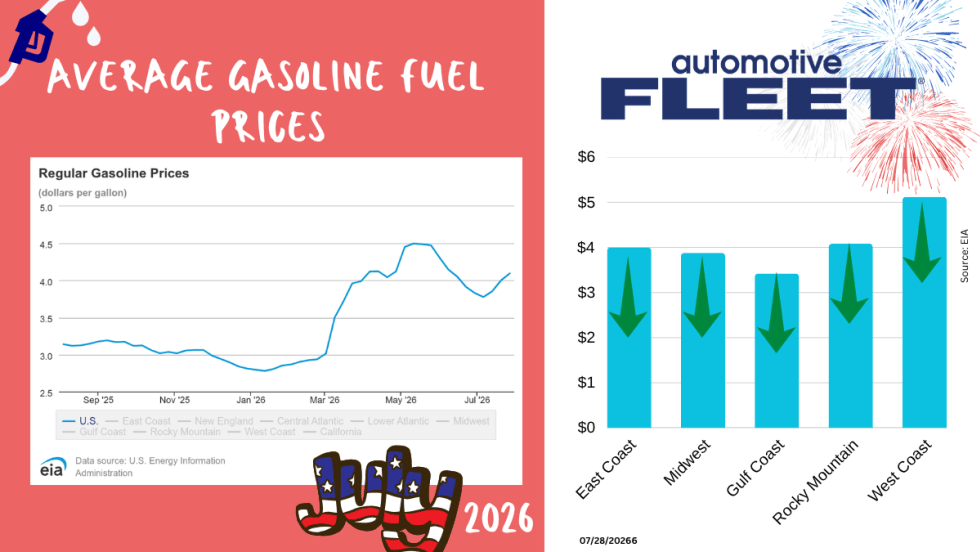
July Fuel Update: Prices Keep Rising in Light of More Conflict
Gas prices continue to rise as more and more conflicts do, too.
Read More →
Bob Adamsky on Fuel Volatility: "Don't Panic, Have a Plan."
When it comes to up and down fuel prices, Adamsky has a message for fleets: “Don’t panic.”
Read More →
How Fleets Can Gain Control of Non-Fuel Spend
Fuel often gets the spotlight, but non-fuel expenses can have a major impact on fleet costs. Ramel Lindsay of U.S. Bank Voyager discusses how fleets can gain better visibility and control over these often-overlooked expenditures.
Read More →
Fuel is Just the Start: How Middle East Tensions are Driving Up Fleet Maintenance Costs
The Middle East conflict is doing more than pushing up fuel prices. It’s also raising the cost of key maintenance products your fleet depends on, from motor oil to tires to windshield wipers. Here’s what you need to know about this budget-busting situation.
Read More →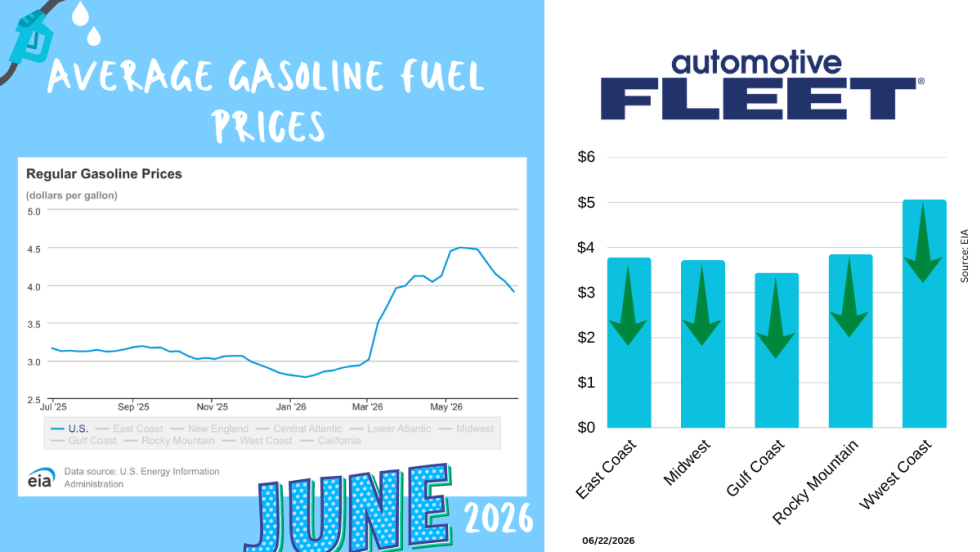
June Fuel Update: Prices Fall Below $4
Drivers are finally getting some relief at the pump. The national average gas price has dropped below $4 a gallon for the first time in months, with prices falling in 47 states as oil markets react to developments in U.S.-Iran negotiations.
Read More →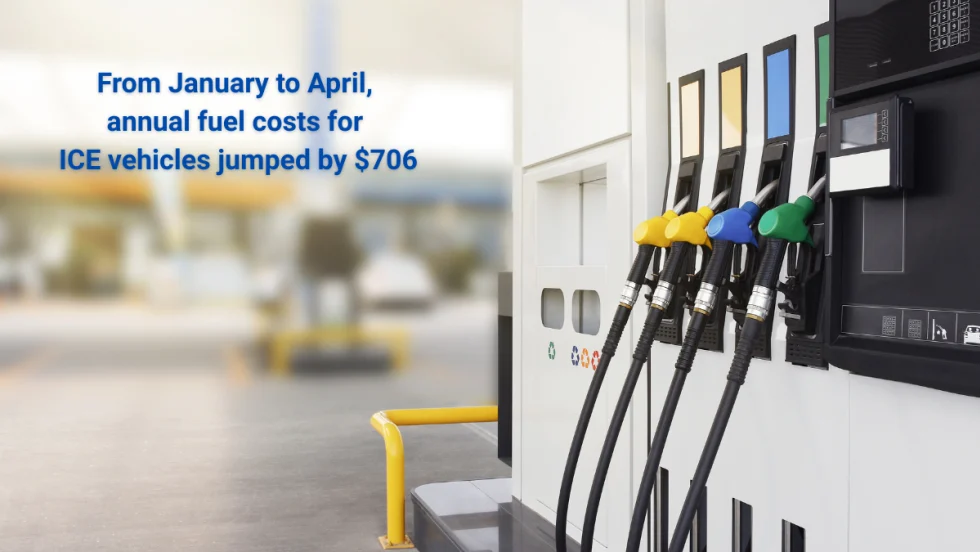
Study: How 2026's Gas Price Hikes Affect Different Vehicle Types
New data from iSeeCars reveals how rising fuel costs have affected different vehicle segments as gasoline prices climbed nearly 46% over the past four months.
Read More →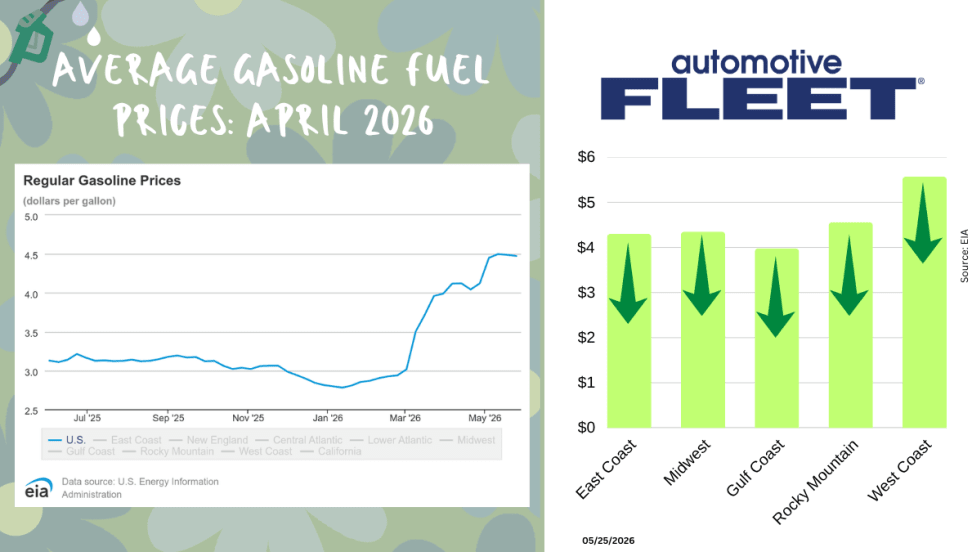
May Fuel Update: All Regions Experience Declines
Gas prices are finally easing in much of the country, but experts warn global tensions could quickly reverse the trend as the national average remains well above last month’s levels.
Read More →