




What’s Real in Autonomy Right Now
A candid discussion at AutoMobility LA 2025 revealed how autonomous vehicles are progressing in trucking, ride-hailing, manufacturing, AI, and safety.
November 26, 2025


At AutoMobility LA, panelists agreed that autonomy is happening right now. The next step is to break down barriers to wider adoption.
Photo: Automotive Fleet
5 min to read
While a steady, cold rain sent fleet attendees scrambling for cover on the Gilbert Lindsay Paza, those who found shelter under the main stage tent enjoyed a warm discussion on the future of autonomous transport.
The panel took place on Nov. 20 as part of AutoMobility LA, the media day at the annual LA Auto Show in downtown Los Angeles. With representatives from Zoox, Kodiak Robotics, Lyft/Flexdrive, Honda, and PAVE, the panel delivered a pragmatic assessment of where autonomous mobility stands and what it means for fleets.
Moderated by Katelyn Magney-Miller, communications director at PAVE (Partners for Automated Vehicle Education), the conversation concentrated on what’s real, what’s scaling, and what still needs to happen for autonomy to become an everyday operational tool.
Building Autonomy from the Ground Up
Michael White, who leads product at Zoox, opened by explaining why the company chose a fully ground-up design for its robotaxi — no steering wheel, no pedals, and a cabin built for riders only.
“Our vehicle isn’t like anything else on the road,” White said. “It’s designed to give riders agency. It can be a loading lounge, a workspace, or just a cool place to hang out with friends.”
Zoox hit two major milestones in 2025: tens of thousands of public rides in Las Vegas, and, on the same day as the panel, its first public waitlist riders in San Francisco.
“Autonomy is here,” White said. “Where it hasn’t permeated is everyday life.”
For Zoox, true arrival will happen when people stop thinking in terms of “rides” altogether. “When the lexicon changes from ‘I need a ride’ to ‘I need to get something done between point A and point B,’ that’s when autonomy has arrived,” White said. “And when it becomes a verb — ‘We’ll Zoox the kids to soccer’ — that’s when it’s part of daily life.”
Driverless Trucking Moves from Pilots to Revenue
While robotaxis are grabbing headlines, the most concrete progress may be happening in the heavy-duty trucking sector.
“If anyone is wondering, autonomous trucks are here,” said Lauren Harper, chief of staff at Kodiak Robotics. “The question now is how they’re going to scale.”
This year was the first in which multiple players reached genuine driverless milestones. Aurora Innovation launched a driverless lane between Dallas and Houston, and Kodiak crossed a major operational threshold: a customer in the Permian Basin now owns and operates 10 autonomous trucks equipped with Kodiak’s system.
Meanwhile, self-driving truck startup Waabi has achieved “feature complete” autonomous driving capabilities across highways and general surface streets, meaning all the intended features needed to remove the human driver are now implemented. Waabi is tracking towards driverless software readiness by the end of the year.
“It’s a dirty place, a tough job,” Harper said. “And we’re adding value today in a region where it’s extremely difficult to hire and retain drivers. These trucks are generating revenue, and that’s new this year.”
Scaling will hinge on its manufacturing partnerships, such as its partnership with Roush Industries, known for its race cars and propane-powered trucks.
It will also rely on AI capabilities that go beyond detection
“AI has had massive, rapid improvement,” she said. “Our system can now go beyond detection to understanding. Instead of just saying, ‘That’s a fire hydrant,’ it can reason, ‘The road looks flooded from that hydrant; traversability may be challenging; move to the left.’ That’s a game-changer.”
Harper also stressed that safety remains both the biggest challenge and the biggest opportunity.
“With autonomy, every driver can become your safest driver,” she said. “A software improvement can be deployed to the entire fleet instantly.”

On display at AutoMobility LA, Silicon Valley startup Tensor is aiming to be the first automaker to sell a purpose-built robocar with a steering wheel that retracts during autonomous driving.
Photo: Chris Brown
Rideshare: Public Trust and Fleet Integration
For Lyft and Flexdrive, its owned fleet division, autonomy is already reshaping fleet operations. “Automation is a turning point,” said John Parks, CEO of Flexdrive. “It allows us to scale differently.”
Today, dispatching relies on matching a rider to a human driver. “With an AV, that negotiation goes away,” Parks said. “We can dispatch immediately and position supply where demand is.”
That translates directly into shorter door-to-door time, higher utilization, and faster scaling.
Parks also pushed back on the idea that public trust is an insurmountable barrier.
“A decade ago, the idea of getting into a stranger’s car was bizarre,” he said. “Today Lyft has over 100 million active users a year. AVs will follow a similar arc.”
Convenience will be the accelerant. “When people ride in a truly driverless vehicle, no one in the front, the adoption is going to climb quickly,” he said.
A Fragmented Policy Landscape
The U.S. remains an international outlier in one critical area: a national AV framework.
“One lesson from Europe and Asia is how important a consistent national system is,” said Brian Bautsch, director of safety strategy at Honda. “Here, we rely on a patchwork of state and even municipal policies. A consistent framework is critical for safe, efficient deployment.”
Bautsch highlighted Honda’s experience with consumer Level 3 automation, pointing to the 2021 Honda Legend, the first such vehicle on the market.
“It had zero crashes when Level 3 was activated,” he said. “That’s why getting life-changing technology into more people’s hands is the headline I want to see.”
Fleet Takeaways
For a fleet audience, the panel highlighted several near-term themes:
AV Freight Will Arrive First
Autonomous trucking is now in revenue service in the Permian Basin; driverless milestones are accelerating; AI is increasing operational domain and safety potential.
Robotaxis Will Influence Customer Expectations
The rider experience Zoox is designing may soon reset expectations for time use, productivity, and comfort.
AVs Will Reshape Fleet Management Tasks
Parks noted that robotics can eliminate inconsistency and human error in maintenance tasks such as torquing lug nuts.
Policy Fragmentation Still Holds the Industry Back
Without federal consistency, fleets operating across multiple states face uneven rulemaking, testing conditions, and compliance requirements.
Autonomy May Increase Safety at Scale
“Every driver can become your safest driver,” Harper said.
Magney-Miller closed by reminding the audience of the safety crisis: “Roadway safety today is a public-health crisis,” she said. “More than 40,000 people die on U.S. roads each year. This is something we can fix.”
Subscribe to Our Newsletter
More Fleet Forward

Chad Edmondson Named 2026 Fleet Safety Award Winner
The VSC Fire & Security fleet director oversees more than 1,100 assets nationwide. His approach to improving driver safety emphasizes collaboration, employee engagement, and building trust with the people behind the wheel.
Read More →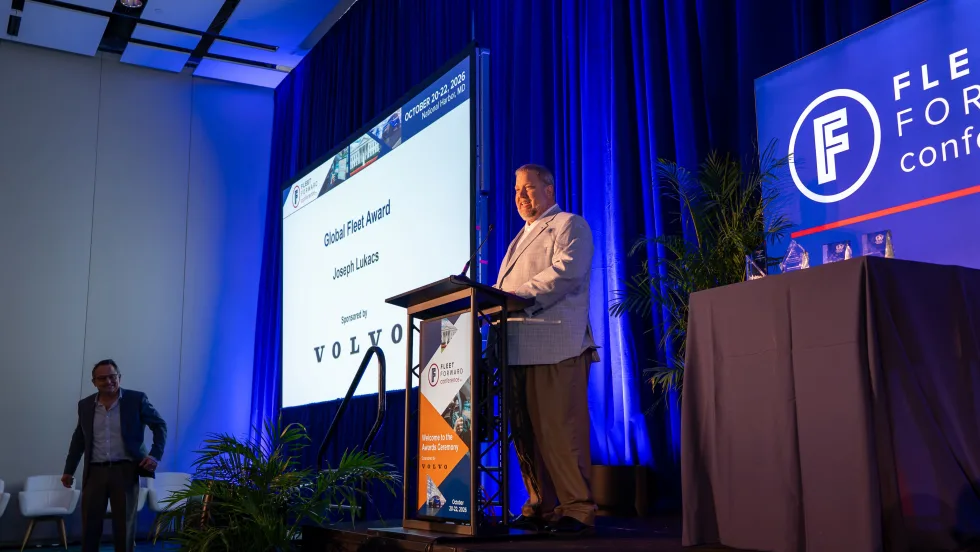
Joseph Lukacs Wins 2026 Global Fleet Manager of the Year
The Sherwin-Williams fleet leader adds another industry honor to his career after being named the 2025 Edward J. Bobit Professional Fleet Manager of the Year.
Read More →
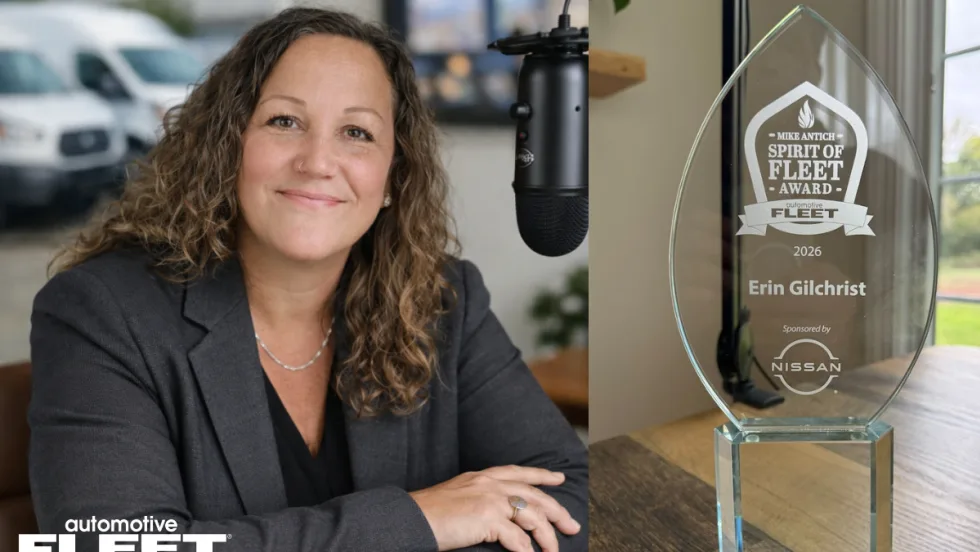
Erin Gilchrist Receives Mike Antich Spirit of Fleet Award
Last week at AFLA in Vegas, Erin Gilchrist received the inaugural, brand-new Spirit of Fleet Award.
Read More →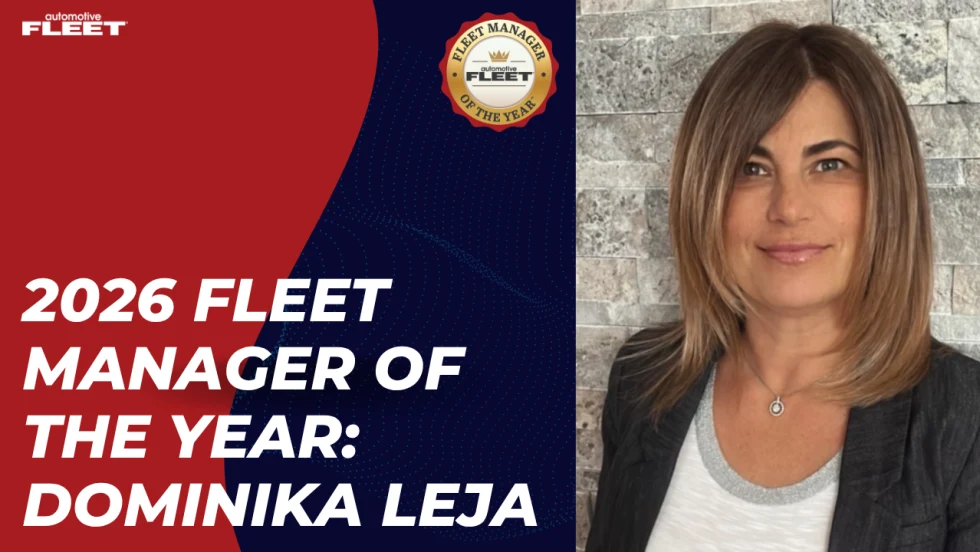
Dominika Leja Named the 2026 Fleet Manager of the Year
The AstraZeneca associate director of fleet was recognized for her leadership in fleet electrification, cost savings, and operational transformation.
Read More →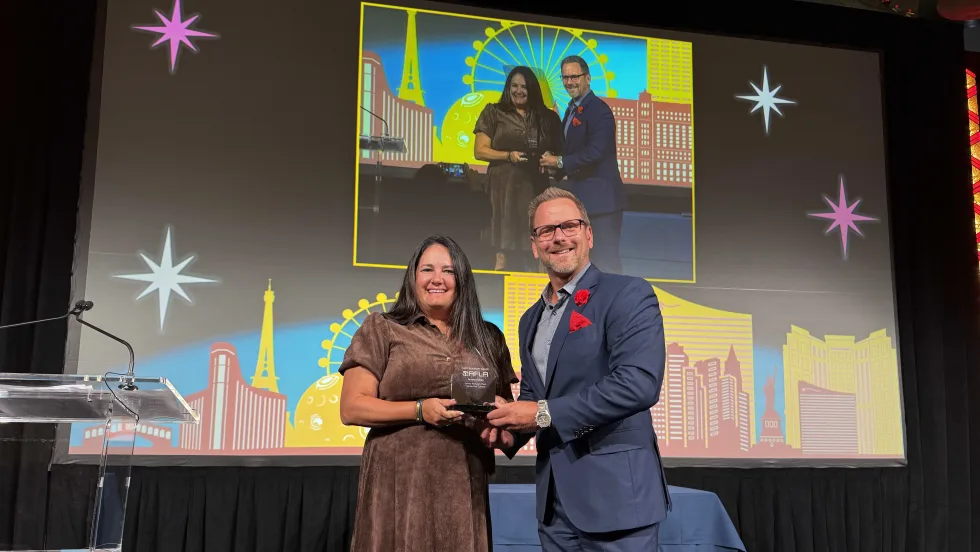
Jamie McKay Named the 2026 Fleet Visionary Award Winner
The Aptive Pest Control fleet manager was recognized for her approach to operations, data, lifecycle management, and driver needs.
Read More →
Fleet Forward Conference Introduces One-Day Passes for 2026
New one-day registration gives fleet professionals the flexibility to attend Tuesday, Wednesday, or Thursday, with passes available for $199 through Sept. 18.
Read More →
Vibe Coding: When Fleet Managers Become Software Builders
Five fleet professionals — none with programming skills — discuss how they’re using AI to build fleet solutions in-house and in a fraction of the time.
Read More →
Fleet Forward Conference Tackles Fleet Industry’s Growing Leadership Gap
This session will examine succession planning, knowledge transfer, and the skills the next generation of fleet leaders will need as veteran professionals leave the industry.
Read More →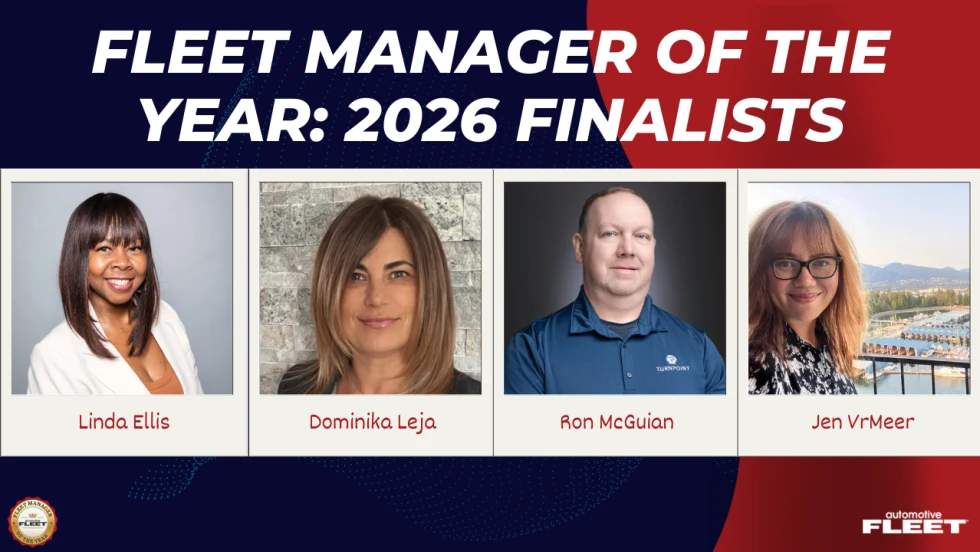
2026 Fleet Manager of the Year Finalists Announced
Who are the 2026 Fleet Manager of the Year finalists?
Read More →