




What's Impacting Truck Replacement?
Big Data, tax law changes, new vehicle options, fuel prices, and more, are impacting fleets decisions about when to replace their trucks.

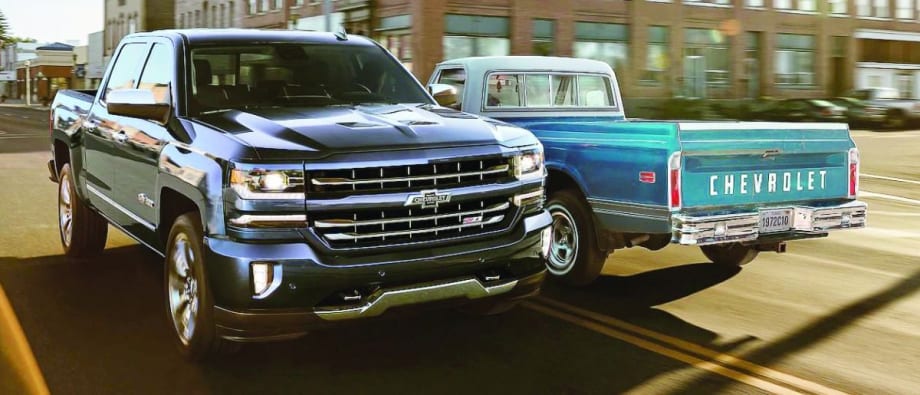
Many companies that own equipment do not have a truck replacement strategy, nor the experience to efficiently sell their old equipment to maximize the residual value of older equipment getting updated. Unless your fleet wants the "retro" look, be sure to set an optimal replacement strategy.
Photo courtesy of General Motors.
Trucks are used and abused, and no one has created a truck that will last forever. Each fleet uses each vehicle differently and every driver drives and operates each truck differently. Determining when to replace a truck isn’t the easiest decision to make.
While there are many different formulas and spreadsheets, the numbers produced may not fit your fleet depending on a variety of factors. “Is it being properly used? Is the spec of the truck able to match the duties for which it will be used? Being able to predict and forecast future replacement cost is crucial when looking at the total fleet,” said Dan Doucette, senior truck engineer for Mike Albert Fleet Solutions.
Much can impact replacement cycling. “Some factors that impact truck replacement include the OEM’s track record for service availability, driver acceptance, resale value, upfit process support, support after asset goes in service, and safety recall frequency and response,” said Ken Gillies, senior consultant, commercial truck solutions, CTP, for Element Fleet.
Impact of Lease vs. Own
One of the most significant factors impacting a truck fleet’s replacement schedule is whether the fleet owns or leases.
“In our experience, a hybrid solution for truck replacements comprised of both leasing and purchasing assets can provide significant benefits for most organizations. For businesses who have limited capital funding for new-vehicle purchases, leasing offers a viable solution to address operational challenges while also remaining within budget,” said Mike Bryan, department head, Business Intelligence & Analytics for ARI.
A strategic purchase/lease hybrid solution can help bring a fleet into accordance with an optimal replacement cycle model.
“Perhaps you’ve determined that you’d like to cycle 20% of your fleet each model-year, but your capital expenditure budget can only support cycling 10%. Rather than only replacing that 10%, which will likely result in increased operating costs and reduced productivity as your fleet ages, supplement your capital expenditure purchases with leased units to help meet your replacement cycling goal of 20%,” Bryan suggested.
Leasing helps aging fleets address pent-up demand while reducing financial burden on annual capital expenditure budgets.
“A common trend we witnessed across several ‘owned’ truck fleets is the tendency to run assets longer than recommended service terms due to significant cash outlay required to replace under ownership. Replacing under a leased program will eliminate the need for large capital expenditure budgets and help normalize total annual cash flow,” said Dale Mottram, fleet consultant for Merchants Fleet.
If the philosophy is to own the assets, will cash or investor debt be used?
“Do you know if cash flows and credit lines support the fleet’s desired replacement strategy? If the philosophy is to lease the asset, what type of lease structure and terms will best support the desired replacement strategy? An 84-month fixed term lease may not align with cost analyses that suggest replacing by 60 months. Can ordering the asset be planned so the outgoing asset is remarketed within peak periods when market demand is highest? Was driver satisfaction and retention considered? Driver input may be overlooked by asset price,” said John Wuich, vice president, strategic consulting services for Donlen.
The recent tax law changes and lowering of the corporate tax rate have more fleets looking toward leasing than in the past.
“Many companies that own equipment do not have a truck replacement strategy, nor the experience to efficiently sell their old equipment to maximize the residual value of older equipment getting updated. The state of the used-truck market the past several years hurt a lot of companies. The beauty of some truck leasing programs is that it can place residual risk squarely on the lessor. A full-service program guarantees all repairs to your truck other than driver abuse,” said Ian Griffin, national account sales executive for PacLease.
An additional benefit of leasing is capital retention.
“Your company may have competing priorities for capital. Is it better to invest in using your capital to grow your business or should you use that money for equipment? The bottom line is there are many reasons companies are looking to diversify how they acquire assets. Leasing trucks often require no down payments and will allow a company to use that much-needed capital elsewhere in their business,” Griffin added.
Delays in Order-to-Delivery
Keep an eye on build times with OEMs and upfitters. Overall order-to-delivery (OTD) times can have a major impact on a fleet’s replacement cycle.
“Truck OEMs have been manufacturing at maximum capacity for the past 18-24 months. A smart fleet manager is looking at their next two years of replacements and ordering well ahead of the needed time to keep on their replacement schedule. Parts shortages and backlogs plague OEMs, so even once the vehicle is ordered, it isn’t a guarantee the truck is done on time,” said Wuich of Donlen.
Fleet managers must consider how market factors such as commodity prices, labor, and supply-and-demand influences current acquisition price both positively and negatively.
“Staying on top of the market can be very challenging and not doing your homework can become very costly,” said Jeff Krogen, AVP Fleet Strategy for Enterprise Fleet Management. “And OTD times continue to rise. Planning is critical. Additionally, company/brand image can be affected by the age and condition of vehicles. The trucks on the road can be your best (or worst) form of advertising, depending on the image they convey to clients.”
Improved Vehicle Tech
With many fleets growing throughout 2017 and 2018, there continue to be more vehicles on our nation’s highways.
“There are very reliable collision mitigation and safety technologies that can help reduce the chances of a commercial vehicle accident or greatly lessen the severity of an incident,” said Jim Wood, vice president of Sales for Penske Truck Leasing. “Onboard technology is rapidly expanding, not only from a safety perspective but also around driver productivity and regulatory compliance. As an example, the 2018 National Private Truck Council (NPTC) Benchmarking Survey noted 98% of the private fleets responding are currently using onboard technologies. Three years prior, the adoption of onboard technology was just under 50%.”
But, safety features available on new models may be lacking in the current fleet. “Safety is an important factor in itself, but improved safety can translate into increased uptime and lower costs due to fewer crashes, damages, and injury claims,” said Krogen of Enterprise Fleet Management.
Increase in Fuel Costs & Alt-Fuel Options
It’s a danger for managers to ignore long-term costs, such as increasing fuel prices. “Many fleet managers are not considering alternative fuels as an option unless there is a federal or state tax credit available,” said Mark Donahue, manager, fleet analytics for EMKAY.
For Class 7-8 heavy-duty trucks, consider the relationship between fuel economy and asset health. “Fuel may be the largest cost component, and maintaining optimal fuel economy can be key to some replacement approaches, such as when the cost to repair outweighs the cost to replace,” said Wuich of Donlen.
And more fleets are adding electric trucks to their offerings. “More organizations with vehicle fleets are starting to consider what effect electrification will have on the fleet plan and every element downstream,” said Krogen, of Enterprise Fleet Management.
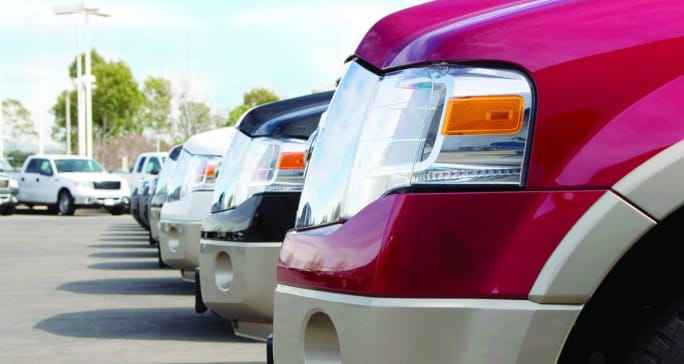
Consider how market factors such as commodity prices, labor, and supply-and-demand influence acquisition prices.
Photo courtesy of Getty Images
Enhancements to Analytics
Over the past decade, Big Data has become an integral part of fleet management.
“Data comes at us from a variety of sources, in high volume and at a great velocity. For the reporting and analytics to be of value, you must have a reporting and analytics process. That process begins by asking questions and defining quantitative objectives. It ends by knowing your questions are answered. In between, the right data must be gathered, transformed, and analyzed in order. With a process, insights become actionable and lead to data-driven replacement decisions,” said Wuich of Donlen.
Today’s equipment is an extension of a company’s network. “Many fleets are operating vehicles that can provide a plethora of meaningful data to their business. Utilizing the data management tools correctly and trying to make better business decisions with the data can be daunting,” said Wood of Penske Truck Leasing.
Focus on PM Programs
From a vehicle maintenance effectiveness perspective, fleet managers must protect their fleet investment.
“This can be accomplished with a preventive maintenance (PM) program throughout their vehicle lifecycle while taking into consideration the additional technologies, technical training, and supervisory considerations needed to do so,” said Wood of Penske Truck Leasing.
Where work gets done should also be considered. “Related to maintenance practices, fleet managers have to determine if it’s best to have an in-house shop or use a third-party facility. Also, they need to decide if they want to have PM work guided by the OEM’s instrument panel readout, and determine if it’s a set schedule or up to the driver,” said Gillies of Element Fleet.
Full-service leasing programs can also include comprehensive maintenance benefits, in addition to the fact that leasing typically means vehicles are kept in service for shorter periods, reducing overall maintenance needs.
To Extend or Shorten Lifecycles?
Service fleets are often extending the life of their vehicles.
“From a budgeting perspective, this switches the fleet cost from acquisition to maintenance. Fleets need to be in the practice of trading short-term fixes for long-term strategies. Choosing long-term strategy helps reduce the need for emergency ordering situations and allow for better planning year-over-year. A strong fleet manager is working closely with the finance department to build long-term budgets rather than concentrating on only one fiscal year at a time,” said Ross Ingham, fleet consulting manager for Wheels Inc.
On the flip side, some fleets may find shortened cycling more effective. “Can you get the equipment you want when you want it? It’s no secret all truck OEMs are producing trucks at an all-time high. Body builders are swamped too, which can lead to extended lead times (in some cases more than 12 months). You may have to look at replacing trucks earlier than expected to meet what your replacement goals are,” said Griffin of PacLease.
Advice for Replacement Cycling
The more you know, the better your decision-making can be.
“Be diligent learning about current asset use. Replacing like for like may create a bigger gap between driver/tech needs and what asset is provided,” said Gillies of Element Fleet. “Routinely review fleet inventory to identify replaced assets, but where the old unit was not turned in. Keep simplicity top of mind. For example, an air compressor may have been necessary at one point, verify that it still is. It’s not uncommon to discover a compressor is no longer needed, but the previous truck had one, so that’s what the replacement truck gets.”
Lean on others. Fleet is a fantastic community and vendors, automakers, and peers can be a huge help. “Do your homework and join associations that do what your company does. Speak to the large leasing managers of fleets and compare strategies,” said Doucette of Mike Albert Fleet Solutions.
Stay abreast to what manufacturers have in the pipeline. “Don’t get locked into a specific body style just because it’s what you’ve always done. The current trend that has us excited is the comeback of the light-duty pickup truck (e.g., the Chevrolet Colorado, Ford Ranger, and Toyota Tacoma). With the recent reintroduction of the Colorado and Ranger, coupled with the redesign of the Tacoma, fleets are reexamining their truck applications. Many fleet managers can now move away from the traditional ¼-ton option in certain applications. This trend should allow fleet managers to inject those savings into more robust cycling practices, optional safety features, additional upfit components, etc.,” said Ingham of Wheels Inc.
Sometimes you have to look at everything from a different point of view. “When operating a fleet vehicle, it’s important to not look at it as recouping the large costs invested in the vehicle, but rather to consider how much revenue each unit can produce daily. Always consider cheaper options to maximize your cost-containment figures,” said Donahue of EMKAY.
Finally, remember to consider the total cost of ownership (TCO) and avoid focusing only on the upfront purchase cost.
“For most fleets, economics, operations, and brand reputation are ‘owned’ by different executives. For instance, the CFO or city manager will be interested in the economic aspects of vehicle spend such as funding or TCO while a CEO or mayor might gravitate toward image/branding or environmental impact. HR might think safety should be the priority, while the operations VP is laser-focused on getting more jobs done in a single day. Fleet managers must navigate all these waters,” said Krogen, of Enterprise Fleet Management.
Originally posted on Work Truck Online
More Operations

How Fleets Can Recruit and Train Veterans for Technician Roles
Here's how the technician shortage has affected uptime for fleets, and what to do about it.
Read More →
Avis Budget Group Deploys Neology Toll Management Technology Across Major Brands
Neology’s neoFleet platform will manage toll transactions and toll-authority operations for vehicles across Avis, Budget, Payless, Budget Truck and Zipcar.
Read More →
Fleet Personal-Use Charges Edge Higher in 2026
Nearly eight in 10 surveyed fleets allow personal use of company vehicles, while just over half of respondents report charging employees for the privilege.
Read More →
The Future of Fleet + What’s Changing Right Now | AF News Recap
Could developments overseas offer a preview of what’s coming for U.S. fleets? This week, we’re looking at the future of AI, autonomy, and electrification, plus Ford Pro’s new certified pre-owned program, smarter vehicle offboarding, and a new way for fleets to manage toll expenses.
Read More →
How to Handle Vehicle Offboarding
What do fleet managers need to do when a driver leaves?
Read More →
Fleet Manager’s Ultimate Playbook: Navigating the New Standard in OEM Connectivity
Rising operating costs, driver safety concerns, and unplanned downtime are putting unprecedented pressure on modern fleets. Discover how fleet managers use embedded OEM connectivity and real-time vehicle data to cut TCO, prevent downtime, and protect drivers without aftermarket telematics hardware.
Read More →
U.S. Bank Adds Verra Mobility Toll Management to Voyager Fleet Platform
The integration allows U.S. Bank Voyager fleet customers to manage toll payments and violations alongside fuel, EV charging and maintenance expenses.
Read More →
ADAS Prevents Crashes. But Repairs Cost More | AF News Recap
ADAS-equipped vehicles may crash less often, but they can cost more when they do. This week, we’re breaking down what that tradeoff means for fleets, plus Subaru’s first Forester Wilderness Hybrid, Nissan’s new e-POWER Rogue, and why Calstart has become Catalyst Mobility.
Read More →
Moventum Fleet Management Names Mark Iorillo Head of Sales
Iorillo brings nearly 20 years of fleet management and sales experience to the role, including previous positions at Element Fleet Management, CEI, Donlen and Ryder.
Read More →
Fleet Has a Talent Pipeline Problem. What Comes Next? | AF News Recap
Where will fleet’s next generation of leaders come from? This week, we’re looking at the industry’s talent pipeline, what certification can add to a fleet career, how to build an award-worthy track record, and the return of Automotive Fleet’s Personal Use Survey.
Read More →