





Related: Addressing Supply Chain Challenges Through Upfitting
What to Do When Upfits Go Wrong
Experts share their advice on how fleet managers can most effectively manage an upfit “crisis” and get things back on track.
May 28, 2013
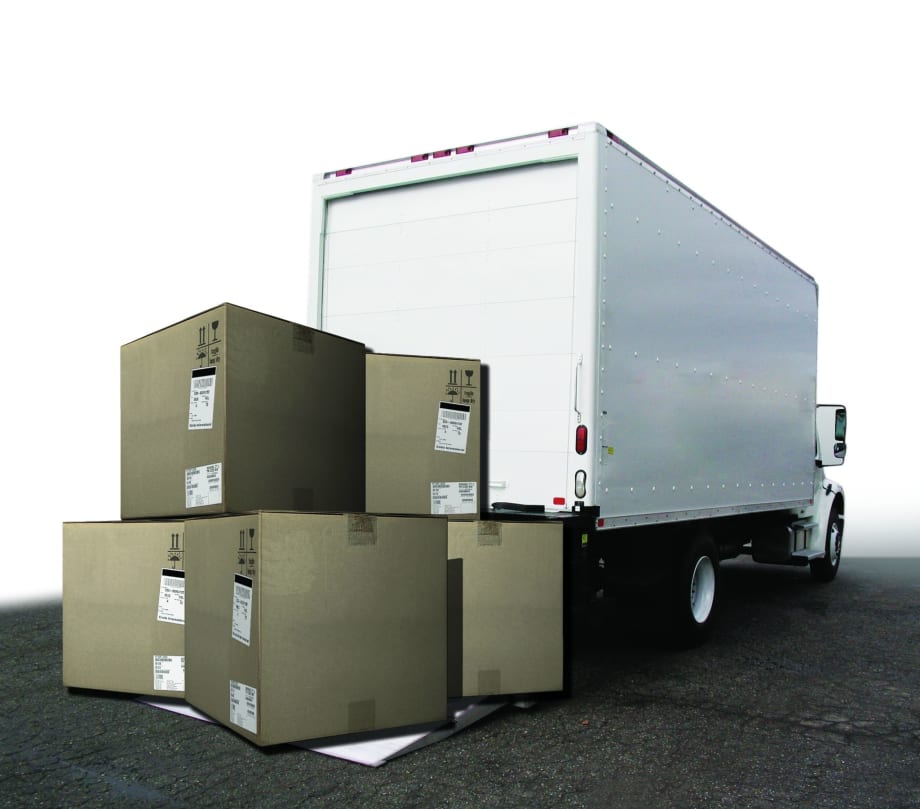
One upfitting error is a liftgate that has a platform too small to safely handle the load it was
intended to carry.
Photo: Work Truck
6 min to read
Even when all stakeholders — the fleet manager, truck manufacturer, supplier (dealer and/or fleet management company), and equipment upfitter — have the best intentions, there are times when things go wrong somewhere in the upfit process, causing delays in vehicle delivery and expensive change orders to fix the problem.
Consider some of the possibilities for error:
The chassis arrives at the upfitter with a frame height 1½-inches higher than expected, forcing a change in body specs or alterations to the chassis to ensure legal overall truck height.
Motor fuel and/or diesel exhaust fluid (DEF) tank configurations mounted on the frame rails creating clearance issues for installing body and equipment.
A dump bed is spec’d with a hoist, but the chassis purchased does not include the PTO option to drive the hydraulic system.
A liftgate is installed with a platform too small to safely handle the load it was intended to carry.
A cargo van is delivered with a shelving system that fails to meet the
drivers’ requirements to do their jobs.
When an upfit goes wrong, how can fleet managers most effectively manage the “crisis” and get things back on track? Experts at GE Capital Fleet Services shared the following ideas.
Contain the ‘Damage’
If you see a mistake on a truck you’ve taken delivery of, call the upfitter immediately. If there are additional units on order, have them stop work until you can sort through the issue and determine what exactly needs to be changed to correct subsequent units, before they’re built.
“The earlier fleet managers can get involved, the better,” said Jim Palin, senior truck applications engineer for GE Capital Fleet Services. “That’s when you still have control of the situation and can still manage the cost of the solution. Once the truck gets to the driver, and he calls the fleet manager saying, ‘This isn’t what I wanted,’ everything escalates. The tone of the conversation escalates — and so does the cost to fix it.”
Assess the Problem
Resist the temptation to panic, advised Ken Gillies, truck ordering and engineering manager for GE Capital Fleet Services.
“You need clarity on what the problem is so there can be some solid decisions made about what action to take. When there’s a problem, it’s really easy to have all hands on deck, with everybody running around like crazy, trying to get it fixed right away. Sometimes, the best first step is one that takes you half a step back to say, ‘Wait a minute! Let’s make sure we actually have a problem and clearly understand what that problem is — before we start throwing money, time, and resources at this.’ ”
Identify Cause & Potential Solutions
The purpose of this step is not for finger-pointing, but to help chart a path forward. Did the upfitter overlook something that was documented in the purchase order? In this case, the upfitter will likely correct the problem at no additional charge. If the mistake was caused by a breakdown in communication between the upfitter, fleet manager, and end-user, then all parties should put their heads together to determine exactly what needs to be changed and what costs will be involved. In some cases, the upfitter and fleet might agree to share the cost burden as part of a long-term partner relationship.
“It’s really dependent upon the relationships between the fleet and vehicle/equipment supply chain that is really going to quickly resolve a problem that may arise,” said Gillies. “If the issue, for example, is that the overall height is above [the legal] 13-feet 6-inches, what’s going to be the pathway to resolve it? Which supplier would be best (upfitter, OEM dealer, etc.) to provide the fix? Answering these types of questions will give you a clearer view on how to move toward a solution.”
Crisis Prevention Plan
Of course, the least expensive way to handle upfit mistakes is to establish processes that help prevent them from happening in the first place. How? Here’s a four-point upfit crisis prevention plan:
1-Involve end-users in the specification process. Jeff Kaley, lead truck advisor for GE Capital Fleet Services recommended that fleet managers get input from end-users from the beginning of the truck specification process.
“Communication between the end-user and fleet manager is very important,” Kaley said. “When working with clients, we do a lot of onsite visits; those contain plenty of discussion with the end-users of the trucks to make sure that what they’re talking about [regarding their vehicle needs] matches the spec — to try to avoid mistakes from happening.”
Gillies agreed. “To the degree possible, the fleet manager needs to make sure that he or she really understands what job the vehicle is being called upon to fulfill. This may require extra interaction with field personnel; whether taking photographs of the [existing] equipment or interviewing drivers, that sort of input will help them understand what has been done,” he said. “When the fleet manager needs to approve an upfit spec, reaching back out to the field for verification is an excellent way to significantly reduce the risk of a configuration that disappoints a driver.”
2-Assess impact of new-vehicle makes and models on upfit specs. When you have a fleet that switches from one manufacturer’s model to another, it becomes critical to nail down any changes created on interior [cargo management] packages and things with the body company because the spec that worked with the last truck might need to change for the new one,” Kaley said. “Those subtle changes can really alter how the upfitting must be configured.”
Said Gillies, “Certainly with 2010 emissions, we’ve had a ton of [frame rail] ‘packaging’ issues with DEF and SCR devices getting in the way of some installations. That has been a tremendous challenge for everybody. We’re getting better at it now after having done it for three years, but it has been a real big challenge.”
The solution? “It’s communication,” Palin said. “That’s really the key. It’s asking the right questions of the upfitter and OEM upfront — to avoid problems on the backside. Don’t take anything for granted.”
3-Request drawings. Request drawings of the upfit design for all stakeholders to approve before each truck order, advised Palin. “Any fleet that does a custom upfit of any kind should be asking for a drawing because it’s just so hard these days to read an English language description of a fairly complex upfit — to really understand where all the parts are going to fit,” Palin said. “Share the drawings with everybody, making sure that everyone from the fleet manager down to the driver sees it and is on the same page. Drawings just save so much grief for all parties down the line.”
4-Set up an “early alert” system. Build relationships with upfitters in such a way that they serve as your partners, providing early warning when there’s something amiss with the chassis when it arrives at the shop.
“My favorite calls are from upfitters that inform us immediately once they spot an issue. That usually means there’s still time to fix the problem,” Palin said. “You want the body company to say, ‘Hey, guess what? I can’t put this 105-inch high body on this chassis you sent me because the chassis frame height is 1½ inches too high. You need to lower your body height to make this thing legal.’ Then you can develop a plan around that so that truck is corrected before it arrives at the end destination.”
The Bottom Line
So, what’s the plan for managing and preventing an upfit “crisis”?
Gillies summed it up this way: “When something is discovered wrong with an upfit — or even if there is a question of whether something is right or not — communicate and act quickly. Let’s get some minds together to solve this and look at it right away so that we don’t allow for more to go awry.”
Originally posted on Work Truck Online
Subscribe to Our Newsletter
More Vehicle Research
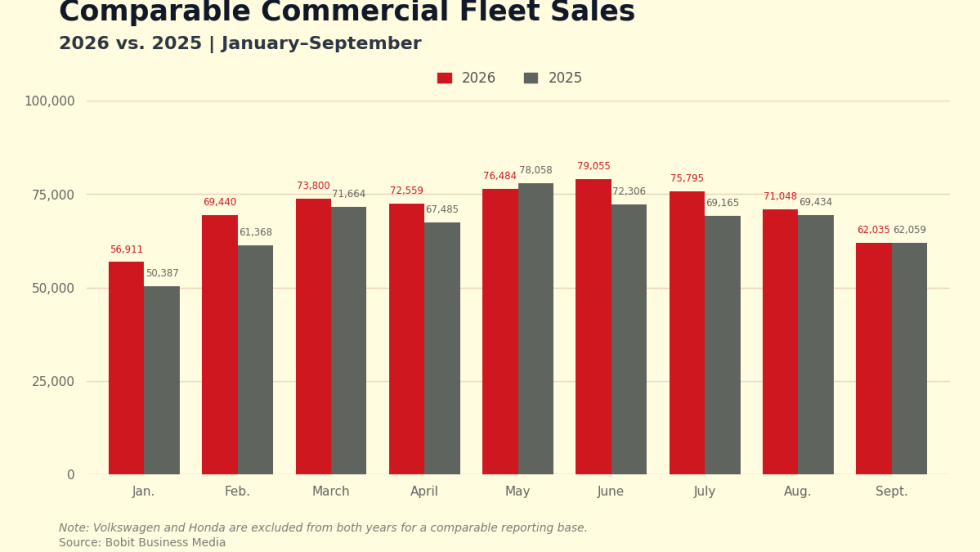
Commercial Fleet Sales Rise 5.8% Through September 2026
September commercial fleet sales were essentially unchanged from a year earlier, slowing year-to-date growth while keeping volume ahead of 2025.
Read More →
Hall of Fame Inductee: John Dmochowsky
The longtime Mondelēz International fleet executive joins the Automotive Fleet Hall of Fame.
Read More →
Hall of Fame Inductee: Lee Miller
After more than four decades at Boehringer Ingelheim, Lee Miller leaves a legacy built on fleet expertise.
Read More →
Hall of Fame Inductee: Mark F. Petersen
From managing fleets of thousands of vehicles to advancing safety and mentoring fellow professionals, Mark F. Petersen made his mark across both the corporate and supplier sides of fleet.
Read More →
When Charger Downtime Becomes a Fleet Availability Problem
As EV deployments move beyond pilot programs, charger reliability can directly affect vehicle readiness, driver productivity and route scheduling.
Read More →
2027 Nissan Rogue Hybrid Adds e-POWER, Standard AWD
The new Rogue Hybrid uses Nissan’s e-POWER system with dual electric motors, offers an estimated 40 mpg and starts at $35,490.
Read More →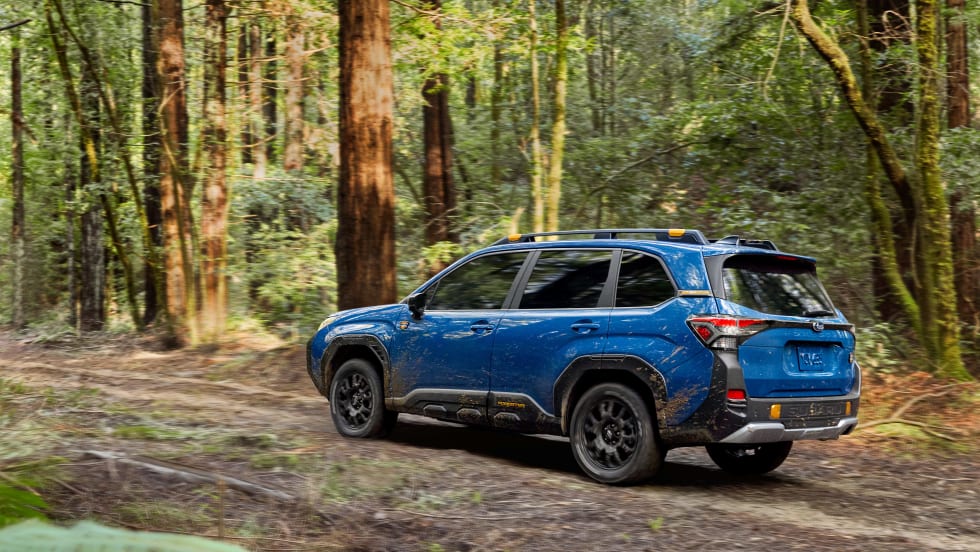
2027 Subaru Forester Adds First Wilderness Hybrid
The 2027 Forester lineup starts at $29,995 and adds a Wilderness Hybrid with 194 combined horsepower and 9.3 inches of ground clearance.
Read More →
EV Realty Names Henrik Holland President as Charging Platform Expands
The former Prologis Mobility and Shell executive will help expand EV Realty’s truck charging business and move its power-first infrastructure model into autonomous vehicle depots and other fleet sectors.
Read More →
Mercedes-Benz Introduces Electric GLC With Up to 350 Miles of Range
The GLC 400 4MATIC Electric features an 800-volt architecture, 330-kW DC fast charging and a 94-kWh battery, along with Mercedes-Benz's new MB.OS operating system.
Read More →
Fleet Has a Talent Pipeline Problem, not a Talent Problem
Where will the next generation of fleet leaders come from, and what does the industry need to do differently to find them?
Read More →