




What Fleet Managers Should Know About Idle Limiters
Automatically controlling idling with engine idle limiters can help produce fuel economy savings, lower maintenance costs, and diminish a fleet’s carbon footprint.

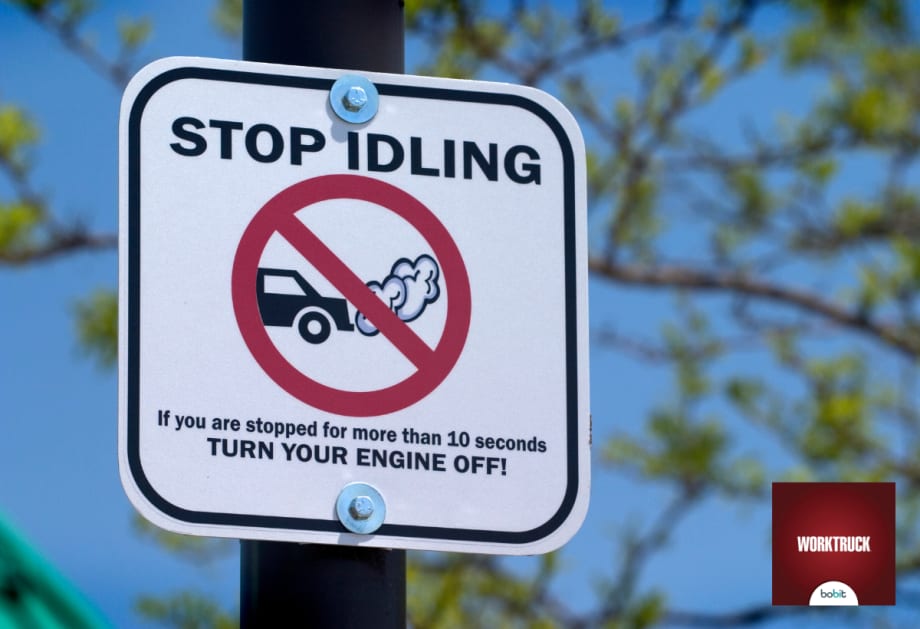
According to the U.S. Environmental Protection Agency (EPA) a typical commercial truck can waste a half-gallon of diesel fuel per hour while idling.
Photo: Work Truck
What if you could lower your truck fleet's fuel costs by 10, 15, or even 20%? What if you could extend maintenance intervals and require fewer oil changes per truck, without lightening the truck's workload? What if you could significantly reduce your fleet's carbon footprint to substantiate your company's green initiatives?
What if you could achieve all three objectives at once for a one-time investment of $200-$500 per truck?
That's the value proposition manufacturers of engine idle limiters are posing to fleet managers. Connected to a truck computer, an idle limiter module automatically detects how long the vehicle idles and cuts off the engine according to a programmed amount of time, typically 3-5 minutes. Idle limiters are available as a manufacturer-installed option on most new trucks or the systems can be retrofitted on an existing fleet.
Reduce Fuel & Maintenance Costs
Why consider idle limiters? Proponents point to unnecessary idling, such as leaving the truck running while making deliveries, as a major source of fuel waste. According to the U.S. Environmental Protection Agency (EPA) a typical commercial truck can waste a half-gallon of diesel fuel per hour while idling. Unnecessary idling just two hours per day squanders $780 per year per truck, based on $3 per gallon. For a fleet of 10 trucks, that's $7,800 in annual fuel savings. Expand that figure over 100 trucks ... you get the idea.
According to Don Malone, president of Malone Specialty Inc., a Mentor, Ohio-based firm that supplies idle limiters to truck manufacturers and several of the nation's largest fleets, the payoff in fuel savings alone is usually within six months.
Another benefit: reduced idling causes less engine wear and tear, allowing fleets to extend oil change cycles and lowering overall maintenance costs.
Comply with Local Anti-Idling Laws
Not only is idle reduction better for the environment, it's also the law in more than 40 states and local government jurisdictions. Fines for non-compliance can range from $50 to $2,500 and more per incident.
"Cities are looking for more ways to collect revenues in a down economy," says Malone. "[Enforcing anti-idling laws] is one way they're doing it."
Ensure Driver Compliance
Why not simply set a policy by which drivers are required to turn off their trucks when not in use? Why install an idle limiter, if you can instruct and train drivers to cut off the engine when making deliveries?
The challenge, says Malone, is getting drivers to follow through with policy 100 percent of the time. The more trucks a fleet operates on the road each day, the more difficult it is to ensure all drivers comply with company policy and the law, exposing a fleet to greater risk of significant fines, in addition to higher costs from wasted fuel and increased engine wear and tear.
Idle limiters provide fleet managers and business owners the tools they need to hold drivers accountable and ensure 100%t compliance.
How do idle limiters work? What are the different options? What should you consider when evaluating these systems?
How Do Idle Limiters Work?
"If the vehicle is not moving, then a timer starts. After a programmed amount of time (usually three to five minutes), the engine shuts down," Malone explains. "The drivers will get accustomed to that kind of thing so that in traffic, they'll know to leave a little space and move a little bit when the timer goes off."
Generally, both a visual (blinking light) and audible warning system tells the driver the engine is about to cut off unless the vehicle moves. Once the vehicle moves, the system resets.
The idle limiter does not activate while power take-off (PTO) is engaged on those trucks with PTO-powered equipment. The idle limiter is also bypassed during the diesel engine regeneration cycle. Some systems also are programmed to automatically disable the idle limiter in extreme outside temperatures, compliant with exceptions allowed by local anti-idling regulations.
What are the Options?
Idle limiters use one of three types of timer-activation systems:
GPS-activated. This system tracks movement based on the vehicle's satellite position. If the system detects no movement, the timer is activated.
Parking Brake/ Park Position-activated. The timer turns on when the driver places the vehicle in park or engages the parking brake.
RPM/ Engine Speed-activated. The system detects when the vehicle is at idle, based on engine speed, and activates the timer.
Which option is better? The answer depends on the fleet manager's preference. Malone advises RPM/engine speed-activated systems tend to be the most accurate and take the driver completely out of the loop of system activation.
"The GPS systems are still not 100-percent accurate 100 percent of the time and could send false signals that fail to cut off the engine at the right time, or worse, shut it off at the wrong time," Malone explains. "The issue with the park brake/park position system is that it gives the driver the ability to override the limiter. For example, you could have a driver park the vehicle up against a concrete bumper and just leave the truck in neutral. Sounds crazy, but it happens - a lot more than you'd think."
Monitor Driver Idling Habits
Some idle limiters are designed as simple engine timers without the ability to capture data. Other systems offer active or passive monitoring, in addition to an automatic timer shutdown. Active monitoring systems are tied to a GPS monitoring service (which usually requires a monthly service fee as well as hardware costs) that alerts the fleet manager, in real time, when automatic idle cut-off or other related "faults" occur.
Passive monitoring systems capture idling data, downloadable at prescribed times, to track how drivers are following through on idle reduction policies. These systems cost slightly more than timer-only idle limiters, but do not require recurring monitoring fees.
If the idle-limiter timer automatically shuts off the engine, what value is there in adding a monitoring capability, whether passive or active? The idea is for drivers not to wait for the automatic cut-off to engage, but to develop the habit to turn off the engine immediately when not in use. The monitoring provides objective data on drivers' idling habits so fleet managers can take corrective measures or even reward drivers based on their compliance.
"We had an interesting case with a large fleet that delivers office supplies that put the system on to both monitor driver habits and automatically shut off the engine," says Malone. "This gave them the best of both worlds. They achieved 10- to 15-percent fuel savings, and they also had information available they could routinely download and then work with the drivers to train them."
Evaluating Idle Limiters
What should be considered when selecting idle limiters for your fleet?
Think through exactly what you want the system to do. Do you want it to monitor? Do you want active monitoring or only data recording? Do you want it only to automatically shut off?
Make sure the idle limiter is programmed to comply with all applicable state and local anti-idling regulations. When retrofitting trucks already in service, "customers need to be sure the unit complies to all applicable laws - not just in the truck's domicile location, but also its area of operation," advises Ken Gillies, truck engineering manager for GE Capital Fleet Services and 37-year veteran of the commercial truck industry.
"The laws in the city in which you operate the vehicle may be different with those where your truck originates. Also, the city regulations may be different from your state's laws. Therefore, you to need to consider all the regulations for all the areas the truck travels to," says Gillies.
Avoid a complete focus on lowest price. "In today's marketplace, where electronic control devices can be manufactured very quickly from low-cost components, it's important to make a decision based on the long-term need for the unit to perform flawlessly," says Gillies. "A unit with a slightly higher acquisition cost may be more economical in the long-term because it won't need repairs as often and will ensure you're not having to pay costly fines because the unit failed to accurately control the engine's idle time."
The Bottom Line
The advantages to eliminating unnecessary idling are clear: fuel economy savings, lower maintenance costs, and reduction in a fleet's carbon footprint. The question is, how to most efficiently and effectively enforce an anti-idling policy across an entire fleet? Additionally, as more state and local governments crack down on unlawful idling, how can a fleet manager protect the company from racking up substantial fines, which eat into the bottom line?
To a growing number of fleets, an automatic idle limiter system, in one form or another, is the solution.
Originally posted on Work Truck Online
More Articles
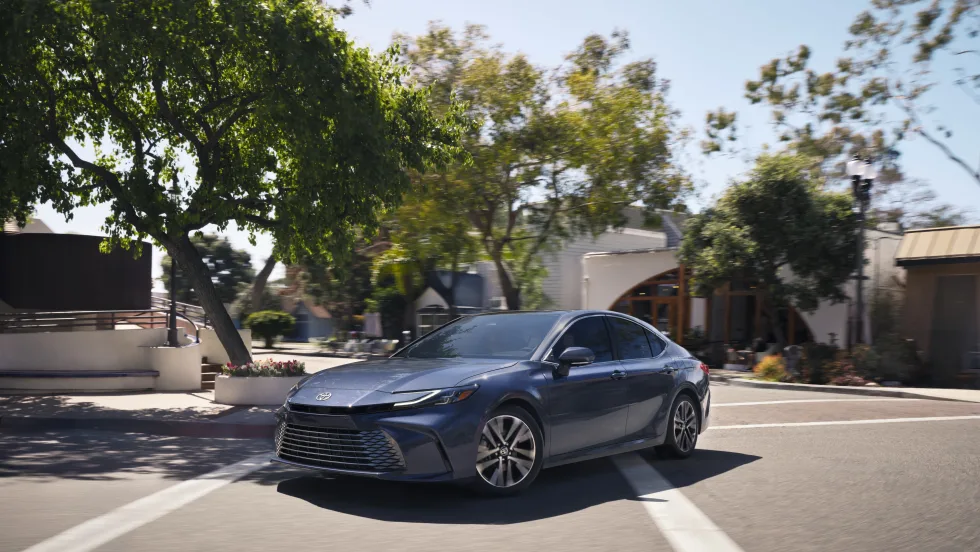
2027 Toyota Camry Offers Hybrid Powertrain Across Five Grades
The 2027 Toyota Camry is a carryover with new pricing.
Read More →
Chevrolet Updates 2027 Trax and Trailblazer with More Standard Safety Features
Chevrolet is updating two of its smallest SUVs with added driver-assistance technology, redesigned interiors, and revised trim options. The changes could add more safety equipment as standard for commercial fleets, while a new Trailblazer configuration adds another all-wheel-drive option.
Read More →
What’s Next for Fleet? Safety, AI & Industry Recognition | AF News Recap
Could your company's culture be encouraging distracted driving? This week, we're exploring how workplace expectations affect driver safety, what AI, EVs, and autonomous vehicles could mean for the future of fleet management, and how fleet professionals can strengthen their award nominations.
Read More →



A buyer's guide to fleet management software in 2027
Buying fleet management software in 2027 means looking beyond features and price. As fleet operations, technology and expectations evolve, this guide explores what today’s fleet professionals should consider when choosing a system that can deliver value now and adapt to what comes next.
Read More →
Does Your Fleet's Culture Encourage Distracted Driving?
What happens when the people responsible for enforcing safety rules are the ones setting the wrong example? The answer may reveal why some of the biggest risks to fleet drivers have little to do with what's written in the employee handbook.
Read More →
What Will Shape the Next Era of Fleet Management?
EVs, AI, and autonomous vehicles are reshaping fleet management. Discover what’s ahead—and how fleet leaders can prepare for the next era.
Read More →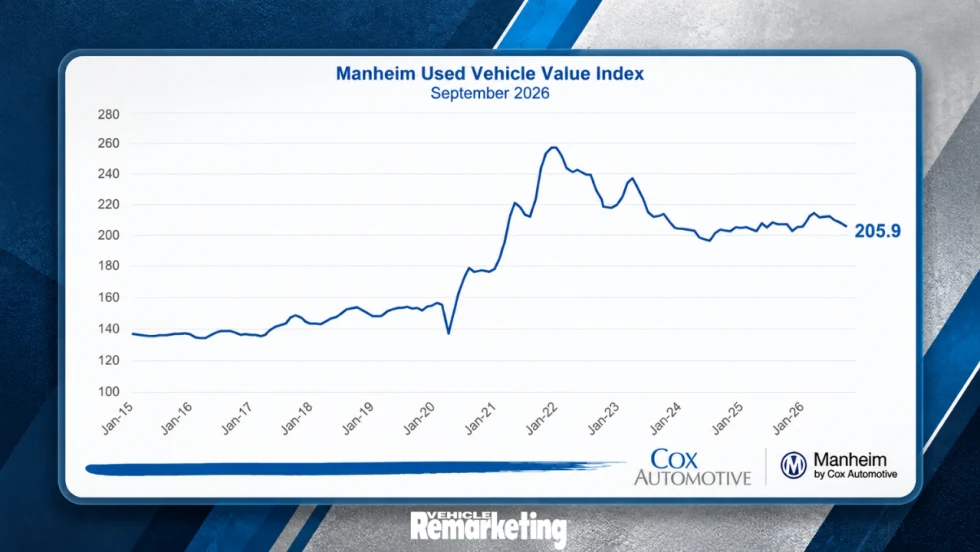
Wholesale Used-Vehicle Values Fall as Cox Automotive Cuts 2026 Forecast
Wholesale used-vehicle prices declined in September as depreciation accelerated, prompting Cox Automotive to lower its year-end forecast.
Read More →
FLD Promotes Three Executives in Leadership Changes
FLD has promoted three longtime executives, naming Gary Mott CEO, Richard Mallek president, and Ron Sanders managing partner.
Read More →
How Fleets Can Recruit and Train Veterans for Technician Roles
Here's how the technician shortage has affected uptime for fleets, and what to do about it.
Read More →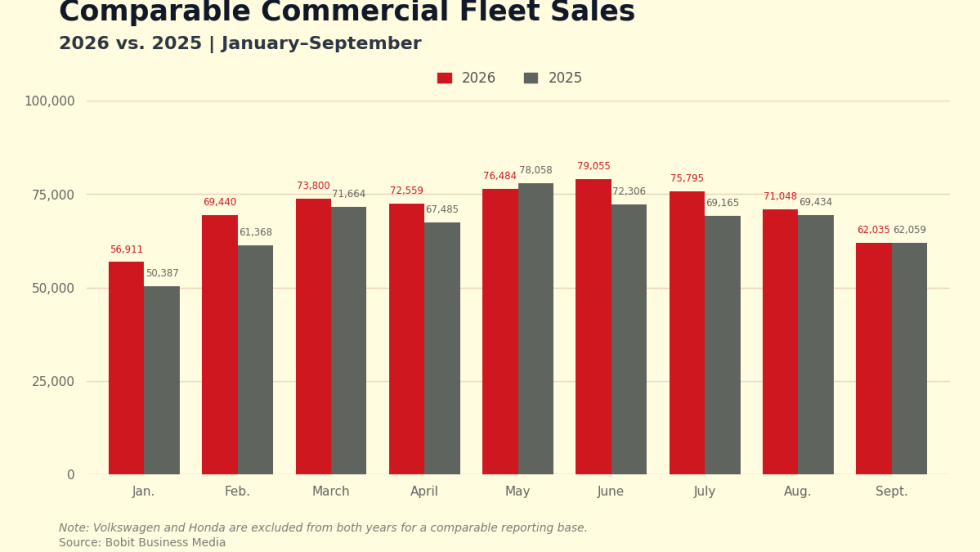
Commercial Fleet Sales Rise 5.8% Through September 2026
September commercial fleet sales were essentially unchanged from a year earlier, slowing year-to-date growth while keeping volume ahead of 2025.
Read More →