




The Cost of Downtime: Keeping Drivers On the Road
Whether it’s a mechanical problem or an accident, a fleet will inevitably incur downtime. Even when using strong management programs, there is a cost when drivers aren’t driving.

The most common causes of downtime are related to either mechanical problems, such as engine or transmission problems, or accidents. In other words, specific events. Mechanical breakdowns are far less common today than they were 20 years ago, but, unfortunately, still occur and result in downtime. Accidents create an entirely different set of costs, which can possibly be far greater than just the repairs to the vehicle.
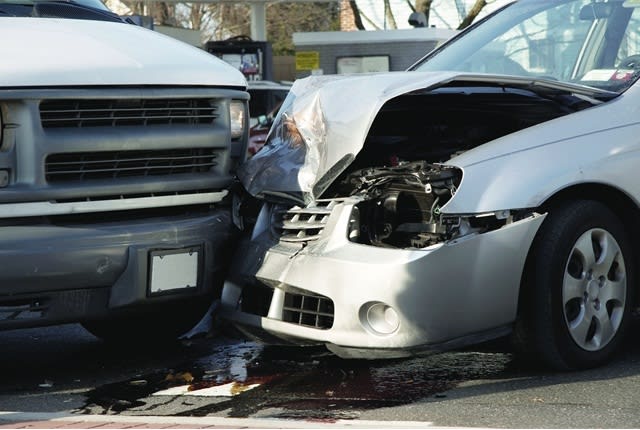
The most common causes of downtime are related to either mechanical problems, such as engine or transmission problems, or accidents. In other words, specific events. Mechanical breakdowns are far less common today than they were 20 years ago, but, unfortunately, still occur and result in downtime. Accidents create an entirely different set of costs, which can possibly be far greater than just the repairs to the vehicle.
At a Glance
Downtime costs are important factors in running a fleet. Determining how much they are begins with knowing what the component costs are, and developing a formula by which they can be applied to events.
Know your drivers’ employment costs, including salaries, benefits, even bonuses and commissions.
Know the productivity costs.
Track downtime in detail.
There are costs incurred when providing company vehicles. Some of them are variable — such as fuel, maintenance and repair, and tires — and change as use changes. Some are fixed costs — such as depreciation and insurance — related to simply having those vehicles.
The standard categories of fleet cost are “hard” costs, expending company funds when incurred. And, “soft” costs, those that don’t necessarily result in a direct expenditure, but are every bit as real as hard costs. When drivers aren’t driving, when they aren’t out doing the job because of a mechanical problem or an accident, they incur downtime costs, which can be both hard and soft, and add thousands of dollars to a fleet’s budget.
Defining the Problem
Much of the business literature and research about downtime surrounds systems; e.g., technology-related downtime due to breakdowns, backups, and other issues that company IT departments both suffer as well as cause. Most of the remaining information is dedicated to manufacturing — when the line is down, it costs the company money.
There is little formal research surrounding fleet drivers’ downtime; however, it isn’t difficult to define it, determine causes, quantify costs, and manage it.
Fleet drivers depend on vehicles to do their jobs. Some use them simply for transportation, for themselves and their customers, covering a geographic territory to which they’re assigned. Others use vehicles to provide service to customers, carrying tools, parts, and products.
Still other drivers are hired to deliver products or parts to customers. Whatever the mission, it cannot be accomplished without the use of a vehicle.
When vehicles are down — need mechanical repairs, are involved in an accident, or stolen — there is a period of time when drivers are also down, unable to perform their jobs.
Until a driver is back on the road, downtime causes the company to incur expense, both hard and soft, that otherwise would not occur:
● Hard costs involve actual expenditures related to the downtime.
● Soft costs are not the actual use of funds directly related to the problem, but costs incurred during the time the driver is lacking transportation.
Figuring Out the Cost
Before any expense can be managed, it must be identified. Identifying downtime costs is not quite as simple as it sounds, however, smart fleet managers know how to go about it.
To illustrate how downtime costs are incurred, we can use a hypothetical series of assumptions, first about the driver.
The total compensation portion of driver cost is $65,000 per year in salary and benefits. The driver produces $2 million per year in revenue for the company (sales, product, and service revenue), from which the company enjoys a 5-percent net profit margin, or $100,000. This can be illustrated as follows:
✔ Salary: $50,000 per year
✔ Benefits: $15,000 per year
✔ Production: $2 million per year
✔ Net-profit margin: 5 percent.
The next step in quantifying downtime is to reduce the above annual costs to hourly and/or daily costs. Assuming 260 working days per year and an eight-hour working day, the calculations are as follows:
✔ Daily cost: $65,000/260 = $250 per day
✔ Hourly cost: $250/8 = $31.25 per hour
Further, any time the driver is unable to perform the job due to fleet downtime costs the company money as well:
✔ $100,000/260 = $384.61 per day
✔ $384.61/8 = $48.07 per hour
These are the employment costs (salary and benefits) the company incurs to employ the driver, and the productivity the company loses when the driver is down, unable to work. The former are direct, hard costs; the latter are opportunity, or soft, costs.
A loss of productivity doesn’t cause the company to actually expend funds; however, it does cause the company to forego the revenue that the driver produces when working. Combining these costs shows that each hour the driver is down, the cost of that time is $79.32.
[PAGEBREAK]
Downtime Costs by Event
The most common causes of downtime are related to either mechanical problems or accidents — in other words, specific events. There are other causes, but mechanical breakdowns and accidents are the most common “creators” of downtime.
Mechanical breakdowns are far less common today than 20 years ago. Vehicles are built better than they were in the 1980s and 1990s, and problems are diagnosed much quicker and more accurately than ever. But, unfortunately, they still do occur.
The hourly cost of downtime would simply be the number of hours from the time the vehicle breaks down until the driver is able to get back out on the road. However, event costs include the cost of the repair itself (if not under warranty), and any replacement rental vehicle which can be used.
Sometimes, especially in the case of a service vehicle, replacement rentals are not practical, lacking specialized upfits and the transfer of equipment and parts isn’t possible. In such cases, a pool vehicle may be used, and there is some cost to that as well.
Accidents create an entirely different set of costs, costs that can possibly be far greater. Here is a typical sequence of events when a driver is involved in an accident:
After the accident has occurred, and the driver has learned of any injuries to him or her or other parties, a call is made to the fleet department, or to the accident management provider. An accident report is taken (on the phone), and the vehicle is either driven (if safe and legal) or towed to a repair facility.
Concurrently, a rental vehicle is booked for the driver; it is usually delivered to the driver at the repair facility. At this point, once any materials or product is transferred, the driver is now able to return to the job. An estimate for repairs is provided by the shop, negotiated, and repairs begin.
Once repairs are completed, the driver is notified, returns to the shop to pick up the vehicle, and the rental vehicle returned to the provider.
In cases where a service-type vehicle is damaged, and there is no practical rental vehicle to provide, either the driver is given a pool vehicle, or, in a worst-case scenario, is not able to return to the job until repairs are complete.
It is clear that the event costs here can be far greater than with any mechanical problem. Downtime begins as soon as the driver leaves the vehicle; no doubt the trauma of the accident, gathering information from any third party, and calling in the accident report can take several hours, hours at the $79.32 rate assumed. Travel to the repair shop and waiting for the replacement rental can add additional hours.
In the unfortunate event a driver is injured, whatever time he or she must take to recover can further add hundreds of hours or more of downtime.
Finally, there is downtime when the driver has to return to the shop, approve the repairs, and return the rental vehicle to the rental provider. All of this can add up to hundreds of dollars in downtime costs.
The other costs of an accident, which include the cost of the rental vehicle, the possibility of both personal injury and physical damage liability, and the cost of the repair itself aren’t considered downtime costs, as once the driver is able to get back out on the road doing the job again downtime ceases.
[PAGEBREAK]
Other Causes of Downtime
Other than these serious events, there can be other causes of downtime, many of which are entirely preventable either by fleet managers or by drivers:
● Expired tags/registration.
● Registration renewal denied due to unpaid violations.
● Car towed/booted due to illegal parking.
● Emergency road service issues, i.e., lockout, out of fuel, dead battery, or flat tire.
Except for the occasional dead battery or flat tire, all of the above are preventable. In such cases, some fleets will consider charging the driver back for costs incurred, sometimes even for the downtime.
Some downtime is actually scheduled, predictable to the extent that the company requires the driver to do something related to, but not directly involved in, the job including sales meetings, conferences, presentations, and other company events. There is a cost to this (a driver attending a sales meeting isn’t calling on customers), however it is necessary and justifiable downtime.
Know the Component Costs
Downtime costs are important factors in running a fleet. Determining how much they are begins with knowing what the component costs are, and developing a formula by which they can be applied to events.
● Know your drivers’ employment costs, including salaries, benefits, even bonuses and commissions.
● Know the productivity costs. Although these are not hard costs, when drivers are not able to work due to a vehicle problem, they cannot produce revenue. This is an “opportunity” cost.
● Track downtime in detail. Fleet managers should not merely accept “repair time” as downtime. As in the accident example above, downtime occurs from the moment the accident does, and until the driver is able to get back on the road.
● That said, it isn’t practical to “time” every phone call. Use suppliers to obtain overall averages. For example, an accident management supplier can likely tell you how long the average accident reporting call takes, and how long it takes from the time a replacement rental is reserved until it is delivered.
The costs of downtime are an important factor in determining fleet productivity. When cars break down, or need repairs due to an accident, drivers must spend time dealing with it, and that is time away from customers. Fleet managers are smart to know what those costs are, and to have a means by which they can be tracked and managed.
More Safety

What’s Next for Fleet? Safety, AI & Industry Recognition | AF News Recap
Could your company's culture be encouraging distracted driving? This week, we're exploring how workplace expectations affect driver safety, what AI, EVs, and autonomous vehicles could mean for the future of fleet management, and how fleet professionals can strengthen their award nominations.
Read More →
Does Your Fleet's Culture Encourage Distracted Driving?
What happens when the people responsible for enforcing safety rules are the ones setting the wrong example? The answer may reveal why some of the biggest risks to fleet drivers have little to do with what's written in the employee handbook.
Read More →
Fleet Manager’s Ultimate Playbook: Navigating the New Standard in OEM Connectivity
Rising operating costs, driver safety concerns, and unplanned downtime are putting unprecedented pressure on modern fleets. Discover how fleet managers use embedded OEM connectivity and real-time vehicle data to cut TCO, prevent downtime, and protect drivers without aftermarket telematics hardware.
Read More →
From Driver Well-Being to EV Charging | AF News Recap
Mental health belongs in the fleet safety conversation. This week, we’re looking at five ways fleets can support employee well-being before a crisis, plus Holman’s expansion in Mexico, new one-day Fleet Forward passes, and why EV charging demand is outpacing infrastructure growth.
Read More →
Nexar-Nauto Merger Aims to Give Fleets Better Safety Intelligence Through Larger Driving Dataset
Stefan Heck tells Automotive Fleet that combining more than 10 billion miles of driving history with Nexar's AI models will give fleets deeper insights into driver risk and roadway conditions than either company could provide independently.
Read More →
Don't Wait for a Crisis: 5 Ways to Build Mental Health Into Your Fleet Safety Program
For Suicide Prevention Month, fleet and safety leaders have an opportunity to put mental health where it belongs: at the center of workplace safety.
Read More →
How Camera Data Can Strengthen a Fleet’s Insurance Renewal
Insights from a commercial insurance carrier and a broker show how fleets can turn video telematic data, driver coaching, and improved claims results into a stronger case at insurance renewal.
Read More →
The Safest Fleets Aren’t the Ones with the Most Technology
You’ve made the telematics investment. Here’s how to capture the other half of its value and build the safest fleet on the road.
Read More →
Hidden in Plain Sight: Fleet Compliance Risks
Fleet compliance isn't just about having policies — it's about consistently enforcing them. This practical guide reveals six hidden compliance risks common in public sector and shared fleet operations and outlines proven strategies to improve visibility, accountability, and audit readiness
Read More →
NETS Sets 2026 Fleet Safety Benchmark Conference for Indianapolis
The Sept. 15–17 program will feature fleet benchmarking data, case studies, emerging technologies, and implementation strategies while running alongside the NSC Safety Congress & Expo.
Read More →