





Related: ROUSH CleanTech Offers Propane Fuel System for Ford F-750
The All-New Propane Autogas Ford F-750
With a growing demand for a propane-autogas-fueled medium-duty chassis for several vocational applications, Ford and ROUSH CleanTech responded.
July 6, 2016
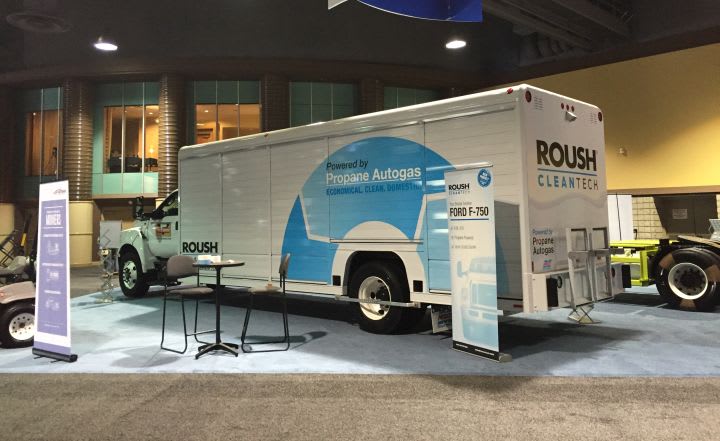
Operating up to 33,000-pounds GVWR, the model was created in response to the growing demand for a propane autogas-fueled medium-duty chassis for bobtail applications, cylinder delivery trucks, beverage delivery, and larger tank setters and box trucks.
Photo: ROUSH CleanTech
4 min to read
ROUSH CleanTech has developed a propane autogas fuel system for the Ford F-750 chassis that costs less than similar diesel counterparts.
Operating up to 33,000-pounds GVWR, the model was created in response to the growing demand for a propane autogas-fueled medium-duty chassis for bobtail applications, cylinder delivery trucks, beverage delivery, and larger tank setters and box trucks.
“Now, fleet managers can purchase a Ford F-750 that not only costs less initially, but also saves money at the pump and uses a clean-operating, American-made fuel,” said Todd Mouw, vice president of sales and marketing for ROUSH CleanTech.
According to Mouw, “The cost of the base Ford chassis and our liquid propane fuel system is less than $70,000, which prices us very competitively against the name brand diesel chassis in this market. The actual price may be less as well, based on volume purchased of both the propane fuel system and the Ford chassis.”
In addition, the business case for fleet customers is significant.
“We can save fleets in excess of $50,000, per truck, over the lifecycle of that asset with reduced fuel and maintenance costs and that is with diesel at current levels. As diesel rises, that savings will become even more significant,” he said.
Plus, beyond just the fuel and maintenance cost savings, “it is easier for customers to find technicians to work on these trucks as diesel mechanics are in high demand,” Mouw said.
Laying the Groundworks
The Ford F-750 base model comes with a 50-usable-gallon fuel tank, located on the driver side for ease of fueling. An extended tank option is available for those in need of more mileage.
Built on Ford’s 6.8L V-10 engine, the vehicles meet stringent Environmental Protection Agency and California Air Resources Board (CARB) certification requirements.
Historically, propane autogas costs up to 40% less than gasoline and 50% less than diesel. Each Ford F-750 equipped with this fuel system will emit about 120,000-fewer pounds of carbon dioxide over its lifetime compared to conventionally fueled counterparts.
Part of Ford’s Sustainable Technologies and Alternative Fuels Plan is to provide diverse fuel options to meet the automaker’s customers’ needs, while at the same time improving its vehicles’ energy efficiency and long-term sustainability.
“For example, our new F-750 medium-duty truck is one of eight factory-available vehicles that can be ordered with a gaseous-prep package that enables our Qualified Vehicle Modifiers (QVMs), such as ROUSH CleanTech, to convert it from gasoline to either compressed natural gas or propane autogas,” according to Kevin Koester, brand manager, Super Duty fleet and medium truck for Ford Motor Co.
The prep kit includes hardened engine intake valves, as well as exhaust valves and valve seats. Customers can also choose to equip the new F-750 with the B-20-capable Ford 6.7L PowerStroke Turbo Diesel V-8.
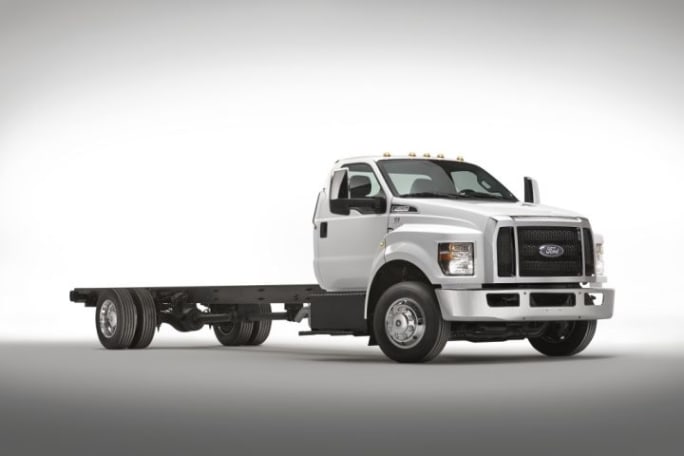
The new system can save fleets in excess of $50,000 per truck over the lifecycle of that
asset with reduced fuel and maintenance costs based on diesel at
current prices.
Photo: Ford Motor Co.
Choosing Propane
With the abundance of fuels on the market, why propane autogas for a medium-duty chassis?
“We received feedback from the market/customers that they are looking for an alternative to diesel that will reduce their cost per mile, reduce emissions, and utilize a domestic energy source without compromising the job that asset needs to complete,” Mouw said. “Ford’s medium-duty chassis is a great value, so coupling this with a lower cost and domestic fuel source was a no-brainer.”
Currently, the key markets/vocations asking for this solution have been the propane industry for their bobtail and cylinder exchange applications; the beverage industry with ROUSH CleanTech’s partner Mickey Truck Body for product delivery; the baking industry, including straight truck applications/product delivery; and tree care, such as chipper trucks and crane trucks.
“The common theme here is that these markets are looking for a way to eliminate the growing cost and complexity of diesel from their fleet and replace it with a lower cost and more user-friendly fuel/technology,” according to Mouw.
And, according to Mouw, “This solution is validated. We have more than 7,500 Blue Bird school buses on the road with this same engine and transmission combination with more than 60 million miles so the data is very strong in favor of this production. There is plenty of power and torque, more than 400 service locations and we supply training for technicians and drivers to help make the transition much smoother.”
Koester of Ford noted the addition of the ROUSH Ford F-750 “gives our fleet customers a solid option for diversifying their fuel choices. As we’ve learned in the past, dedication to an individual fuel type can put a fleet’s budget at the mercy of commodity pricing. Diversifying fuel sources are one way fleets can help protect the bottom line against fuel price fluctuations.”
Deliveries began at the end of April. Several fleets, including Victory Propane (15 trucks, including the first two produced) and Nestlē Waters (156 trucks) have already placed their orders.
Topics:ROUSH CleanTechFord F-750Medium-Duty TrucksPropane AutogasPropane ConversionGlobal FleetGreen Fleet
Originally posted on Work Truck Online
Subscribe to Our Newsletter
More Global Fleet

GeoFencing Adds to Your Truck Security Arsenal
Geofencing is a familiar fleet tool today, but its early adoption marked a major shift in vehicle tracking, route monitoring, and the debate over employee privacy.
Read More →
Holman Takes Full Ownership of ARIZA in Mexico
Holman is bringing its Mexican fleet management operation fully under its own brand after more than 30 years as a joint venture. The change gives multinational fleet customers a single Holman operation across the U.S., Canada, and Mexico.
Read More →
5 Tire Maintenance Tips to Help Prevent Work Truck Downtime
Regular tire checks can do more than extend tread life. These five maintenance practices can help work truck fleets catch problems early, reduce costs, and prevent downtime.
Read More →

Proven Ways to Reduce Work Truck Downtime
The age-old problem of downtime will always be a reality, but with new strategies at hand, fleets have more ways to keep trucks on the road longer.
Read More →


Cameras, Safety and Insurance: From Reactive Claims to Real-Time Prevention (Part 2 of 2)
Part Two: Commercial auto remains one of the most challenging and costly lines of coverage for fleet operators and insurers alike. Continue learning more about how to effectively address these issues from Onur Aksan, Enterprise Business Development Executive, Geotab
Read More →
Cameras, Safety and Insurance: From Reactive Claims to Real-time Prevention
Commercial auto remains one of the most challenging and costly lines of coverage for fleet operators and insurers alike. Learn more about how to effectively address these issues from Onur Aksan, Enterprise Business Development Executive, Geotab.
Read More →
Fleet Costs Are Rising: Here’s How Leaders Are Responding
Fleet leaders are under pressure to reduce costs, adapt to economic uncertainty, and make smarter decisions. See how peers across North America are responding with real data, proven strategies, and forward-looking insights. Download the 2026 Market Pulse Report to benchmark your strategy and uncover where you can gain an edge.
Read More →
Enterprise Fleet Management Surpasses 900,000 Vehicles in U.S. & Canada
Enterprise Mobility connects with mobility solutions around the globe
Read More →