




Telematics in Vocational Truck Fleets: Utility Operations
The utility fleet industry is very labor intensive and often must help during emergency situations or during times of severe weather. Telematics can help keep a utility fleet going where it needs to be.

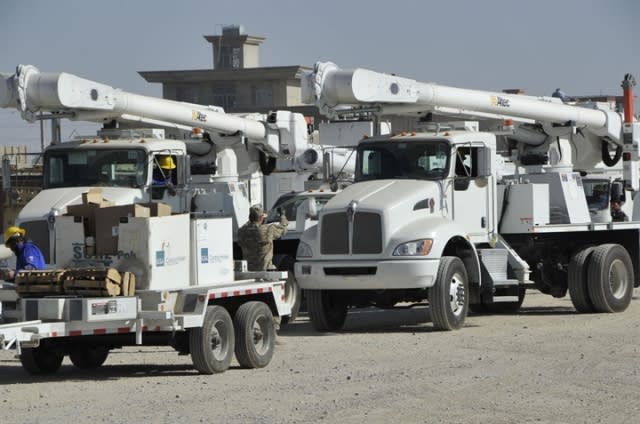
Photo of utility fleet trucks courtesy of Wikimedia/USCAE-TAS
As with the other service industry fleets, productivity and customer satisfaction are going to be key drivers of telematics use for utility fleets.
“Maximizing labor productivity and customer satisfaction and responsiveness is the name of the game in the utility industry because it is a very labor intensive industry with high customer expectations and costs of non-performance, but with even higher labor costs. With utilities, we are also faced with more dangerous outage repercussions as a result of natural disasters and emergencies that may mean people are in peril if basic needs such as water, electricity, and natural gas are not available. Utilities, by design, are also generally non-competitive geographical monopolies, so they have a desire and mandate to assist other utilities in the event of emergencies and disasters, thus joint-emergency-response is a basic operating imperative that is enriched by vehicle telematics/tracking,” said Kelly Frey, VP of product marketing for Telogis.
Safety is probably one of the biggest concerns with utility fleets due to the extreme circumstances they can operate in, from severe weather to concerns related to outages, such as live wires and the use of bucket trucks and other pieces of heavy equipment.
“Additionally, using telematics data in safety management is common given the application and higher profile of utility fleet vehicles. Some customers more than halved their speeding instances and duration through effective management coupled with organizational focus and policy,” said Brad Jacobs, director of strategic consulting for Merchants Fleet Management.
A telematics solution can help with scheduling and routing.
“Telematics helps with job scheduling, route optimization, and dispatching. It can also be useful for utility companies that work in very rural areas at locations not found with a standard GPS – telematics allows the user to input GPS coordinates vs. an address,” said Dain Giesie, assistant vice president for Enterprise Fleet Management.
Knowing where a vehicle is at all times can help provide important arrival times during emergency situations.
“Knowing the service vehicle’s location relative to a customer is extremely beneficial as it allows a dispatcher to locate the closest available unit and send them to the site to improve response time. During critical outages, fast resolution helps drive customer satisfaction and reduce revenue lost due to service unavailability,” said Bob Clark, manager of commercial motor vehicle compliance and telematics for Wheels.
The utility fleet industry has high customer expectations as well as high costs when not performing their jobs or when they are not efficient at their jobs.
Telematics can also help with the important task of monitoring power-take off (PTO) on boom trucks. This can help the fleet manager know when work is being done and completed.
“Monitoring PTO on boom trucks allows utilities fleet managers and dispatchers to know when the boom is in the air and the tech is working on a powerline,” said Ryan Driscoll, marketing manager for GPS Insight.
Utility fleets may also have trucks that fall under the upcoming ELD mandate, and telematics can help ensure regulatory compliance.
“As fleets gear up for the ELD mandate, leveraging telematics trip data with a mobile driver log and pre and post inspection process is top of mind to meet required safety regulations. The proper marriage of data and equipment creates a manageable and efficient driver experience,” said Jacobs of Merchants Fleet Management.
In addition, utility fleets are in a unique situation due to their participation in emergency response.
“Sharing 'visibility' with partners in the event of joint-emergency-response can be helpful. Utilities are somewhat unique in that they are generally geographic monopolies. In the event of a major emergency such as a natural disaster, they may need to 'borrow' resources from other utilities,” said Frey of Telogis.
Utility fleet managers may benefit from portable systems, especially during emergency situations such as severe weather for a quick response.
“A best practice for utilities is having a portable system that can be quickly deployed for a major storm response. The solution deployed must be able to be quickly upfitted on contractor vehicles with a simplified registration process, and an easy way to tag the vehicle in your mapping system to track response activities,” said Kimberly Clark, telematics leader for Element Fleet Management.
Staying connected overall is important.
“Use telematics to understand where employees, and assets are and track safety-related metrics, such as seat belt use to improve the overall safety of your fleet,” said Scott Sutarik, associate VP, commercial vehicle services for Geotab.
Originally posted on Work Truck Online
More Global Fleet
GeoFencing Adds to Your Truck Security Arsenal
Geofencing is a familiar fleet tool today, but its early adoption marked a major shift in vehicle tracking, route monitoring, and the debate over employee privacy.
Read More →
Holman Takes Full Ownership of ARIZA in Mexico
Holman is bringing its Mexican fleet management operation fully under its own brand after more than 30 years as a joint venture. The change gives multinational fleet customers a single Holman operation across the U.S., Canada, and Mexico.
Read More →
5 Tire Maintenance Tips to Help Prevent Work Truck Downtime
Regular tire checks can do more than extend tread life. These five maintenance practices can help work truck fleets catch problems early, reduce costs, and prevent downtime.
Read More →

Proven Ways to Reduce Work Truck Downtime
The age-old problem of downtime will always be a reality, but with new strategies at hand, fleets have more ways to keep trucks on the road longer.
Read More →


Cameras, Safety and Insurance: From Reactive Claims to Real-Time Prevention (Part 2 of 2)
Part Two: Commercial auto remains one of the most challenging and costly lines of coverage for fleet operators and insurers alike. Continue learning more about how to effectively address these issues from Onur Aksan, Enterprise Business Development Executive, Geotab
Read More →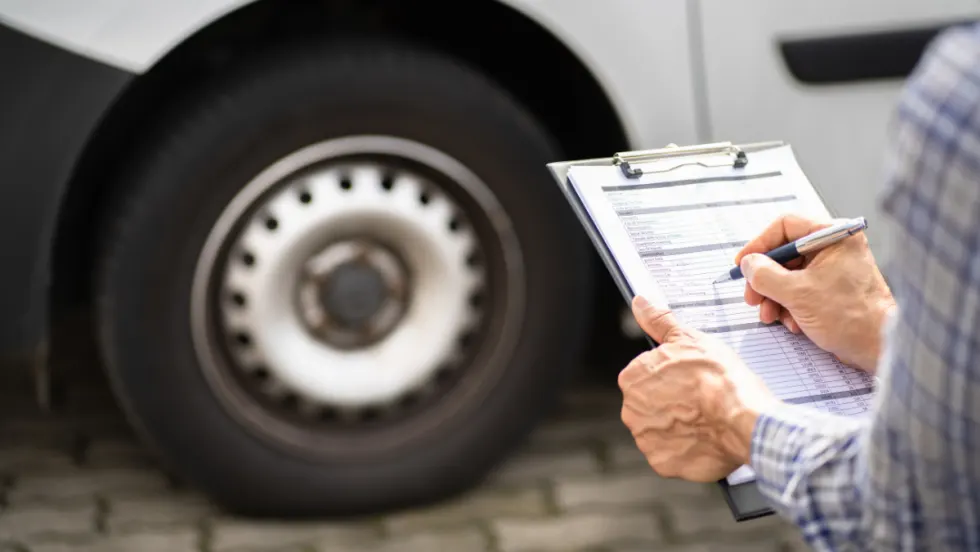
Cameras, Safety and Insurance: From Reactive Claims to Real-time Prevention
Commercial auto remains one of the most challenging and costly lines of coverage for fleet operators and insurers alike. Learn more about how to effectively address these issues from Onur Aksan, Enterprise Business Development Executive, Geotab.
Read More →
Fleet Costs Are Rising: Here’s How Leaders Are Responding
Fleet leaders are under pressure to reduce costs, adapt to economic uncertainty, and make smarter decisions. See how peers across North America are responding with real data, proven strategies, and forward-looking insights. Download the 2026 Market Pulse Report to benchmark your strategy and uncover where you can gain an edge.
Read More →
Enterprise Fleet Management Surpasses 900,000 Vehicles in U.S. & Canada
Enterprise Mobility connects with mobility solutions around the globe
Read More →