




Telematics in Vocational Truck Fleets: Food and Beverage
Complying with both vehicle and food safety regulations, keeping vehicles on the road with minimized downtime, and ensuring route efficiency are all ways food and beverage fleets are leveraging telematics solutions to help with their operations.

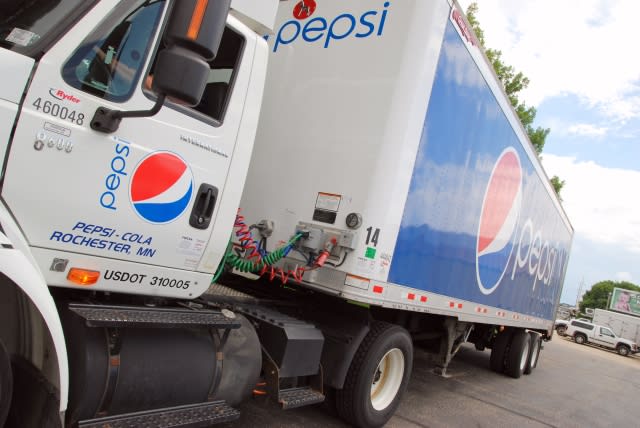
Image of truck courtesy of PepsiCo
Food and beverage fleets operate a variety of vehicle types, from cargo vans to trucks of all class sizes. Many trucks require additional equipment, such as refrigeration units to keep perishables fresh for delivery.
“Maximizing asset utilization and route productivity, minimizing operational costs, and creating and executing the best plan are the names of the game in food and beverage operations. These fleets are able to tightly monitor and minimize cost per case by maximizing vehicle utilization and route density while minimizing unnecessary miles with better route planning and plan versus actual reporting,” according to Kelly Frey, VP of product market for Telogis.
The ability to track temperatures inside trailers is incredibly important to a food and beverage fleet.
“Food safety is extremely important, especially when dealing with refrigerated items that require specific tolerances of temperature in order to guarantee food quality. Telematics can be linked to the refrigerated units to measure the temperature and report out at specific intervals so that the food and beverage company can demonstrate the cargo was transported and delivered within specification,” said Bob Clark, manager of commercial motor vehicle compliance and telematics for Wheels.
New regulations coming in 2018 related to tracking and reporting trailer temperatures in refrigerated trucks will be managed through telematics solutions.
“Food and beverage fleets can also track the temperature of their reefer trailers. The new Food Safety Modernization Act (FSMA) mandate coming into place in January 2018, all reefer trailers will need telematics to report temperature for receivers,” said Ryan Driscoll, marketing manager for GPS Insight.
Food safety is very important. In addition to temperature, telematics sensors can report on additional factors such as harsh or aggressive driving that may impact or damage products being delivered.
“Ensure you maintain compliance with the FSMA Transportation Rule. Use telematics to help you track temperature of the goods in your vehicle and protect food safety,” said Scott Sutarik, associate VP, commercial vehicle services for Geotab.
Most food and beverage fleets have little time to spare during deliveries. Vehicle downtime due to maintenance concerns can also be reduced through vehicle diagnostic reporting.
“These vehicles can’t afford an accident or a downtime event without risking a partial or total loss of product. It is critical to ensure that the truck diagnostics are monitored for issues with a proactive response to send an alternate vehicle to swap the product and determine the best shop location for the repair,” Clark added.
Proactive preventive maintenance and being able to quickly handle any unscheduled maintenance needs are extremely important to food and beverage fleets, which can leverage telematics to assist.
“Telematics gives insight into potential maintenance problems. An unscheduled maintenance delay can create major issues for ensuring that food and beverages are delivered on time and in acceptable condition,” said Dain Giesie, assistant vice president for Enterprise Fleet Management.
Finally, telematics can be used to ensure that fleets are working at their optimal capacity. Tracking and measuring delivery density and vehicle utilization can help save on unnecessary miles driven.
“Food and beverage fleets also have special factors to keep in mind during distribution. Telematics solutions can help drivers and fleet owners maintain on-time delivery and cost-effective transportation of goods from the manufacturer to the distributor, and all the way out to the consumer. Route optimization and job workflow can also be positively accelerated by telematics use. These solutions are also helpful in monitoring environmental conditions, such as temperature and humidity, for food and beverage fleets – as goods are transported, they must remain compliant with food transport regulations, and avoiding the loss of product (such as frozen goods thawing) is vital. These fleet owners can also use telematics to maintain compliance with federal regulations for driver hours and hours of service,” said Nathan Todd, director of product management at Teletrac Navman.
Originally posted on Work Truck Online
More Global Fleet
GeoFencing Adds to Your Truck Security Arsenal
Geofencing is a familiar fleet tool today, but its early adoption marked a major shift in vehicle tracking, route monitoring, and the debate over employee privacy.
Read More →
Holman Takes Full Ownership of ARIZA in Mexico
Holman is bringing its Mexican fleet management operation fully under its own brand after more than 30 years as a joint venture. The change gives multinational fleet customers a single Holman operation across the U.S., Canada, and Mexico.
Read More →
5 Tire Maintenance Tips to Help Prevent Work Truck Downtime
Regular tire checks can do more than extend tread life. These five maintenance practices can help work truck fleets catch problems early, reduce costs, and prevent downtime.
Read More →

Proven Ways to Reduce Work Truck Downtime
The age-old problem of downtime will always be a reality, but with new strategies at hand, fleets have more ways to keep trucks on the road longer.
Read More →


Cameras, Safety and Insurance: From Reactive Claims to Real-Time Prevention (Part 2 of 2)
Part Two: Commercial auto remains one of the most challenging and costly lines of coverage for fleet operators and insurers alike. Continue learning more about how to effectively address these issues from Onur Aksan, Enterprise Business Development Executive, Geotab
Read More →
Cameras, Safety and Insurance: From Reactive Claims to Real-time Prevention
Commercial auto remains one of the most challenging and costly lines of coverage for fleet operators and insurers alike. Learn more about how to effectively address these issues from Onur Aksan, Enterprise Business Development Executive, Geotab.
Read More →
Fleet Costs Are Rising: Here’s How Leaders Are Responding
Fleet leaders are under pressure to reduce costs, adapt to economic uncertainty, and make smarter decisions. See how peers across North America are responding with real data, proven strategies, and forward-looking insights. Download the 2026 Market Pulse Report to benchmark your strategy and uncover where you can gain an edge.
Read More →
Enterprise Fleet Management Surpasses 900,000 Vehicles in U.S. & Canada
Enterprise Mobility connects with mobility solutions around the globe
Read More →