




Taking the Guesswork Out of Medical Exceptions
Driver ergonomic assessments help fleets find the right vehicle fit for employees and budgets.

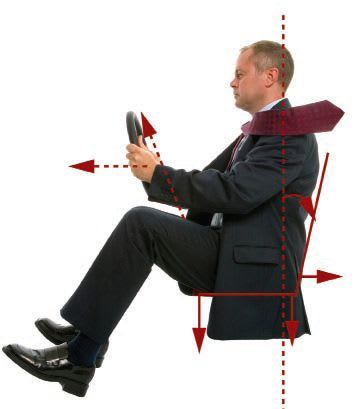
Ergonomic assessment of driving posture helps ensure employees are properly positioned to avoid unnecessary strain or back pain. The steering wheel, seat, cushion, back rest, and lumbar adjustment must all be taken into consideration.
The modern office is equipped with ergonomically suitable equipment to help prevent work-related strain and injury: desk chairs for backs, mouses and keyboards for carpel tunnel, and glare-reduction monitors for eyes. For many fleets, however, their clients' vehicles serve as their offices and are not equipped to accommodate special needs.
To remedy this, fleets have developed standard operating procedures (SOPs) and sought medical consultation to validate medical claims and recommend the proper vehicles for medical exceptions.
inVentiv Health, a pharmaceutical services company with thousands of vehicles on the road, is one example of a company that has partnered with a specialized health care provider to ensure proper vehicle selection and employee needs are met.
Getting a Second Opinion
inVentiv's fleet department encountered difficulty with vehicle selection that would meet company and individual driver needs. When an employee had a medical condition that needed to be accounted for, or when an employee's stature required special accommodations, the department had no resources on staff to assist with medical opinions. That left the company to rely on doctors' notes and the employee's own vehicle recommendation.
"It was critical that we bring on board a company that specializes in this service," said Warren Dudek, inVentiv fleet and travel manager. "Before, requests were simply passed through by HR and turned over to fleet to resolve. In those instances, we would be at the mercy of the reps and they would recommend a vehicle that, in their opinion, would remedy a medical condition. Employees now know we have a detailed process in place, which eliminates those who may have wanted to exploit the situation."
Based on a reference from another pharmaceutical company, inVentiv chose to partner with Select Medical Corporation to verify medical and stature needs and make appropriate vehicle recommendations. Their assessments and recommendations take the onus off of fleet, and help identify the most suitable vehicle for each employee.
"The main goal in bringing on Select Medical was to ensure we matched the correct vehicle to our drivers' medical conditions or special needs utilizing trained professionals to determine the outcome," said Paul Kandle, vice president, Integrated Solution Alignment at inVentiv. "Prior to having Select Medical on board, it was difficult to ascertain which requests were true medical needs versus convenience, and our decision-making process was based more on judgment than on science."
Select Medical helps inVentiv determine any factors of an employee's stature and/or medical history that might affect driver function. This process includes interviewing the employee, collecting standard measurements such as height, weight, and body mass index, and reviewing current vehicle fit.
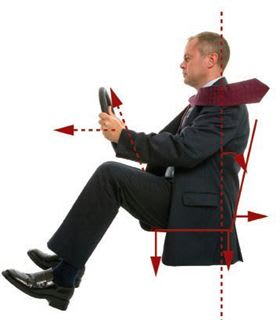
Upon performing this ergonomic assessment, clinicians educate employees about their conditions and concerns, and how to accommodate them. This helps treat employees' current conditions and prevent future ones.
"The stress of static posture has long been considered a risk factor for discomfort and potential injury," said David Hoyle, regional director of WorkStrategies for Select Medical Corporation. "In addition to making sure workers have the equipment that is appropriate for them, educating them about appropriate posture, changing positions within acceptable ranges, taking short breaks for stretching, ways to get in and out of their vehicle, and how to load and unload supplies can be beneficial."
The clinician can also aid fleet in determining how to appropriately modify fleet units to fit an employee's need - or assign a new vehicle altogether. For example, inVentiv recently purchased an SUV for an individual who was more than 7 feet tall. "We previously assigned him a [large sedan], which failed to meet Select Medical's criteria due to his size," Dudek said. "Select Medical always reviews the model car and specs assigned to any individual. If it is inappropriate, they recommend an appropriate vehicle with any optional equipment, such as a power lumbar driver seat, if appropriate."
Hoyle said the value of ergonomic assessments is growing. "We created the process of ergonomic driver assessments based on the need of one customer about five years ago. Since that time, the number of employers using the service - as well as the number of assessments we do - has grown exponentially every year," said Hoyle. "We knew there was an issue with long-haul truck drivers with back pain but had never really thought about the number of other workers out there, such as police officers and sales people who spend as much time in their vehicles as their offices."
[PAGEBREAK]
Assessments Ensure Compliance & Save Time, Money
Dudek said inVentiv has seen a number of benefits by working with Select Medical. "We are in compliance with the Americans with Disabilities Act, which requires employers provide employees with a qualified disability with reasonable accommodations that would enable them to productively complete essential job functions. With Select Medical's expertise, they recommend the appropriate model vehicle, including optional equipment if needed, to ensure these individuals ergonomically fit in a vehicle that is conducive to perform their job," he said.
This, in turn, has helped Dudek make smarter purchases for the fleet. "We recently developed a process to purchase turnkey-ready 'used' cars at auction, for special medical needs, using our network of suppliers," Dudek said. "The suppliers purchase them on our behalf and lease back on a standard open-end lease. The big picture is favorable in regard to the accomplishment of providing this vehicle at reasonable cost within 30 days of notice."
With new SOPs comes some leg work - although Dudek noted these additional processes are minor drawbacks. "The individual now has to spend some time out of the field completing paperwork and traveling to get this evaluation. On the fleet side, we must get a chain of signatures for approval to purchase a vehicle and reassign their former vehicle with cost. I am certain the employees are comfortable with this program validating their medical exception request," he said.
However, confidentiality - perhaps an employee's main concern - is not an issue. All Select Medical findings are encrypted messages and are only sent to the appropriate HR manager. "This individual only sends fleet the relevant fleet information, which keeps the medical information of employees confidential," Dudek said.
Even though inVentiv does not yet have hard data on just how beneficial the program is, Kandle agreed with Dudek that overall, pairing standard operating practices with an outside consultant has already clearly benefitted the company. "The new process combined with Select Medical has decreased the number of requests, which allows everyone involved in the process to only spend time on special vehicles when there is a true need," Kandle said. "Although we have not had enough time to determine the overall benefit to the organization, I can confidently say that we will spend significantly less time trafficking special requests and we will certainly realize an overall cost savings by utilizing Select Medical."
More Safety

From Driver Well-Being to EV Charging | AF News Recap
Mental health belongs in the fleet safety conversation. This week, we’re looking at five ways fleets can support employee well-being before a crisis, plus Holman’s expansion in Mexico, new one-day Fleet Forward passes, and why EV charging demand is outpacing infrastructure growth.
Read More →
Nexar-Nauto Merger Aims to Give Fleets Better Safety Intelligence Through Larger Driving Dataset
Stefan Heck tells Automotive Fleet that combining more than 10 billion miles of driving history with Nexar's AI models will give fleets deeper insights into driver risk and roadway conditions than either company could provide independently.
Read More →
Don't Wait for a Crisis: 5 Ways to Build Mental Health Into Your Fleet Safety Program
For Suicide Prevention Month, fleet and safety leaders have an opportunity to put mental health where it belongs: at the center of workplace safety.
Read More →
How Camera Data Can Strengthen a Fleet’s Insurance Renewal
Insights from a commercial insurance carrier and a broker show how fleets can turn video telematic data, driver coaching, and improved claims results into a stronger case at insurance renewal.
Read More →
The Safest Fleets Aren’t the Ones with the Most Technology
You’ve made the telematics investment. Here’s how to capture the other half of its value and build the safest fleet on the road.
Read More →
Hidden in Plain Sight: Fleet Compliance Risks
Fleet compliance isn't just about having policies — it's about consistently enforcing them. This practical guide reveals six hidden compliance risks common in public sector and shared fleet operations and outlines proven strategies to improve visibility, accountability, and audit readiness
Read More →
NETS Sets 2026 Fleet Safety Benchmark Conference for Indianapolis
The Sept. 15–17 program will feature fleet benchmarking data, case studies, emerging technologies, and implementation strategies while running alongside the NSC Safety Congress & Expo.
Read More →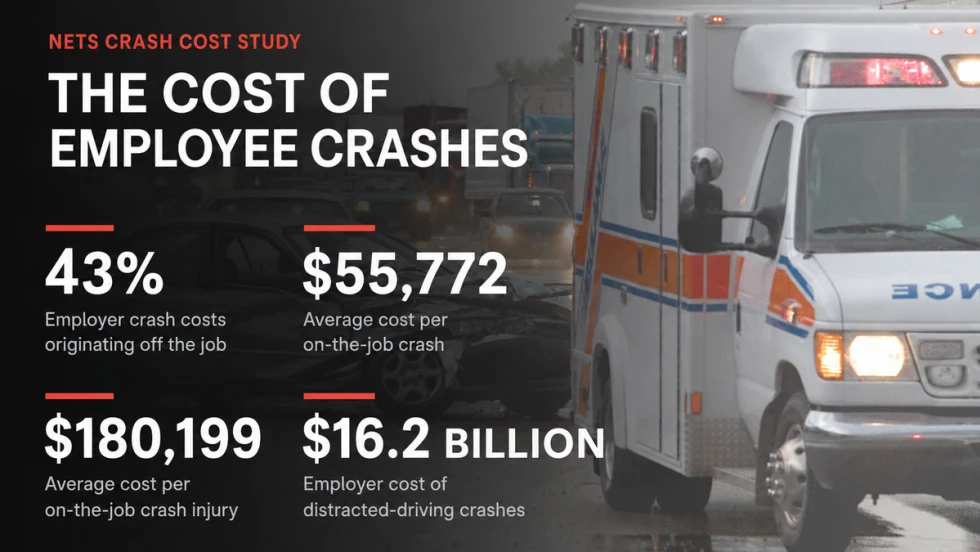
Off-the-Job Crashes Account for 43% of Employers’ $61.7 Billion Crash Burden
NETS quantifies costs dispersed across fleet, risk, HR, and other departments while providing new per-crash benchmarks for employers.
Read More →
Ram Recalls More Than 1.27 Million 1500 Pickups for Seat Belt Anchor Issue
The recall affects certain 2019-2026 Ram 1500 pickups that may have improperly attached second-row seat belt buckle anchors.
Read More →
Operation Safe Driver Week: Why the Industry's Oldest Safety Campaign Still Matters to Fleets
A look at how a 2007 enforcement initiative became one of the most consequential weeks on the fleet safety calendar, and what it means for your drivers in 2026.
Read More →