


At a Glance
Heading into the future, there are several areas fleets may want to focus on when considering safety:
Combing video technology with telematics data.
Utilizing prescriptive analytics data.
Autonomous vehicle technologies.
 MENU
MENU SEARCH
Upcoming safety tech for fleets includes solutions that will preemptively predict potential crashes to ultimately remediate the issue.

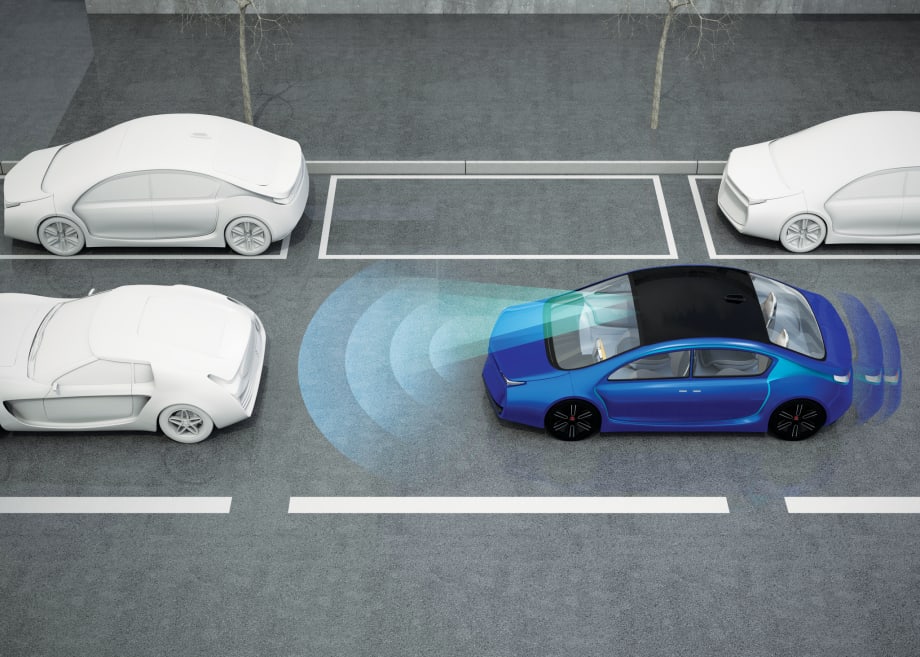
Photo courtesy of istockphoto.com.
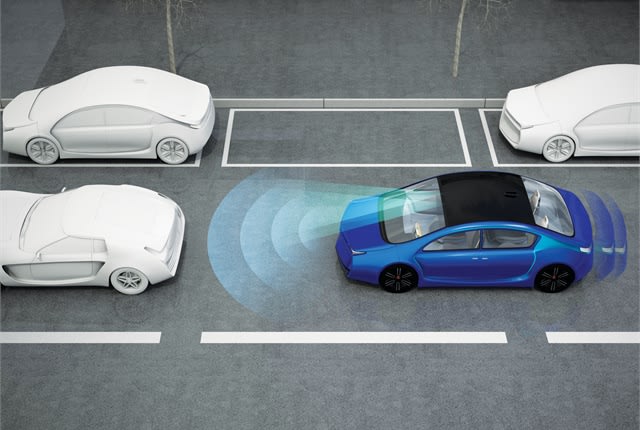
Photo courtesy of istockphoto.com.
Editors Note: This article is part of a four-part package that addresses state-of-the-art fleet technology. Read related articles that offer an in-depth look at fuel, telematics, and on-the-horizon techology.
The road has become increasingly dangerous for drivers. In the first half of 2016, approximately 17,775 people died in traffic crashes in the U.S., according to a projection from the National Highway Traffic Safety Administration.
This amounts to an approximate 10.4% year-over-year increase in traffic-related deaths compared to the same six-month period in 2015.
Further adding to the hazards of the road, DUI deaths are also reportedly on the rise, according to a report by CBS.
This is where the practical use of technology becomes important. The development and implementation of vehicle safety technology — with the goal of helping drivers better handle the dangers of the road — has been on the rise. Features like crash avoidance technologies have become increasingly ubiquitous in newer model-year vehicles. And, new and evolving fleet specific tools meant to curb the concerning trend of traffic crashes are also emerging.
While vehicle safety technology is constantly evolving, fleets don’t have to wait for future developments to begin utilizing cutting-edge technology. There are solutions available that have proven to be useful.
Adam Kahn, VP, fleet business at Netradyne, elaborated on some of the major safety technological advancements over the last several years. He stressed the importance of high-bandwidth wireless connectivity mobile apps; electronic/compliance management platforms; commercial vehicle routing/navigation systems; and data aggregation systems.
Brian Kinniry, senior director, strategic services at The CEI Group, agreed with several of these concepts.
“Because technology has been the catalyst of so much fleet management progress, any number of technological advances have generated lots of attention, including telematics, cloud-based data, mobile applications, and Big Data,” said Kinniry.
Data that is pulled from these solutions can help streamline how fleets improve safety in their operations. It allows them to compile the information and organize it in such a way so they may evaluate the data effectively and efficiently.
Telematics as a tool for fleets has evolved over the years and has continued to flourish more recently as an essential safety tool by way of monitoring driver behavior. And while the basic elements of telematics such as driver monitoring and GPS capability might not be considered a “cutting edge” concept, there are newer tools available that fleets may want to consider when factoring the safety capabilities of telematics.
“As we further connect more people and devices to vehicles, improved telematics technology will be integral for fleets in keeping an eye on driver safety,” said Bob Krueger, VP, client relations of SafetyFirst.
In driver monitoring, fleets use telematics to analyze the way that drivers in their operations are performing. This includes looking for undesirable habits such as harsh braking or cornering, excessive speeding, etc., according to Krueger. Looking at this information allows fleets to coach their divers accordingly based on the data.
However, one of the more recent safety trends for fleets is the addition of video applications used in tandem with telematics technology and its data.
“Telematics has been used in the industry for quite some time now. More recently, we are seeing fleets use telematics in tandem with other services/technologies such as cameras and dynamic routing. This shows more devices/systems/vehicles/drivers are connecting and working in unison,” said Krueger of SafetyFirst.
Kahn elaborated on the use of cameras in tandem with telematics systems as a video application.
“Vision-based safety platforms allow for the capture, analysis, and preservation of all images and exceptions that make up a driver’s work day,” he said.
Krueger further expanded on some of the elements of using video with telematics by addressing the use of dual-vision cameras.
“Dual-vision cameras have been very popular in tandem with telematics. These cameras can save video of any telematics events (I.E. harsh braking, harsh cornering) that occur. Stored video will include images of the driver and footage from in front of the vehicle. This helps create opportunities to coach drivers and may help a company in court cases due to an accident,” he said.
Kahn said that some vehicle configurations have four or five cameras being deployed. The video systems can benefit with the application of artificial intelligence (AI) and deep-learning solutions. (Editors note: these topics are expanded on further in the “The Near Future” section of the article.)
With the mention of telematics that are used in tandem with other current technologies, it is also important to address the mandate of electronic logging devices (ELDs) that will be implemented in late 2017.
ELDs are intended to help create a safer work environment for drivers, and make it easier and faster to accurately track, manage, and share records of duty status (RODS) data, according to the Federal Motor Carrier Safety Administration (FMCSA).
With the ELD mandate for December, fleets have until then to implement certified ELDs in their operations to record Hours of Service (HOS). The purpose is to create standard data displays and data transfer processes, making it easier to demonstrate compliance and faster to share RODS with safety officials, according to the FMCSA.
Fleets looking for other state-of-the-art technology for assessing their operations may want to take a look at predictive and prescriptive analytics.
Predictive analytics is designed to take data regarding a driver’s history and present multiple future possibilities based on the data, according to Kinniry.
“Many business people assume that predictive analytics will scientifically conjecture what will happen in the future. It doesn’t. It can only predict what might happen in the future. It provides insight only into probabilities, taking data that we already have to forecast data that we don’t have,” he said.
Expanding upon predictive modeling, prescriptive analytics focuses on two consultative components: actionable data and a feedback loop to track the performance metrics of the action taken, Kinniry said.
“Prescriptive analytics is an emergent technology that leads to recommending one or more courses of action and projecting the respective outcomes,” Kinniry said. “Recommendations might include remediation for drivers, increased driver communications, and direct managerial communications.”
Analyzing the data from prescriptive analytics allows fleets to find “hidden” at-risk drivers who were previously undetected by standard risk-scoring models utilized in the industry today, Kinniry said.
Krueger of SafetyFirst, expanded on concepts of the prescriptive analytics model.
“The data can show the most accidents by intersection in the country or a region. The data can recreate the accidents and give enough data to analyze time of day, weather conditions, type of vehicle, speed of vehicles, and more,” he said.
He also offered a real-life example of how fleets could use the technology and asses it for their operations based on the routes that their drivers take.
“If you or your vehicle knew that on Monday morning during your commute, the intersection of Main Street and Maple Avenue, at 8 a.m. has an 80% chance of an accident — you would be extra cautious — this would minimize accidents. Maybe even avoid the intersection completely,” he said.
On top of the safety benefits, Kinniry said that prescriptive analytics also has a positive effect on a fleet’s total cost of ownership.
“The savings on total cost of ownership that prescriptive analytics delivers is realized when accidents are prevented due to the safety training assigned for at-risk drivers. Because insurance, accident repairs, and driver downtime add up to a significant portion of the vehicle total cost of ownership, avoiding accidents and controlling repair costs are critical,” said Kinniry.
However, the way the prescriptive analytics model is utilized will vary depending on the fleet.
“Each customer has different needs and goals for a safety program. The more that a program can be custom-fit to the safety culture, fleet profile, driver make-up, and operational realities, the more precise the solution. While safety program components can be shared, the combination of tactics must be unique,” Kinniry said.
A push for the testing and development of the autonomous vehicle has been prominently highlighted in the automotive industry in the last few years. When considering cutting-edge safety technology in the future, self-driving cars are important for fleets to consider as the safety aspect is one of the biggest selling points for the technology.
“The further development and use of the autonomous vehicle will be the focus for most. OEMs will be trying to work through technology advancements of lasers, sensors, and radar. Commercial use of vehicles and the transportation industry will shift to safely and effectively use the autonomous vehicle that will not create more traffic and accidents,”
said Krueger of SafetyFirst.
He also sees a tie between autonomous cars and ride-sharing and ride-hailing companies like Uber as a focus for fleets in the future.
“Fleet Managers and fleet companies will shift focus toward vehicle sharing, minimizing the overall cost per mile and total cost of ownership,” said Krueger.
Deeply rooted to the idea of the autonomous vehicles is artificial intelligence (AI) and deep learning solutions. These concepts help make up what we see today in autonomous vehicle technology.
“The emerging trend that we see is the application of artificial intelligence and deep learning driving vision-based safety systems that are specifically designed to protect the fleet and commercial driver,” said Kahn of Netradyne.
He said that the vision-based systems using AI and deep learning solutions expand on what vehicles will be able to analyze, including traffic lights, stop signs, and dynamic following distances, based on speed calculations.
Kahn adds that the concepts of AI and deep learning are based on the foundation of current technologies that fleets analyze, including Big Data, IoT, cloud computing, and GPS capabilities.
“Over the next years, these technologies will continue to improve and evolve – where you will see smarter vehicles and roads. Where you might start to see advantages from integrated vehicle-to-vehicle communications, smart roads, optimized traffic, and drivers that are equipped with the latest safety technology,” said Kahn.
The data from deep learning is being assessed in state-of-the-art technology, according to Kahn.
“Devices are being built with supercomputer processing power where trillions of calculations are being managed within each second. The devices handle their own processing and storage, while the cloud will morph into the big strategic brains behind it all,” said Kahn. “These smart machines collect, analyze and assign severity to events that occur while driving.”
Krueger also elaborated on the concept of deep learning solutions.
“In deep learning solutions, we can see driver training automatically being pushed to drivers based on events occurring like telematics speeding alerts, post accidents, etc.” he said.
Krueger offered an example to explain the impact of the tech.
“As more data is collected you will be able to know your highest risk and mitigate it before it happens. If you knew that the new hire you just brought in is 30% more likely to have an accident because of their location/age/territory, you would give that new hire additional training or give them extra attention to ensure they know the importance of safe driving,” said Krueger.
Kahn said the way data from deep learning solutions is processed will help streamline how fleets assess the information.
“Technology has shifted from a model of regulating what is sent over to the air, to being able to process everything at the device level — creating a more meaningful, confident data stream,” Kahn said.
Kahn elaborated on what exactly meaningful data means to fleets.
“This is data that the fleet manager can quickly apply resources against — either recognizing great driving, reinforcing best practice training, or exonerating the fleet/driver from false claim,” he said.
To that same point, Kinniry of The CEI Group stressed how technological innovations related to the intelligence of the vehicle will change how fleets approach safety.
“Safety technology built into vehicles, such as driver alert and intervention systems or V2V (Vehicle to Vehicle) communications technology is already well underway. The establishment of standards and regulations to support these new technologies will be a concern for the foreseeable future,” said Kinniry.

Rising operating costs, driver safety concerns, and unplanned downtime are putting unprecedented pressure on modern fleets. Discover how fleet managers use embedded OEM connectivity and real-time vehicle data to cut TCO, prevent downtime, and protect drivers without aftermarket telematics hardware.
Read More →
Mental health belongs in the fleet safety conversation. This week, we’re looking at five ways fleets can support employee well-being before a crisis, plus Holman’s expansion in Mexico, new one-day Fleet Forward passes, and why EV charging demand is outpacing infrastructure growth.
Read More →
Stefan Heck tells Automotive Fleet that combining more than 10 billion miles of driving history with Nexar's AI models will give fleets deeper insights into driver risk and roadway conditions than either company could provide independently.
Read More →
For Suicide Prevention Month, fleet and safety leaders have an opportunity to put mental health where it belongs: at the center of workplace safety.
Read More →
Insights from a commercial insurance carrier and a broker show how fleets can turn video telematic data, driver coaching, and improved claims results into a stronger case at insurance renewal.
Read More →
You’ve made the telematics investment. Here’s how to capture the other half of its value and build the safest fleet on the road.
Read More →
Fleet compliance isn't just about having policies — it's about consistently enforcing them. This practical guide reveals six hidden compliance risks common in public sector and shared fleet operations and outlines proven strategies to improve visibility, accountability, and audit readiness
Read More →
The Sept. 15–17 program will feature fleet benchmarking data, case studies, emerging technologies, and implementation strategies while running alongside the NSC Safety Congress & Expo.
Read More →
NETS quantifies costs dispersed across fleet, risk, HR, and other departments while providing new per-crash benchmarks for employers.
Read More →
The recall affects certain 2019-2026 Ram 1500 pickups that may have improperly attached second-row seat belt buckle anchors.
Read More →