




Further Reading: 2022 Technology Trends: Digital Fleet Management and the Self-Managed Fleet
Salary Survey 2022: Fleet Salaries Continue to Rise
Despite low vehicle inventory, higher acquisition costs, the global semiconductor shortage, and a fuel cost spike, fleet salaries continued to rise.

Jordan Wiklund・Former Senior Editor
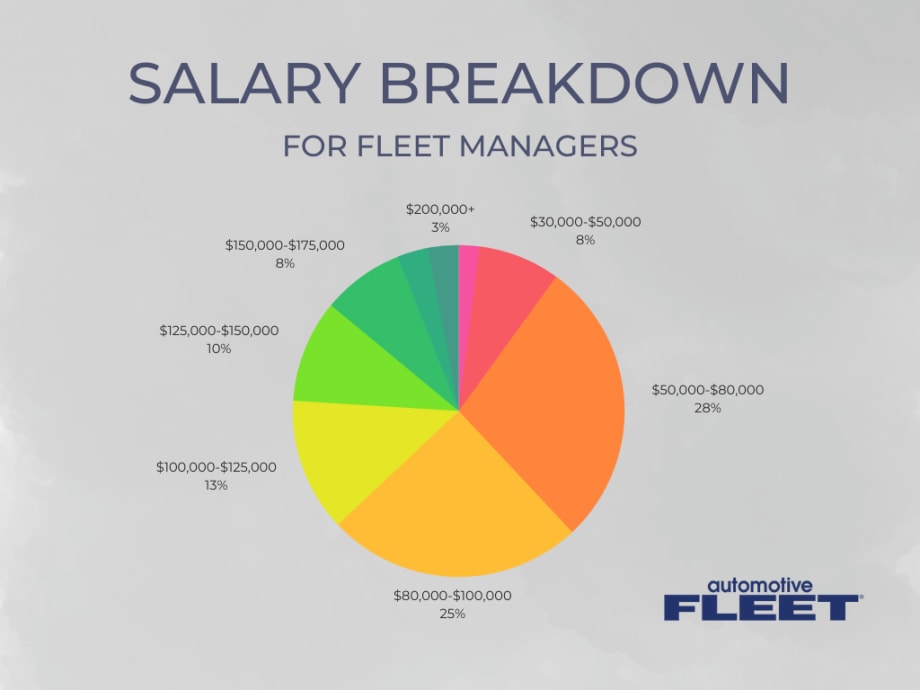
Over half of respondents make up to $100,000, with another third netting more than six figures. Over the past few years, the pandemic has revealed the manager’s role in not only maintaining but growing revenue. For many fleet managers, once they’re in, they’re in, and the only way to go is up.
Photo: Automotive Fleet
8 min to read
What else?
What else can possibly occur to make the job of a commercial fleet manager more difficult? Maybe the larger question is more existential than anything—instead of worrying about what else is coming, perhaps it’s time to ask is there anything that can’t be accomplished, in spite of the last few years?
Because despite the cumulative hurdles facing the commercial fleet management industry, salaries continue to rise, and the overall data of 300+ respondents indicated that the No. 1 factor in fleet salary remains years of experience, pointing (however obliquely) to an evolving industry that rewards loyalty and features quite a bit of cross-pollination between companies and fleets. If you can manage a fleet well here, so to speak, you can perhaps manage a fleet well anywhere.
Let’s get to it.
Follow the Money
Last year, the majority of respondents (55%) made anywhere from $50,000 - $100,000, and this year’s data grew by 1% to 56% of respondents. One out of every two fleet managers is doing pretty well, in other words, with 33% of respondents making more than $100,000. Those margins comprise almost 90% of survey takers, with a scant few either below $50,000 (less than half of 1%) or above $200,000 (no more than 3%).
Like the previous survey, the majority of those making over six figures shrank from 17% in 2021 to 13% this year, indicating what the data already shows—most of those job seekers stayed in the industry and jumped to $125,000 or more, particularly above $150,000; last year, that number was 4%. This year, it almost doubled to 7% and change.
“I think companies are more aware of what fleet managers do, and how much of what they do impacts field operations,” says David McCauley, fleet manager at ADT.
“The pandemic certainly had something to do with it. ADT is a sales-driven company, but if you don’t have vehicles, you can’t get salespeople and technicians out to service calls.”
McCauley has been in fleet for almost 20 years. He was the first fleet manager at Red Bull, in fact, and helped create the department. He then spent several years with Service Experts and recently joined ADT, a Texas-based security company with a fleet of about 8,000 assets, mostly small- and medium-sized transit vans.
“Organizations are realizing that more of an emphasis on fleet in the long run helps them, and you have to pay for what you want,” he says. “There are good people working in fleet; companies are recognizing that, and they’re offering people more money to move. As people switch jobs, you have to hire a replacement, and fresh hiring helps keep experienced professionals gain more traction within their organizations (or new ones).”
McCauley also believes that trade organizations such as AFLA and NAFA have experienced tremendous growth and helped provide transparency, resources, and solutions for fleet managers of fleets large and small, helping fuel growth not only among traditional fleets but among all the third-party stakeholders involved—suppliers, tech and data companies, safety companies, and more.
“Nonetheless, many fleet managers are older and hope to retire soon,” McCauley adds, and the trade organizations offer clarity on the status of the job market, especially as word travels about impending retirements or acquisitions.
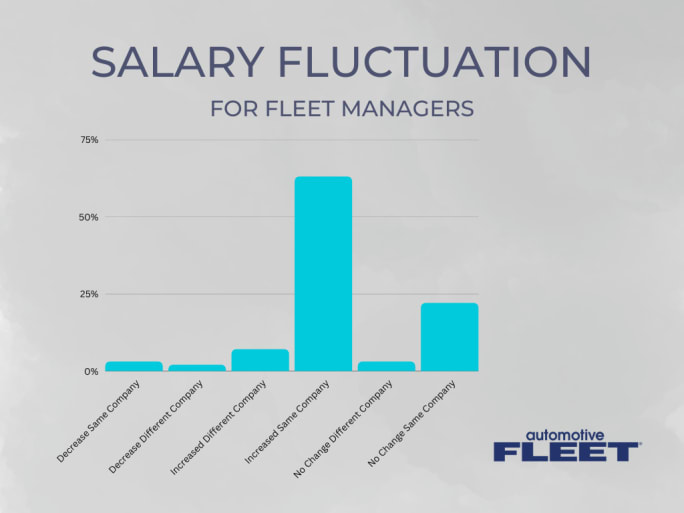
Here’s the good news—71% of total respondents indicated salary increases in a time when all market hurdles against the American fleet manager point otherwise.
Photo: Automotive Fleet
If you were to mosie up to the bar at any major fleet function, for instance, you’d have no question about the strength of the fleet manager market. People are happy with their positions, and will tell you; people are happy to move (or have moved) and they’ll also let you know.
Despite more pressure than ever to modernize, equip, and flip the fleet (if necessary, or even able), the salary survey reflects as strong a financial picture for fleet management as ever.
Buddy, Can I Get a Ride?
Fleet remains something of a shrouded industry to those outside or not responsible for it; if it’s not in your professional purview, you probably don’t think about it at all. To that end, one fleet manager who wished to remain anonymous said this: “[Our company] is under the same supply chain constraints for small home gadgets, microchips, and electrical equipment; I don’t believe our stakeholders truly understand how bad it is out in the fleet world.”
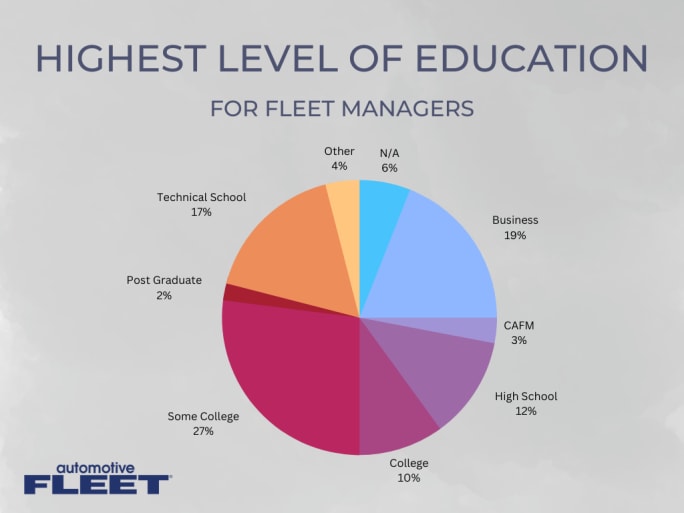
Some college (29%) and business school (20%) combine for almost 50% of reported education.
Photo: Automotive Fleet
When asked to define bad, this manager jumped straight to the point—“It’s almost impossible to get vehicles,” they said, “while maintenance and mileage thresholds are going up. If I can repair it for another 25,000 - 50,000 miles, I will, because there’s no rhyme or reason as to how some manufacturers are allocating their fleet vehicles. If I could retire, I would—the lack of vehicles, and to a certain degree, a lack of directions from the OEMs hinders all fleets. It’s been a hard two years.”
Several other fleet managers agreed, having no problem pointing to the primary hurdle of the past 18 months—vehicle inventory. Perhaps this helps further explain why salaries remain high—the dearth of new vehicles coupled with the lowest initial quality in decades (at least according to a recent report by J.D. Power) means many experienced professionals have their eyes on the horizon, moving on from fleet to retirement.
Fleet allocations have been consumed quickly, shortening the order period. Manufacturers are forced to make difficult decisions regarding fleet allocations, and it’s a struggle for many fleet managers to get exactly what they need. All stakeholders—including the manufacturers—are trying to find the right balance.
One manager described the “lag effect from year to year—I could only get about 25% of the vehicles I needed, so now I’m that much further behind as I look ahead to flipping what I just purchased. The stack is cumulative.”
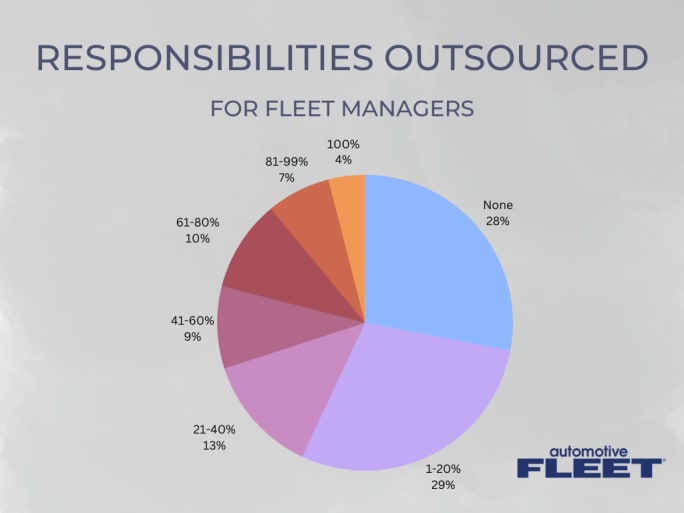
Almost half of commercial fleet manager respondents (47%) hardly outsource at all, preferring (or simply needing) to keep all fleet responsibilities in-house, indicative of small- to mid-size fleets in the overall survey group.
Photo: Automotive Fleet
Most managers report only being able to source 15 - 25% of their desired allotment. And despite all the hooplah, electric vehicles only account for a fractional sliver of fleet in America, and acquiring EVs is even more difficult than traditional ICE-powered vehicles or plug-in hybrids.
Permanent Post-covid
Despite the supply chain frustrations, many managers report their jobs and responsibilities have in fact become more efficient in a hybrid or fully remote model.
“From a functionality standpoint, it’s 100 times better,” McCauley continues. “We’ve figured out there’s a lot you can accomplish online without getting together.”
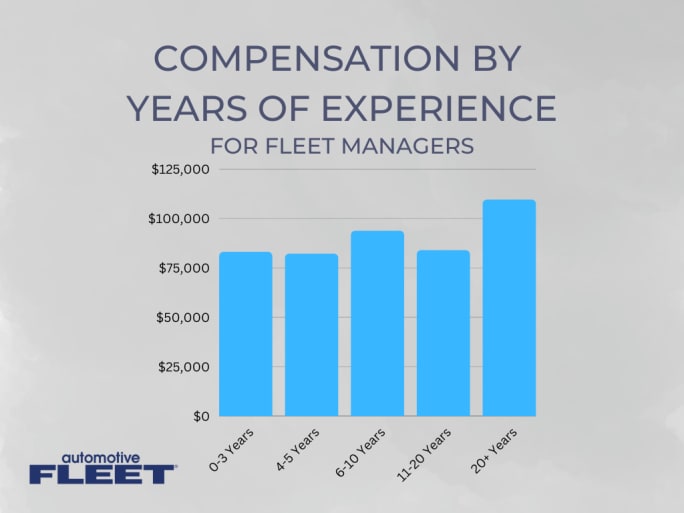
A whopping 47% of fleet manager respondents spent the majority of their time—75% and more— managing the fleet this year, a significant increase over last year (34%).
Photo: Automotive Fleet
McCauley says the execution of his job is simpler (not to be confused with easy), but the sheer volume of “unknown unknowns” (my words) of vehicles “drives you nuts” (his words).
Thankfully, successfully managing a fleet—or at least getting by enough to keep the ledgerbook in the black—does not boil down to one particular factor such as experience, number of vehicles, or education. The homogeneity of yesterday’s mid-size fleets is by and large gone, giving way to much more nuanced (and often tricky) balancing act of newer vehicles coupled with lightning-swift wireless technology and even fuel options.
As the infrastructure of motoring America slowly begins to accommodate electric vehicles and plug-in hybrids, fleet managers will have more options, more data, and ultimately more decisions to make about how to get ahead.
“I believe that the increase in data that we’re able to collect has allowed us to make more educated decisions, and that makes the execution of my job much easier,” McCauley says.
“If I can say, ‘I want to terminate this vehicle’ and I have the data behind it, nobody questions it. Five, ten years ago, it was an uphill battle between mileage, maintenance, and more, and I couldn’t account for what would happen if we kept it in service. Today I can make educated decisions, not guesses.”
McCauley says that everything from fuel and route efficiency to standard maintenance and safer drivers can be adjusted using the right data. For many fleet managers, micro (vehicle) and macro (fleet) decisions are much more informed, and despite the deluge of digital data available, if you want find it, you can, and if you’re ever questioned about why you’re doing the things you’re doing form behind the desk while administrating the fleet, you can support it.
“More so than that, what else enables me to succeed is the organization. Being seen as the fleet resource and subject matter expert - and being treated that way - changes everything.”
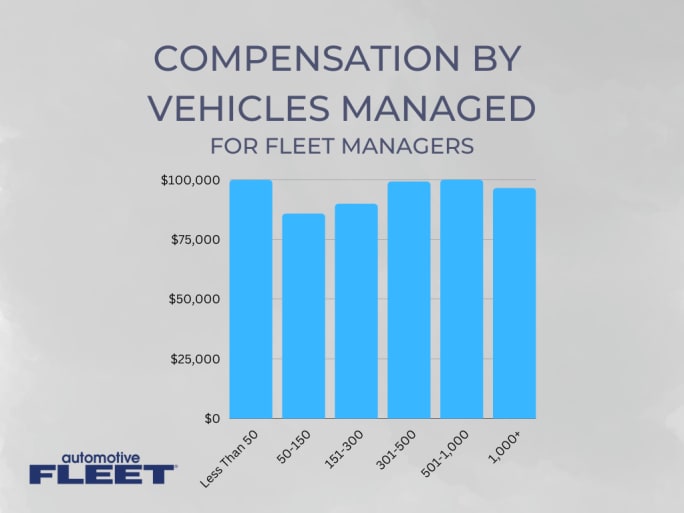
Here are the increases from the survey, with the average salary bump since last year in parentheses: 51-150 vehicles, $85,700 (+$6,200); 151-300 vehicles, $89,800 (+$700); 301-500 vehicles, $99,100 (+$2,900); and 501-1,000 vehicles, $99,900 (+$1,100). The takeaway? It is a good time to be a fleet manager.
Photo: Automotive Fleet
Over at ABM, David Hayward agrees. “Transparency is what enables me to succeed,” he says, “and many of the vendors and suppliers do a great job on that.”
Hayward describes an environment in which full transparency with multiple vendors and solutions providers—whether employing their services in your fleet or not—goes a long way toward avoiding disaster and putting yourself and your fleet in a position from which it may be tough to recover.
“Tending to all the blooms—and not just the brightest ones—means your garden will flourish,” I said.
“Exactly,” he said, “it remains a small fleet world, and letting service providers and suppliers know your position - when possible - means you may have access to more than you think, and when the time comes to use a new service, switch providers, or simply need a hand, you may get more lucky than you realize.”
For me, the main takeaway of this year’s salary survey is that data helps ensure agency for the fleet manager; agency equals empowerment, and empowering decisions at the top yield a happier, more efficient fleet; and more wheels turning in the right direction yields trust from those around you—trust to move the fleet forward. Salaries are up, and many managers feel empowered by their organization despite jumping through hurdles to secure new vehicles, tech, and data. Doing diligent work day in and day out has always been valuable, and never more so than for today’s fleet managers.
Subscribe to Our Newsletter
More Leasing

Martin Kuhn on the Future of Mike Albert Fleet Solutions
The new president and CEO explains how Mike Albert Fleet Solutions plans to invest in technology, data, and people without losing the personal service fleet customers value.
Read More →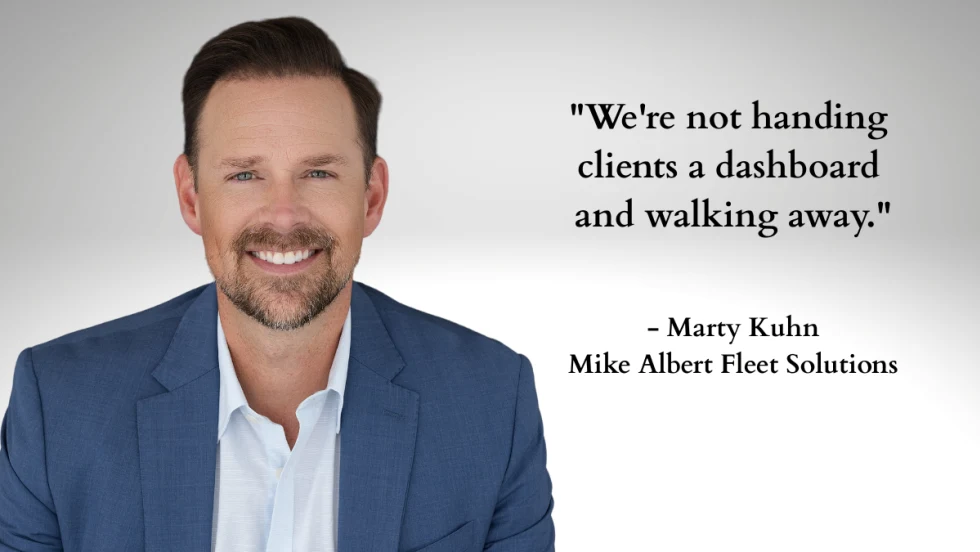
Mike Albert Fleet Solutions Names Marty Kuhn CEO, First from Outside the Family
Kuhn has a theory of what sets the company apart from larger FMCs: depth of partnership over breadth of volume.
Read More →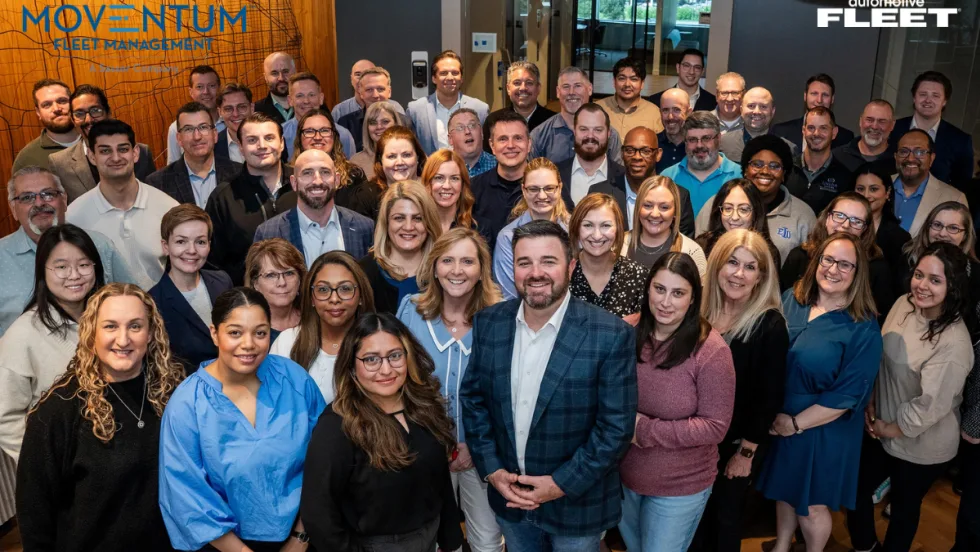
Union Leasing Rebrands as Moventum Fleet Management
The name Moventum reflects the company’s position at the intersection of movement and momentum, with the guiding principle "Keep Work Moving."
Read More →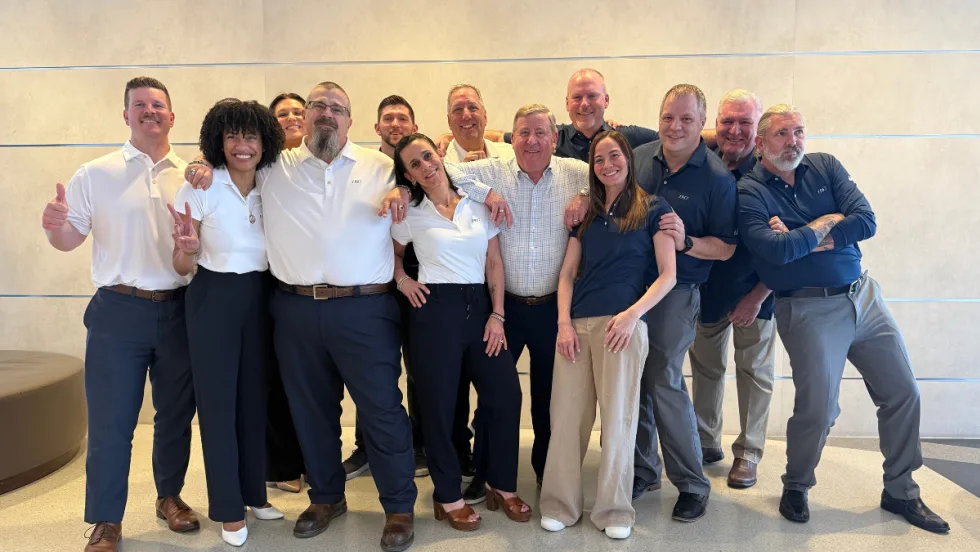
How Does a Mid-Major FMC Compete? Ask BBL Fleet
This Pittsburgh-based FMC built a technology-first culture, sustained double-digit organic growth, and expanded its Midwest footprint through a recent acquisition. How did it happen?
Read More →
What’s Really Happening in Fleet Supply Right Now
Fleet supply has improved, but not everywhere. Merchants Fleet’s Charles Matthew explains where constraints still exist, what risks are emerging, and why fleets shouldn’t wait to place orders.
Read More →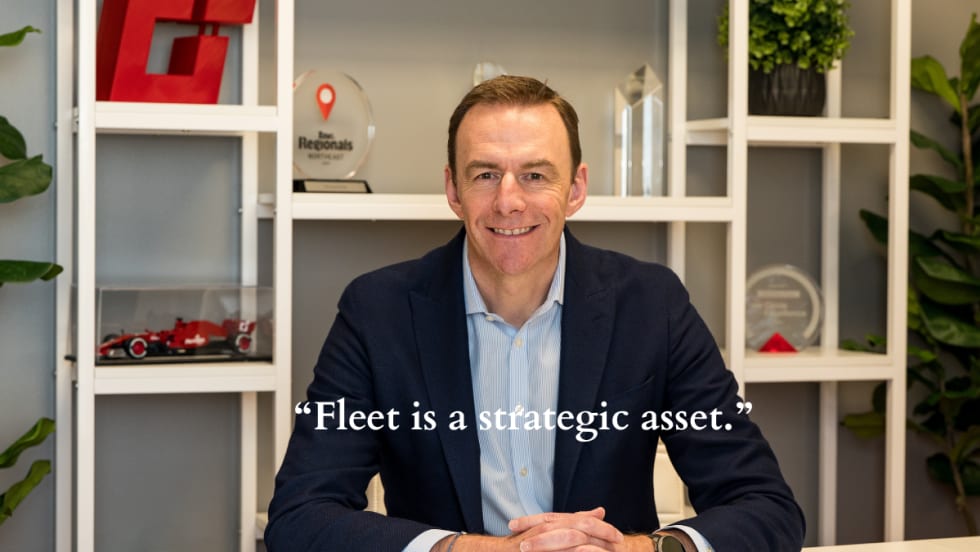
These Edges Are Measured in Inches — Matt Dyer on Fleet’s New Normal
The Merchants Fleet CEO contends that fleets that drive the business win the inches. In 2026, every one of them counts.
Read More →
Who Gets a Company Car? (In 2026 and Beyond)
As costs rise and scrutiny increases, fleets are refining criteria that govern eligibility for company-owned vehicles.
Read More →
DriveItAway Holdings, Free2move Launch Operations In Nine Cities
The co-branded program with Stellantis’ mobility division scales up leasing and financing options nationwide with more cities to come online in 2026.
Read More →
AFLA 2025 Conference in Pictures
Drawing over 640 attendees, the 2025 AFLA Annual Conference was held Sept. 14-17 at the JW Marriott Marco Island Beach Resort in Florida.
Read More →
DriveItAway, Free2move Partner to Expand Vehicle Access for Dealers
The arrangement enables franchise dealers to offer flexible lease-to-own programs with no credit checks, no down payments, and no long-term commitments.
Read More →