





More on Safety: IIHS Challenges Automakers to Make Greater Safety Strides
Safety Systems May Cause ‘Phantom Braking’
While automakers continue to improve the reliability and performance of automatic emergency braking systems, issues can still occur, such as sudden, unexpected vehicle deceleration or braking.
April 12, 2023
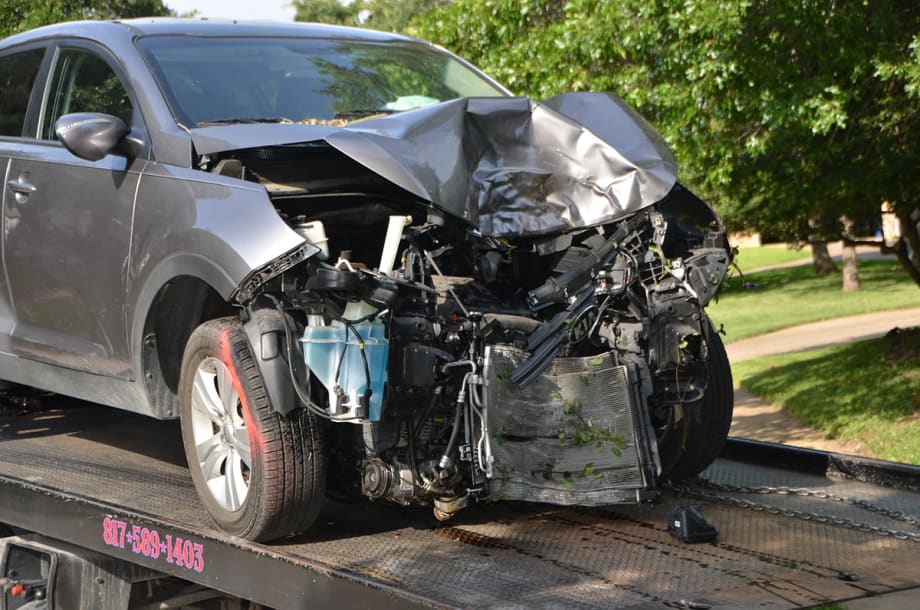
While automatic emergency braking systems help save lives and prevent accidents, incidents of "phantom braking" -- sudden, unexpected braking -- have been reported.
Photo: GD Baker
7 min to read
Automotive technology, like many human advancements, creates unintended consequences.
While automakers have been working to improve the reliability and performance of automatic emergency braking (AEB) systems, issues with these systems can still occur.
In some cases, for example, phantom braking may be caused by environmental factors, such as shadows, low sun angles or weather conditions, which the AEB system interprets as potential obstacles.
A case in point: On January 9, two North Carolina Tesla owners filed a class-action lawsuit against Tesla, alleging 2021-2022 Tesla Model 3 and Tesla Model Y vehicles suddenly brake on a road free of objects.
Sudden, Unexpected Braking
Phantom braking refers to an unexpected and sudden vehicle deceleration or braking without an apparent reason or danger on the road. This phenomenon often happens in vehicles equipped AEB one element of advanced driver-assistance systems (ADAS).
Phantom braking can occur due to various reasons, including faultysornco sens, irrect calibration of the ADAS system, poor weather conditions or objects in the surrounding environment that trigger the sensors.
The sudden and unexpected deceleration caused by phantom braking can lead to accidents, especially if the vehicle is traveling at high speeds or is in heavy traffic.
To prevent phantom braking, it is important to:
Regularly maintain and calibrate ADAS systems and sensors.
Avoid relying solely on these systems while driving.
Always remain vigilant and prepared to take control of the vehicle if necessary.
Common Feature Across Brands
The National Highway Traffic Safety Administration (NHTSA) typically collects data on safety-related issues and defects from automakers, consumers and other sources. NHTSA uses this information to identify potential safety concerns and take appropriate action, such as issuing recalls.
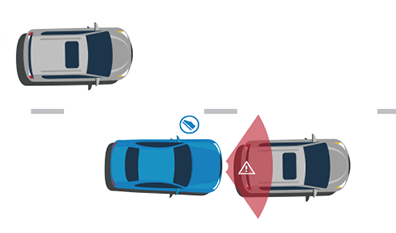
AEB systems apply the vehicle’s brakes automatically in time to avoid or mitigate an impending forward crash with another vehicle.
Image: NHTSA
However, it is worth noting that AEB systems are not exclusive to a specific automaker, and they are becoming increasingly common as a safety feature in many different vehicle brands and models.
While issues with AEB systems in some vehicles have been reported, these systems are still considered an important safety feature to help prevent accidents and save lives.
The development of AEB systems in the U.S. auto industry can be traced to the 1990s. Early versions of AEB systems were developed primarily for use in heavy trucks and commercial vehicles. The systems used radar and other sensors to detect potential collisions and automatically apply the brakes to avoid or mitigate a collision’s impact.
In the early 2000s, some automakers began introducing AEB systems in passenger vehicles as an optional safety feature. These early systems were relatively simple and only applied the brakes in certain low-speed scenarios, such as a vehicle approaching a stationary object.
Over time, AEB systems have become more advanced and sophisticated. Today, many modern vehicles come equipped with AEB systems as standard or optional equipment. Modern systems use a variety of sensors, including cameras, radar and lidar, to detect potential road obstacles and hazards. They can also detect pedestrians and cyclists and can apply the brakes automatically to help prevent collisions or reduce the severity of an impact.
AEB system development has been driven, in part, by advances in sensor technology, as well as a growing awareness of the importance of safety features in vehicles.
Automakers continue to invest in the making AEB systems even more reliable and effective.
NHTSA Receives AEB Complaints
The National Highway Traffic Safety Administration (NHTSA) is investigating complaints about Autopilot’s automated emergency braking system. Drivers have reported more than 400,000 instances of so-called phantom braking.
NHTSA has not released official data regarding the percentage of ADAS-related crashes occurring specifically in Tesla vehicles. However, crashes have been reported involving Tesla vehicles operating in Autopilot mode, which includes ADAS features such AEB, lane departure warning and adaptive cruise control.
According to a 2020 National Transportation Safety Board (NTSB) report, Tesla's Autopilot system was engaged in three fatal crashes in the U.S. between 2016 and 2019. The report also noted the Autopilot system played a role in two other crashes in which the occupants sustained serious injuries.
It is important to note that while Tesla vehicles have been involved in some high-profile crashes related to ADAS systems, it is not necessarily an indication that Tesla vehicles are more prone to accidents than other vehicles with ADAS features. ADAS systems are still a relatively new technology, and ongoing research and development should improve their safety and reliability.
In general, it is essential drivers understand the limitations of ADAS systems and remain alert and attentive while driving, even when these systems are engaged. ADAS systems are designed to assist drivers, but they are not a substitute for careful and attentive driving.
Agency Investigating Incidents
NHTSA opened a formal investigation in February 2022 regarding phantom braking incidents. The investigation includes 2021-2022 Tesla Model 3 and Model Y vehicles, and by May 2022, the government knew of more than 750 unintended sudden braking incidents.
In fairness to Tesla, the Model 3 and Model Y owner's manuals warn customers about automatic emergency braking.
Specifically, the vehicles’ owner’s manual states:
“Several factors can affect the performance of Automatic Emergency Braking, causing either no braking or inappropriate or untimely braking, such as when a vehicle is partially in the path of travel or there is road debris. It is the driver’s responsibility to drive safely and remain in control of the vehicle at all times. Never depend on Automatic Emergency Braking to avoid or reduce the impact of a collision.”
Tesla is not the only company to face phantom braking issues. EasyMile, which operates autonomous shuttles, was ordered to suspend operations over phantom braking incidences.
NHTSA also investigated Nissan Rogue CUVs after drivers reported similar braking errors and other Nissan models equipped with AEB systems.
In 2018, Nissan announced a recall of more than 100,000 Rogue vehicles due to an issue with the AEB system that could cause it to activate unexpectedly, resulting in unnecessary braking. The recall was intended to address a software error that could cause the AEB system to misinterpret certain objects, such as roadside objects, as obstacles and apply the brakes, even if no actual threat of collision existed.
While the issue was addressed through the recall, other reports of phantom braking incidents in the Nissan Rogue and other Nissan models have surfaced in recent years.
Notably, phantom braking incidents can occur in any vehicle with an AEB system, and they are not necessarily a reflection of a particular brand or model's reliability or safety.
Any driver experiencing unexpected braking while driving a Nissan Rogue or any other vehicle should have the AEB system checked by the local dealer, an authorized repair center or a certified mechanic to ensure it is functioning correctly.
If an AEB system issue is suspected, drivers are strongly advised to see a Nissan dealer or authorized repair center for a vehicle inspection and any necessary repairs.
Other Manufacturers Report Issues
While AEB systems are designed to improve safety on the road, issues have been reported with vehicles from several different automotive and truck manufacturers.
In addition to Tesla and Nissan, other manufacturers reporting issues with AEB systems include:
Subaru: In 2019, Subaru announced a recall of more than 1.3 million vehicles due a system problem that could cause the AEB to activate unexpectedly. The recall affected several models, including the Forester, Outback and Crosstrek.
Toyota: Toyota has issued several recalls related to AEB system issues in various models, including the Camry and the RAV4. In some cases, the AEB system failed to activate when it should have, while in other cases, it activated unexpectedly.
Ford: In 2020, Ford issued a recall of 600,000-plus vehicles because the AEB system activated randomly and without cause. The recall affected several models, including the Fusion, Edge and Lincoln MKX.
American Honda: In 2019, Honda recalled more than 118,000 CR-V models due to a software issue that could cause the AEB system to engage unexpectedly.
General Motors: GM has also issued several recalls related to incidences when the AEB system either unexpectedly activated or failed to activate when needed in various models, including the Chevrolet Malibu, GMC Acadia and Cadillac XT5.
Again, while these issues are concerning, AEB systems remain a valuable safety feature in most vehicles, and they have the potential to prevent many accidents and save lives.
Subscribe to Our Newsletter
More Safety

Does Your Fleet's Culture Encourage Distracted Driving?
What happens when the people responsible for enforcing safety rules are the ones setting the wrong example? The answer may reveal why some of the biggest risks to fleet drivers have little to do with what's written in the employee handbook.
Read More →
Sponsored•October 1, 2026
Fleet Manager’s Ultimate Playbook: Navigating the New Standard in OEM Connectivity
Rising operating costs, driver safety concerns, and unplanned downtime are putting unprecedented pressure on modern fleets. Discover how fleet managers use embedded OEM connectivity and real-time vehicle data to cut TCO, prevent downtime, and protect drivers without aftermarket telematics hardware.
Read More →
From Driver Well-Being to EV Charging | AF News Recap
Mental health belongs in the fleet safety conversation. This week, we’re looking at five ways fleets can support employee well-being before a crisis, plus Holman’s expansion in Mexico, new one-day Fleet Forward passes, and why EV charging demand is outpacing infrastructure growth.
Read More →
Nexar-Nauto Merger Aims to Give Fleets Better Safety Intelligence Through Larger Driving Dataset
Stefan Heck tells Automotive Fleet that combining more than 10 billion miles of driving history with Nexar's AI models will give fleets deeper insights into driver risk and roadway conditions than either company could provide independently.
Read More →
Don't Wait for a Crisis: 5 Ways to Build Mental Health Into Your Fleet Safety Program
For Suicide Prevention Month, fleet and safety leaders have an opportunity to put mental health where it belongs: at the center of workplace safety.
Read More →
How Camera Data Can Strengthen a Fleet’s Insurance Renewal
Insights from a commercial insurance carrier and a broker show how fleets can turn video telematic data, driver coaching, and improved claims results into a stronger case at insurance renewal.
Read More →
The Safest Fleets Aren’t the Ones with the Most Technology
You’ve made the telematics investment. Here’s how to capture the other half of its value and build the safest fleet on the road.
Read More →
Sponsored•August 7, 2026
Hidden in Plain Sight: Fleet Compliance Risks
Fleet compliance isn't just about having policies — it's about consistently enforcing them. This practical guide reveals six hidden compliance risks common in public sector and shared fleet operations and outlines proven strategies to improve visibility, accountability, and audit readiness
Read More →
NETS Sets 2026 Fleet Safety Benchmark Conference for Indianapolis
The Sept. 15–17 program will feature fleet benchmarking data, case studies, emerging technologies, and implementation strategies while running alongside the NSC Safety Congress & Expo.
Read More →
Off-the-Job Crashes Account for 43% of Employers’ $61.7 Billion Crash Burden
NETS quantifies costs dispersed across fleet, risk, HR, and other departments while providing new per-crash benchmarks for employers.
Read More →